

According to Ntuli, STEAMLabs Africa has trained more than 8,500 educators in a few months, making it Canva’s strongest-performing EduTrainer partner on the continent. She credited Kagai, Felix Malombe, Wambui Chege and other team members with helping to drive the initiative.
AI brings learning materials to life
During the interview, Kagai described how a teacher used Canva AI to address a challenge in teaching students to identify weeds. The textbook illustrations available to the class were in black and white, making it difficult for students to distinguish the plants.
The teacher used Canva AI to generate coloured visuals that helped learners identify the weeds, including through their vernacular language.
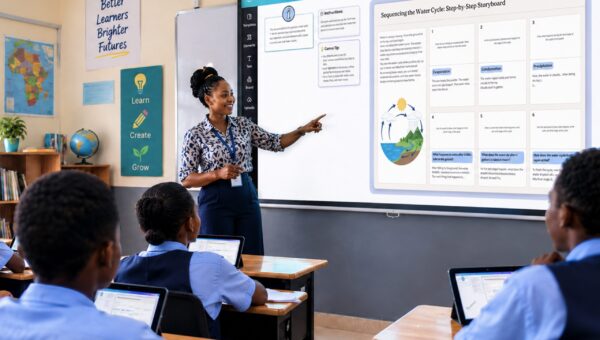
Ntuli also explained how teachers could upload existing lesson documents and use AI to develop presentations, flashcards and other classroom resources. She said some educators using Canva Education had reduced lesson-planning time from approximately three hours to 10 minutes, freeing up time for differentiated instruction and other teaching responsibilities.
Canva Education provides tools for creating presentations, worksheets and visual learning materials, while its AI features can help educators adapt resources to different classroom needs.
STEAMLabs Africa drives educator training
Ntuli attributed part of Canva Education’s growth in Kenya to its partnership with STEAMLabs Africa, which provides training to help educators incorporate digital tools into teaching and learning.
She said Canva began its Kenya engagement and government conversations in February, with hundreds of thousands of educators and students registering for educational use since then.
Canva Education is available free of charge to eligible educators and students. According to Ntuli, the company aims to make creative and digital learning tools more accessible, while helping young people develop skills that can remain relevant beyond school.
The reported 460,000 registrations represent cumulative educational sign-ups, while the 51,000 monthly users indicate activity on the platform during a typical month.
Language and connectivity remain challenges
The interview also examined barriers to digital inclusion, particularly language accessibility and unreliable internet connectivity.
Ntuli said Canva supported more than 20 African languages at the time of the interview, including Swahili, Zulu, Shona, Siswati, Yoruba and Hausa. She said the company continued to expand its language support, noting the importance of mother-tongue learning in helping students understand concepts and relate them to familiar contexts.
On connectivity, Ntuli discussed Canva’s offline functionality, which allows users to continue editing a design after starting it while connected to the internet. Changes can then synchronise when connectivity becomes available again.
She acknowledged that technology platforms alone cannot address the challenges facing African education systems, highlighting the need for infrastructure, connectivity, engaging content, teacher support and collaboration between governments and private-sector partners.
Responsible AI use in schools
The speakers also addressed concerns that students could become overly dependent on AI-generated answers at the expense of critical thinking and independent problem-solving.
Kagai argued that AI should complement human intelligence rather than replace it, while Ntuli emphasised that teachers must remain central to the learning experience.
They discussed how AI could help teachers develop differentiated assignments and identify areas where students require additional support. The conversation also highlighted the importance of responsible AI use, teacher supervision and protecting sensitive personal information.
For schools adopting these tools, ensuring that students continue to develop independent thinking skills while learning to use AI responsibly remains an important consideration.
Implications for African education
Kenya’s reported adoption figures highlight the role of local partnerships and educator training in expanding access to digital learning tools. Through its work with STEAMLabs Africa, Canva is seeking to help teachers integrate creative technology into their classrooms while addressing practical barriers to adoption.
The experience provides an example for education stakeholders across Africa exploring how digital tools and AI can support teaching, improve access to engaging learning resources and strengthen educators’ capacity.
Watch the full interview: Canva Education, AI in the classroom and the future of learning in Kenya — Good Morning Kenya, KBC
The user and training figures are attributed to Farai Ntuli’s statements during the interview and in his public post.
Discover more from NAIRAVOICE.COM.NG
Subscribe to get the latest posts sent to your email.