It’s certainly easy to define video games as an art form by their overwhelming success stories, with the industry being larger than most other media industries combined and constantly breaking records in terms of growth and scale with each new generation. However, for every major success in the video game industry, there, conversely, have to be those games that simply don’t perform well and end up being either a disappointment or an outright financial loss for the studio that created it. It’s one of the saddest parts of the capitalization of an art form such as this, yet just because a video game is deemed a massive flop does not inherently mean that it is lacking in quality.
With so many prominent and exciting video games being released, it can be incredibly difficult for some games to find their target audience, with these games only truly falling into classic status long after their initial release and once word-of-mouth allowed them to succeed. Several of these games have even found ways to find success over time, thanks to re-releases on more modern consoles and a continued legacy as they are both referenced by modern games and massively influence the next generation of games.
6
‘MadWorld’ (2009)
<<img src="https://static0.colliderimages.com/wordpress/wp-content/uploads/2026/10/madworld_box_art.jpg?q=70&fit=crop&w=825&dpr=1" />
</figure>
While the Nintendo Wii was overwhelmingly successful as one of the biggest video game consoles of all time, one specific perception of the console that never truly left was how it was considered much more of a “family” console and simply not as serious as the competing Xbox 360 or PS3. This was reflected in the larger lack of mature titles on the console, with the very few mature games released on the console not performing as well, with the clearest example being the debut release of PlatinumGames, MadWorld.
This super-stylish 3D hack and slash proved to be one of the bloodiest and most violent games on the console, reveling in the carnage and defining the signature strengths of PlatinumGames as a studio. Considering just how much of the Wii’s built-in audience was casual gamers and Nintendo diehards, this third-party action game only sold around 125,000 copies. While the game could have fared better on the more mature consoles, MadWorld utilized Wii motion controls as a central aspect of its gameplay and combat, which, while limiting its reach, made it that much more of a memorable experience and one of the best Wii games.
5
‘Beyond Good & Evil’ (2003)
<<img src="https://static0.colliderimages.com/wordpress/wp-content/uploads/sharedimages/2024/09/breath-attack-beyond-good-and-evil-black-isle-boss.jpg?q=49&fit=crop&w=825&dpr=2" />
</figure>
Originally touted by Ubisoft as a groundbreaking next-gen action-adventure game from the creator of Rayman, Michel Ancel, Beyond Good & Evil had a relatively poor showing when it was shown off at E3 2002 and soured its potential for success at launch. While being a commercial failure at launch, the game became one of the perfect examples of a cult classic for the sixth generation of consoles, garnering a following and a great appreciation as a must-play hidden gem.
HD remasters and rereleases for digital storefronts a decade after its release certainly furthered its reputation and appeal with gamers, as more and more people were coming around to the distinct charm and fantasy sci-fi world that the game created. Not to say that the game ever reached the inherent popularity of other massive Ubisoft franchises like Assassin’s Creed or Far Cry, but those who experienced the game were quick to tout its strengths, enough to where a long-awaited sequel continuing on the game’s cliffhanger ending was announced in 2008. However, this sequel sadly has the record for the longest development period of a AAA game, having been in development for over 15 years.
4
‘Conker’s Bad Fur Day’ (2001)
<<img src="https://static0.colliderimages.com/wordpress/wp-content/uploads/sharedimages/2024/09/conkers-bad-fur-day-1.jpg?q=70&fit=crop&w=825&dpr=1" />
Image via Rare</figure>
Rare had always been a consistent arbiter of great video games throughout their history in the 90s, but following the success of games like Donkey Kong 64, Goldeneye 007, and Banjo-Kazooie, they became one of the premier faces for exceptional gaming on the N64. However, the last game that they released for the console, Conker’s Bad Fur Day, never had the opportunity to shine, as it was released right at the end of the console’s life cycle. However, those who played the game were quick to sing its praises, as it’s a raunchy, wildly absurd parody of 3D platformers complete with violence, witty writing, and all sorts of pop culture references.
While this archetype of self-aware parody is much more commonplace nowadays, it was massively under explored in the realm of video games, especially in this time period. The fact that Rare had previously made many of the games that it was parodying and satirizing made it that much more memorable, combined with the absolute absurdity of using a sunflower’s boobs for platforming or fighting a giant singing pile of poop. It’s crass, no doubt, but it speaks to the culture and style of the 2000s better than most other games could dream of, becoming one of gaming’s biggest hidden gems.
3
‘Okami’ (2006)
<<img src="https://static0.colliderimages.com/wordpress/wp-content/uploads/2024/11/okami.jpg?q=70&fit=crop&w=825&dpr=1" />
Image via Capcom</figure>
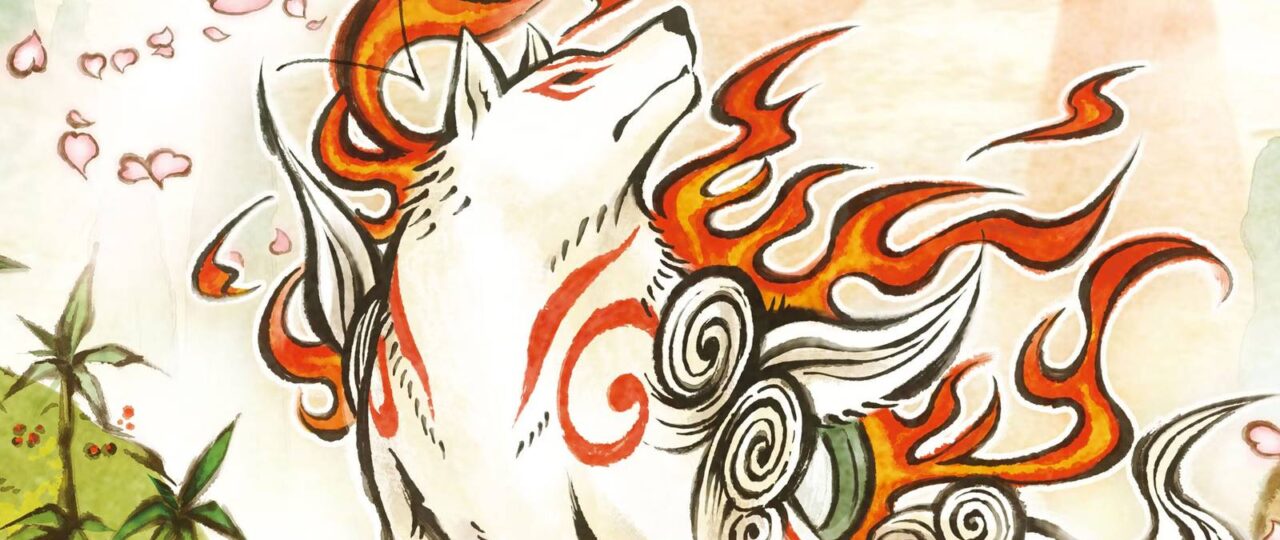
A beautifully woven fantasy adventure that rivals the likes of The Legend of Zelda in terms of the brilliance and mastery of its execution within the genre, Hideki Kamiya‘s masterpiece Okami has always been considered one of the greatest games of its era, even when sales didn’t reflect its quality. It’s a visually enchanting work of art that takes inspiration from classical Japanese mythos for both its storytelling and its visuals, with a one-of-a-kind watercolor aesthetic that still looks absolutely beautiful 20 years later.
Okami never managed to get as big as the Zelda series, even with its more successful ports and remakes for consoles following its original release, but it’s difficult to find anyone who has played the game that won’t consider it a masterpiece of the genre. It’s an exceptional work of art that pushes the medium forward with its excellence, and it is now rightfully being considered a classic of the genre following its frequent rereleases. With a long-awaited sequel just announced 2 years ago, the legacy and stature of Okami only continues to grow with each passing year.
Four of the largest communities on the planet, and four completely
different reasons to belong to one. Here is yours, what it would give you, and the argument you
would be having within a week.
You belong to the fandom that is really about comfort. Hogwarts
works on people because it is a place rather than a plot, and the pull is not the wizard war
so much as the corridors, the food, the weather and the sense that somebody is expecting
you.
- You are drawn to belonging, which is why this fandom sorted itself into houses within
about five minutes and has never stopped. - This is the most social of the four, and the one most likely to know which type every
single person in your life would be. - The books are built to be reread rather than analysed, and rereading is exactly what you
do with things you love. - The new HBO series is bringing the whole thing back one book at a time, which means the
arguments are about to start all over again.
You belong to the deepest fandom on this list, the one where
somebody has always read further than you and is quietly delighted to say so. Middle-earth
rewards patience more than any other world in popular culture.
- You like the sense that the story you are reading is only the visible part of something
enormous, which is precisely how Tolkien built it. - This fandom takes adaptation seriously to a degree that other fandoms find slightly
alarming, and it has good reasons for that. - Your favourite thing about the books is probably the bit that is not action at all,
which is the walking, the songs and the long goodbyes. - Nobody here thinks heroism belongs to the powerful, and the whole story exists to make
that argument.
You belong to the loudest and largest tent of the four, the one
where three generations are all watching the same thing and none of them agree about any of
it. That disagreement is not a flaw in this fandom, it is the main activity.
- You want something you can share with absolutely everybody, from a six year old to a
grandparent, and this is the only one on the list that really does that. - Nobody argues like Star Wars fans argue, and the argument has been running since roughly
1980 with no sign of resolution. - The pull here is sensory before it is narrative, since it is the sound design, the score
and the look of a used and dented galaxy. - You would be first in the queue, in costume, with strong opinions and a genuinely good
time.
You belong to the thinking fandom, the one that turns up for the
argument rather than the explosion. Trek has always been a series of ethical problems in
space, and the people who love it love being asked what they would have done.
- You are an optimist in a way that is currently unfashionable, and this is the only major
franchise still willing to say the future might be better. - The best episodes are the ones where nobody fires anything, which is a sentence that
makes perfect sense to this fandom and to nobody else. - Starfleet Academy brought the franchise back to a classroom in 2026, which is
appropriate, because Trek has always been a bit of a seminar. - You would want the conversation afterwards more than the episode itself, and here you
will always find somebody willing to have it.
2
‘Grim Fandango’ (1998)
<<img src="https://static0.colliderimages.com/wordpress/wp-content/uploads/2022/11/Fandango-1.jpg?q=49&fit=crop&w=825&dpr=2" />
Image via LucasArts</figure>
There’s an argument to be made that nearly this entire list could have been filled by the works of Tim Schafer and his string of absolute masterpieces at Double Fine, as games like Psychonauts, Brutal Legend, and Broken Age were all massively acclaimed despite lackluster sales. However, Schafer’s greatest masterpiece actually predates his time at Double Fine, creating a point-and-click adventure game that proved to be so unsuccessful that it spelled the end of the point-and-click adventure genre as a whole. However, Grim Fandango, amidst the failure that surrounds it, is an absolute work of art with a gripping story, layered characters, and some of the best point-and-click gameplay imaginable.
This hilarious video game noir parody takes place in a retro-futuristic Day of the Dead, following grim reaper Manny Calavera as he attempts to guide a wayward soul through the afterlife. The combination of Aztec afterlife and film noir doesn’t seem like it would work well, but Grim Fandango does wonders with its style, overwhelming in personality and charm in each line of dialogue and each vibrant locale. Its exceptional art design and direction make it one of the most unique and striking video game experiences out there, yet said uniqueness is sadly what failed to have it reach larger audiences on release. While it’s certainly an acclaimed game nowadays, following a modern remaster in the 21st century, it’s still a shame that a game this great managed to underperform so much.
1
‘EarthBound’ (1994)
<<img src="https://static0.colliderimages.com/wordpress/wp-content/uploads/sharedimages/2024/09/exploring-the-world-in-earthbound.jpg?q=49&fit=crop&w=825&dpr=2" />
Image via Nintendo</figure>
Nintendo is an icon of the video game industry, no doubt, but even the all-time greats are going to have a few misfires along the way in terms of marketing and perception of their brand. EarthBound is one of the defining examples of miscommunication leading to a game’s commercial failure in a region, as it had a massive yet outright terrible marketing campaign that focused entirely on the game’s humor and failed to truly explain what it was to gamers of the era. However, Earthbound isn’t just a great game worth playing, but it’s arguably one of the greatest games that Nintendo has ever released, as a genuine work of art that is still one-of-a-kind within the JRPG space.
It has a resounding legacy thanks to its mixture of quirky humor and genuine emotional weight in its storytelling, not being afraid to delve into dark, uncomfortable concepts but always having a sense of charm in its execution. Its rise to popularity in the years since its release came in multiple forms, although primarily through word-of-mouth in the digital age and the frequent appearance of lead character Ness in the Super Smash Bros. series. It continues to be an inspiration to atypical JRPGs to this day, most notably being a massive inspiration to indie masterpieces like Undertale, OMORI, and Lisa: The Painful.
Discover more from NAIRAVOICE.COM.NG
Subscribe to get the latest posts sent to your email.