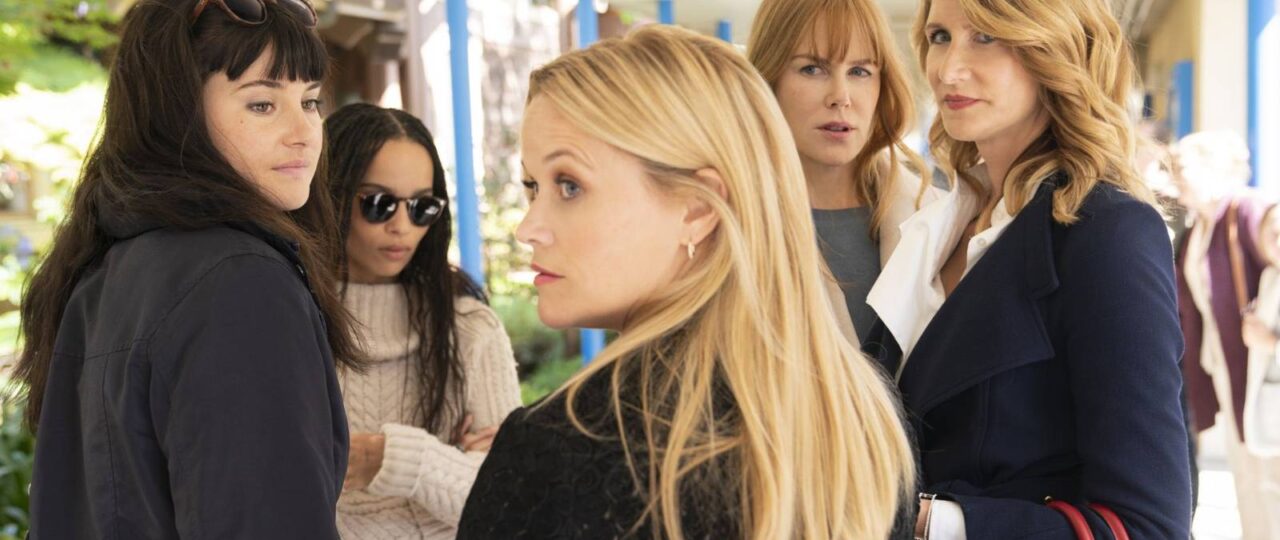
One of the best stories to come out of the last 10 years is Big Little Lies. A masterfully written and performed show, it turns seemingly perfect lives into a tangled mess of secrets, manipulations, and simmering resentment. Beneath the designer wardrobes and beautiful homes, its characters are wrestling with trauma, toxic relationships, and the impossible expectations placed on women.
And with Season 3 officially (and finally) in development, there’s even more reason to revisit the kind of stories that make the HBO drama so compelling. From twisty psychological thrillers to tales of female friendship and revenge, these movies peel back the glossy surface to reveal something much darker—perfect viewing for anyone counting down the days until we return to Monterey.
8
‘Widows’ (2018)
<<img src="https://static0.colliderimages.com/wordpress/wp-content/uploads/2022/05/WID-125-longform-Cropped.jpg?q=49&fit=crop&w=825&dpr=2" />
Image via 20th Century Fox</figure>
Four women quickly find themselves in a dangerous situation after their criminal husbands are killed during a botched robbery. With Veronica (Viola Davis) at the helm, the group must pull off a heist to repay a debt left behind by their husbands, forcing them to navigate Chicago’s criminal underworld while confronting secrets from their own marriages.
Like Big Little Lies, Widows explores the gulf between who people appear to be and who they really are, with the women gradually discovering how little they knew about the men they loved. Davis anchors a terrific ensemble in a tense, unpredictable thriller that examines grief, power, and the lengths one will go to reclaim control of their lives. Plus, Widows also has a lot to say about solidarity, showing how women from very different backgrounds can find common ground when pushed into impossible situations.
7
‘Fried Green Tomatoes’ (1991)
<<img src="https://static0.colliderimages.com/wordpress/wp-content/uploads/2023/07/jessica-tandy-and-kathy-bates-in-fried-green-tomatoes.jpg?q=49&fit=crop&w=825&dpr=2" />
Image via Universal Studios</figure>
Struggling with her stagnant marriage and low self-esteem, middle-aged housewife Evelyn Couch (Kathy Bates) finds new solace in her unlikely friendship with elderly nursing-home resident, Ninny Threadgoode (Jessica Tandy). Immersed in stories about Ninny’s past, Evelyn learns about the lives of Idgie Threadgoode (Mary Stuart Masterson) and Ruth Jamison (Mary-Louise Parker), two women whose close bond is tested by violence, prejudice, and a suspicious death.
If the friendships between the women in Big Little Lies are what keep you coming back, Fried Green Tomatoes offers a warmer, though no less affecting, take on female solidarity. Its story moves between generations, exploring how women find strength in one another when the world around them offers little support. And where there is humor and comfort here, note that there’s also a mystery that gives the film an unexpectedly sharp edge.
6
‘Mystic River’ (2003)
<<img src="https://static0.colliderimages.com/wordpress/wp-content/uploads/2024/12/mystic-river.jpg?q=49&fit=crop&w=825&dpr=2" />
Image via Warner Bros.</figure>
The lives of childhood friends Jimmy (Sean Penn), Dave (Tim Robbins), and Sean (Kevin Bacon) change forever after Dave is abducted and abused as a child. Years later, the three men are drawn back together when Jimmy’s daughter is murdered and Sean, now a detective, investigates the case. But as suspicion falls onto Dave, the men’s shared history threatens to complicate an already devastating mystery.
While Mystic River trades the Monterey coastline for the working-class neighborhoods of Boston, it shares Big Little Lies‘ interest in how buried trauma can shape relationships long after the original wounds were inflicted. Its characters are consumed by grief, suspicion, and the secrets they struggle to keep, with outstanding performances adding emotional weight to every revelation. A truly great (and deeply affecting) crime film.
5
‘Gone Girl’ (2014)
<<img src="https://static0.colliderimages.com/wordpress/wp-content/uploads/2025/12/rosamund-pike-in-gone-girl.jpg?q=49&fit=crop&w=825&dpr=2" />
Image via 20th Century Studios</figure>
On their fifth wedding anniversary, writer Nick Dunne (Ben Affleck) comes home to find his wife, Amy (Rosamund Pike), suddenly missing. But as the investigation intensifies, Nick’s increasingly suspicious behavior makes him the prime suspect, while evidence about the couple’s seemingly perfect marriage begins to unravel—including the disturbing schemes of one Amy Dunne.
Like Big Little Lies, Gone Girl pulls apart the image of domestic perfection to reveal the resentment, manipulation, and cruelty lurking underneath. Pike is particularly chilling as a woman whose public persona conceals something far more calculating, while the film skewers the media’s appetite for turning private tragedies into public spectacles. So, if you love a twisty mystery in which nobody is quite as innocent as they seem, this is essential viewing.
Four criminal masterminds. One of them was always going to be yours.
Here is who comes for you, why they picked you out of everyone available, and what they want from
the encounter.
Your nemesis does not want to beat you. He wants to know you
completely, and he is patient enough to wait for it. The frightening part is how good the
conversation is.
- Lecter is the most dangerous kind of opponent: the one who finds you interesting. He
never raises his voice, because he has never needed to. - You keep a great deal to yourself and you are careful about what you show. That reserve
is exactly the door he would knock on. - The films understood something other thrillers missed. The horror is not the violence.
It is being perfectly understood by the wrong person. - He would be unfailingly polite about all of it. That is the worst part.
Your nemesis is not after money, territory or revenge. He is
after a demonstration, and you are the person he has chosen to prove his point on.
- The Joker only picks opponents who believe in something. Your decency is not a defence
against him. It is the entire reason he showed up. - He has no plan you can predict and nothing you can take away, which removes every tool
you would normally reach for. - His whole argument is that you are one bad day away from being him, and you would spend
the rest of your life proving him wrong. - He would call it a magic trick. You would call it the worst night of your life.
Your nemesis respects you, which sounds flattering until you work
out what it means. He chose you because nobody else was worth his time.
- Moriarty is the original criminal mastermind, the template every later one borrows from:
a mind the equal of the hero’s, pointed the wrong way. - You enjoy being the cleverest person in the room. He is counting on exactly that, and he
has already built the room. - This is the rare nemesis who would be genuinely disappointed if you lost badly. He needs
the game to be worth playing. - It ends the way these things always end. Two people, one problem, and only one way down.
Your nemesis has no personal interest in you whatsoever, and that
is precisely what makes him unsurvivable. You are not a rival. You are a stop on the way.
- Chigurh does not negotiate, gloat or explain. He arrives, he asks one question, and the
answer was decided long before you opened your mouth. - You trust yourself to handle things. He is the one problem in the world that has no
interest in how capable you are. - No Country for Old Men rewrote the screen villain by removing the thing audiences
quietly rely on: the sense that talking might work. - Call it. He will wait.
4
‘Promising Young Woman’ (2020)
<<img src="https://static0.colliderimages.com/wordpress/wp-content/uploads/2022/04/Cassie-Thomas-Promising-Young-Woman.jpg?q=49&fit=crop&w=825&dpr=2" />
Image via Focus Features</figure>
Cassie Thomas (Carey Mulligan) was once an aspiring med student whose life derailed after her best friend was sexually assaulted by a classmate. By day, Cassie now works at a coffee shop and lives at home with her concerned parents. By night, she visits clubs and pretends to be drunk to expose men who take advantage of vulnerable women. But when someone from her past re-enters her life, Cassie’s carefully constructed routine takes a darker turn.
Similar to the show, Promising Young Woman digs into the lasting effects of sexual violence and the uncomfortable ways people protect themselves and those around them. Mulligan gives a terrific performance in this Oscar-winning thriller as a woman whose actions are as unsettling as they are understandable. Meanwhile, writer-director Emerald Fennell refuses to offer easy answers about justice and accountability. So, if you enjoy stories that expose the ugliness hiding behind a mask of respectability, this one will stay with you long after the credits roll.
3
‘9 to 5’ (1980)
<<img src="https://static0.colliderimages.com/wordpress/wp-content/uploads/2022/10/Dolly-Parton-Lily-Tomlin-and-Jane-Fonda-in-9-to-5.jpeg?q=70&fit=crop&w=825&dpr=1" />
Image via 20th Century Studios</figure>
Three office workers—Judy (Jane Fonda), Violet (Lily Tomlin), and Doralee (Dolly Parton)—have had enough of their sexist, egotistical boss, Franklin Hart Jr (Dabney Coleman). And after a series of misunderstandings lead them to believe they’ve killed him, the women find themselves covering up the supposed crime while taking control of the workplace.
While 9 to 5 is considerably lighter than the show, both stories understand the frustration of watching powerful men get away with appalling behavior. Of course, the film’s biggest pleasure comes from seeing its heroines turn their boss’ own workplace against him, using their different strengths to challenge a system designed to keep them down. It’s a sharp, funny reminder that sometimes the best revenge is taking back control.
2
‘Nocturnal Animals’ (2016)
<<img src="https://static0.colliderimages.com/wordpress/wp-content/uploads/2022/10/Nocturnal-Animals.jpg?q=49&fit=crop&w=825&dpr=2" />
Image via Focus Features</figure>
Susan Morrow (Amy Adams), a successful art-gallery owner, receives a manuscript from her ex-husband, Edward (Jake Gyllenhaal), years after their marriage ended. But as Susan reads his unsettling thriller about a family terrorized during a road trip, the fictional violence begins to reflect the unresolved wounds of their relationship.
For fans of Big Little Lies, Nocturnal Animals offers another unsettling look at the damage people inflict on one another behind closed doors. Its layered narrative explores guilt, revenge, and all the ways emotional cruelty can linger long after a relationship has ended. Adams, Gyllenhaal, and Aaron Taylor-Johnson give the film a simmering sense of unease, while Tom Ford‘s striking visuals make even its quietest moments feel loaded with menace.
1
‘Thelma & Louise’ (1991)
<<img src="https://static0.colliderimages.com/wordpress/wp-content/uploads/2023/01/susan-sarandon-and-geena-davis-in-thelma-and-louise-1991.jpg?q=49&fit=crop&w=825&dpr=2" />
Image via MGM</figure>
A weekend getaway turns into a desperate escape after Louise (Susan Sarandon) shoots a man who attempts to assault her friend, Thelma (Geena Davis). But as the pair flee across the American Southwest, they soon find themselves pursued by the police, just as their journey forces them to reconsider the complicated lives they left behind.
The friendship at the heart of Thelma & Louise makes it a natural companion to Big Little Lies, particularly for viewers drawn to stories about women who find strength in one another when the world fails them. Sarandon and Davis have terrific chemistry as they allow the relationship to evolve from playful camaraderie into fierce, unwavering loyalty. Better still, its iconic ending remains one of cinema’s most memorable acts of defiance, cementing the film as a powerful story about female agency and solidarity.
Discover more from NAIRAVOICE.COM.NG
Subscribe to get the latest posts sent to your email.