Readers have a long habit of claiming the book is better than its adaptation, but few genres have suffered from as many terrible on-screen translations as science fiction. In part, that’s due to the futuristic nature of many sci-fi stories, which has historically been tricky to capture realistically on film. But even more modern translations, including Taika Waititi’s recent take on Klara and the Sun, have failed spectacularly to capture what makes the original stories great.
Few things are more nerve-wracking for readers than seeing their favorite book optioned for screen. While a good adaptation can bring more readers to a beloved story, some on-screen iterations can have the opposite effect. As movies often gain broader recognition, a bad adaptation can give even the best books a bad reputation in the popular imagination. There’s a reason 2007’s The Golden Compass adaptation didn’t bring many new readers into the fold, after all.
Bad on-screen renditions aside, however, readers shouldn’t miss out on some of the best sci-fi stories just because their movies flopped. As Klara and the Sun gains all the wrong kinds of press, those who loved the book no doubt know better than ever that even a wonderful sci-fi novel can be made into a terrible movie. And it’s far from the only example.
The Time Machine (1895)
by H.G. Wells
As one of science fiction’s earliest and most prolific writers, it’s no surprise that H.G. Wells has had a few spectacularly underwhelming adaptations of his work over the years. The 2002 film adaptation strays so far from its source material that it’s barely recognizable as the same story. With new characters injected to up the action-thriller elements, this movie loses much of what makes the novella great.
The Time Machine itself, though, is well worth a read. As its title suggests, the book helped popularize the notion of time travel, while also delivering sharp social commentary that remains relevant to this day. And at just around 100 pages, it’s a quick read, making it an easy entry point for newer sci-fi readers or those of us trying to pad out our reading challenge numbers for the year.
You can purchase The Time Machine 10 Actually Great Sci-Fi Books You
The War of the Worlds (1898)
by H.G. Wells
<<img src="https://static0.srcdn.com/wordpress/wp-content/uploads/2026/10/the-war-of-the-worlds-book-cover.jpg?q=49&fit=crop&w=749&dpr=2" />
</figure>
With Tom Cruise at the helm, it’s not terribly surprising that the 2005 The War of the Worlds adaptation falls victim to the action movie over substance trap. Despite straying from its source material, that movie still performed reasonably well commercially and with critics. The same can’t be said for the 2025 screenlife adaptation starring Ice Cube and Eva Longoria, which earned itself a shockingly low Rotten Tomatoes score and a Razzie Award.
Despite mixed attempts to bring the story to screen, The War of the Worlds is a must-read for science-fiction fans. It’s one of the earliest alien invasion stories, introducing many concepts that are still popular in alien depictions today. Alongside its heavy influence on modern sci-fi, The War of the Worlds remains compelling today for its depiction of ordinary people faced with a crushing, overwhelming threat to society.
You can purchase The War of the Worlds here.
A Wrinkle in Time (1962)
by Madeleine L’Engle
<<img src="https://static0.srcdn.com/wordpress/wp-content/uploads/2026/09/a_wrinkle_in_time_-1962-_front_jacket-_first_edition.jpg?q=49&fit=crop&w=750&dpr=2" />
</figure>
Disney’s 2018 rendition of A Wrinkle in Time was kind of a disaster. With a reliance on casting big names for its celestial guides, along with bright, colorful CGI renderings, the movie failed to deliver where it counts: storytelling and character development. As such, it’s a confusing, disjointed experience that fails to capture what readers love about L’Engle’s classic.
The source material, on the other hand, has held up surprisingly well despite its age. A modern YA classic, A Wrinkle in Time offers a flawed, realistic protagonist in Meg, along with impressively complex sci-fi and fantasy elements. And on the page, its celestial guides are actually quite compelling, interesting characters alongside Meg and her younger brother.
You can purchase A Wrinkle in Time 10 Actually Great Sci-Fi Books You.
Dune (1965)
by Frank Herbert
<<img src="https://static0.srcdn.com/wordpress/wp-content/uploads/2026/07/dune-modern-paperback-book-cover.jpg?q=49&fit=crop&w=749&dpr=2" />
</figure>
This book has, thankfully, gotten a modern redemption in the form of the more recent trilogy of film adaptations. But for many years prior to the 2021 release of Dune: Part One, this beloved sci-fi book series boasted one of the worst on-screen translations in history. Its 1984 adaptation failed miserably at the box office and received pretty much universally bad reviews from critics.
Despite its early adaptation failure, Dune has continued to captivate readers, which is likely why it got a second shot at the big screen. Herbert’s novel is a sci-fi masterpiece, with impressive world-building and a cautionary tale that turns the “chosen one” trope on its head. Many of its themes still resonate today, ensuring the book remains relevant and popular despite the terrible film adaptation that could’ve ruined its reputation for good.
The Dark Tower (1982-2004)
by Stephen King
Most of the issue with the Dark Tower movie adaptation is that it doesn’t pull from one of the individual books in the Dark Tower series. Instead, it tries to adapt Stephen King’s entire 7-book arc into a single movie spanning just 95 minutes. As such, much of the nuance and world-building collapsed in a movie that was too short and too sanitized to do its source material justice.
By contrast, the series that begins with The Gunslinger is well worth your time. It’s a genre-bending blend of high fantasy, sci-fi, and of course, horror. This is Stephen King, after all. The series follows the world’s last gunslinger on a quest to reach the mythical Dark Tower, bringing readers into a compelling story that spans space and time. The first book is a bit on the slow side, but the series picks up significantly in book two, so it’s worth the slog to delve into this modern sci-fi classic.
You can purchase The Dark Tower 10 Actually Great Sci-Fi Books You.
Ender’s Game (1985)
by Orson Scott Card
<<img src="https://static0.srcdn.com/wordpress/wp-content/uploads/2026/08/ender-s-game-book-cover.jpg?q=49&fit=crop&w=749&dpr=2" />
</figure>
Like many bad sci-fi book-to-screen attempts, Ender’s Game falls short largely because of its attempt to compress and simplify the original. Orson Scott Card’s novel is 300+ pages long, full of essential world-building and carefully rendered character development and relationships. While that’s relatively short by sci-fi epic standards, it somehow still didn’t quite fit into a two-hour movie without losing the character development and themes that make the book great.
By contrast, the original source material offers excellent story pacing, with fast-paced action that nonetheless leaves space for Ender’s development and struggles with morality. The book tackles big ethical questions, earning it a variety of awards alongside enduring interest from readers.
You can purchase Ender’s Game 10 Actually Great Sci-Fi Books You.
The Giver (1993)
by Lois Lowry
This speculative YA novel is one of the earliest dystopian novels to captivate young readers. Many of us first encountered it in school, where it’s often featured on reading lists to this day. But despite its award-winning status, the book’s 2014 film adaptation failed to stick the landing in a big way. As such, those who first encountered the story through this cheap, action-heavy rendition may not ever pick up the book.
The Giver is a classic dystopian novel that paved the way for modern hits like The Hunger Games. It is a masterful coming-of-age narrative that renders questions of identity, sameness, and the breadth of human emotion comprehensible for younger readers. Though it is quite short and suffers some simplified world-building as a result, The Giver is a great introduction to speculative fiction that manages to ask some big questions in a compact format.
Mortal Engines (2001)
by Philip Reeve
When it released in 2018, Mortal Engines was almost impressively bad. Despite its massive budget, the movie delivered underdeveloped characters and failed to make Reeve’s moving cities believable. With so many characters and subplots forced into the film, the movie didn’t manage to make an emotional connection with the main characters or story.
Sometimes, a concept that requires suspension of disbelief just works better in print. Mortal Engines delivers a unique setup with its moving cities, leaning into steampunk and post-apocalyptic vibes to craft a fast-paced sci-fi story that feels fresh and original. Though it is YA, it doesn’t shy away from difficult choices and moral complexity, earning it a place among some of the best YA sci-fi stories out there.
You can purchase Mortal Engines 10 Actually Great Sci-Fi Books You.
World War Z (2006)
by Max Brooks
There have been plenty of compelling zombie movies and TV series. Alas, most viewers agree that the 2013 adaptation of World War Z isn’t one of them. While it did actually perform pretty well commercially, fans of the book wound up hating it. A lot. The movie strays significantly from its source material, turning the story into an action-thriller riddled with plot holes.
By contrast, World War Z takes itself quite seriously. Though it is a zombie apocalypse story at heart, the book uses that horror/thriller premise to craft a compelling commentary on economics and politics. Though zombies might be the spark for the end of the world, its humanity that fails itself in World War Z. And the world-building here holds up where the movie’s does not, thanks in part to its audio history format, which is largely lost in translation to screen.
Klara and the Sun (2021)
by Kazuo Ishiguro
<<img src="https://static0.srcdn.com/wordpress/wp-content/uploads/2026/09/klara-and-the-sun-book-cover.jpg?q=49&fit=crop&w=750&dpr=2" />
</figure>
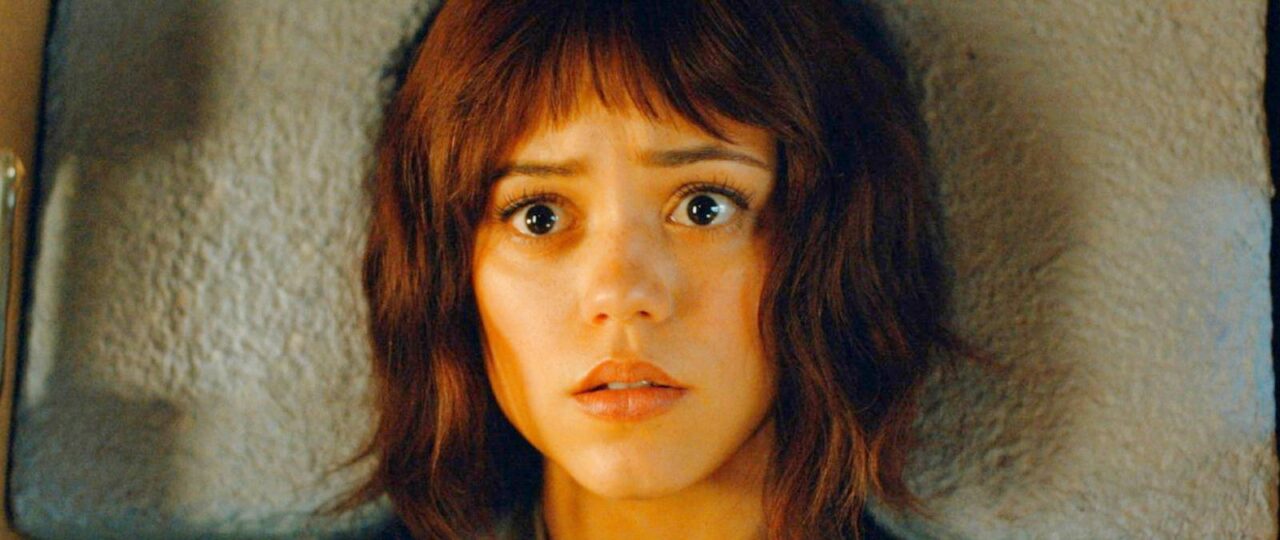
Though you’d think modern CGI technology would help cut down on massive sci-fi failures, realistic futuristic tech is far from the only way a sci-fi adaptation can stumble. Ishiguro’s Klara and the Sun released in 2026 to an underwhelming reception, to say the least. Directed by Taika Waititi and starring Jenna Ortega as the titular Klara, it had the bones of something promising. Unfortunately, the movie leans too far into the robot’s quirkiness as a play for comedy, losing the depth and reflection of the novel.
Though the movie may go down as one of the year’s biggest flops, readers shouldn’t skip the book. Ishiguro is a masterful writer, and Klara and the Sun showcases his reflective, philosophical side at its best. On the page, Klara is a compelling narrator, whose observations of the world offer emotional depth that sneaks up on you. Like with Never Let Me Go, the world-building is subtle, yet effective, and this is one that’s well worth reading, even if its film adaptation is best forgotten.
You can purchase Klara and the Sun 10 Actually Great Sci-Fi Books You.
Discover more from NAIRAVOICE.COM.NG
Subscribe to get the latest posts sent to your email.