The education system must reward skills too
A certificate earned several years ago cannot permanently guarantee that a person possesses all the skills required for a changing workplace.
Continuous learning is therefore becoming just as important as formal education.
Parents also need to reconsider some of the messages they give children about success. It is reasonable to encourage a child to take education seriously, but academic achievement should not be reduced to grades and certificates.
Parents can ask different questions. Instead of only asking, “What did you score?” they can also ask, “What did you learn?”, “What problem did you solve?” or “How can you use what you learnt?”
These questions help children understand that education has a purpose beyond passing examinations.
Students themselves must also take responsibility. They should recognise that the absence of a job immediately after graduation does not necessarily mean their education has failed, but it can be a signal to examine the skills they have developed.
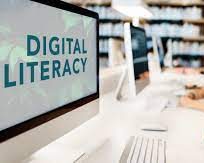
A graduate may need to learn digital tools, improve communication, develop a technical skill, understand how businesses operate or gain practical experience. The willingness to learn beyond the classroom can make a significant difference.
This is especially important because the world of work is not static.
The World Bank’s 2026 human capital report found that Nigeria’s learning and workforce skill deficits remain significant. It reported that Nigerian student test scores in 2025 were still one point below their 2010 level and placed Nigeria’s education pillar score below the median for lower-middle-income countries.
These figures should encourage a broader conversation about what educational success means.
Nigeria cannot afford to produce young people who spend years acquiring qualifications without acquiring the ability to apply knowledge.
At the same time, the argument for problem solvers should never become an argument against certificates. Formal qualifications remain essential in many professions and can provide evidence of specialised knowledge. The real goal is to connect the two.
Nigeria needs certificate holders who are also problem solvers. A medical doctor needs both professional certification and the ability to make sound decisions when confronted with complicated cases. An engineer needs both technical training and practical problem-solving skills. A teacher needs both educational knowledge and the ability to respond to the different needs of learners.
The certificate opens the door, but competence determines what happens after the door is opened.
This distinction should also influence how employers recruit. Organisations should look beyond grades and qualifications and examine what applicants can actually do. Interviews, practical assessments, portfolios, case studies and demonstrations can provide a clearer picture of a candidate’s abilities.
A young graphic designer, for example, may have little formal work experience but a strong portfolio demonstrating creativity and technical ability. A software developer may demonstrate competence through projects they have built. A graduate applying for a communications role may demonstrate their ability through writing samples.
Such evidence can complement formal qualifications.
Ultimately, Nigeria’s development depends on its people being able to transform knowledge into results. The country has no shortage of intelligent young people, graduates and certificate holders. The greater challenge is ensuring that education develops the capacity to use intelligence productively.
The future belongs to people who can learn, adapt, question, create and solve.
Conclusion
Nigeria does not need to choose between certificates and skills. It needs an education system where certificates are supported by genuine competence.
Degrees and professional qualifications will continue to matter, particularly in careers where formal training and licensing are essential. However, certificates alone cannot repair broken systems, create businesses, improve public services or solve the everyday problems facing communities.
Those tasks require people who can think beyond the examination hall.
Nigeria needs graduates who can look at a problem without immediately asking who will solve it for them. It needs young people who can investigate causes, test ideas, learn from failure and develop practical solutions. It needs professionals who can continue learning when their original training is no longer enough.
The country’s education system should therefore move towards producing people who are not merely qualified on paper but useful in practice.
The real measure of education should not only be what certificate a person has collected, but what they can do with what they have learnt.
For Nigeria to become more productive, innovative and competitive, the next generation must be equipped not just to search for answers, but to become the people capable of finding them.
Discover more from NAIRAVOICE.COM.NG
Subscribe to get the latest posts sent to your email.