
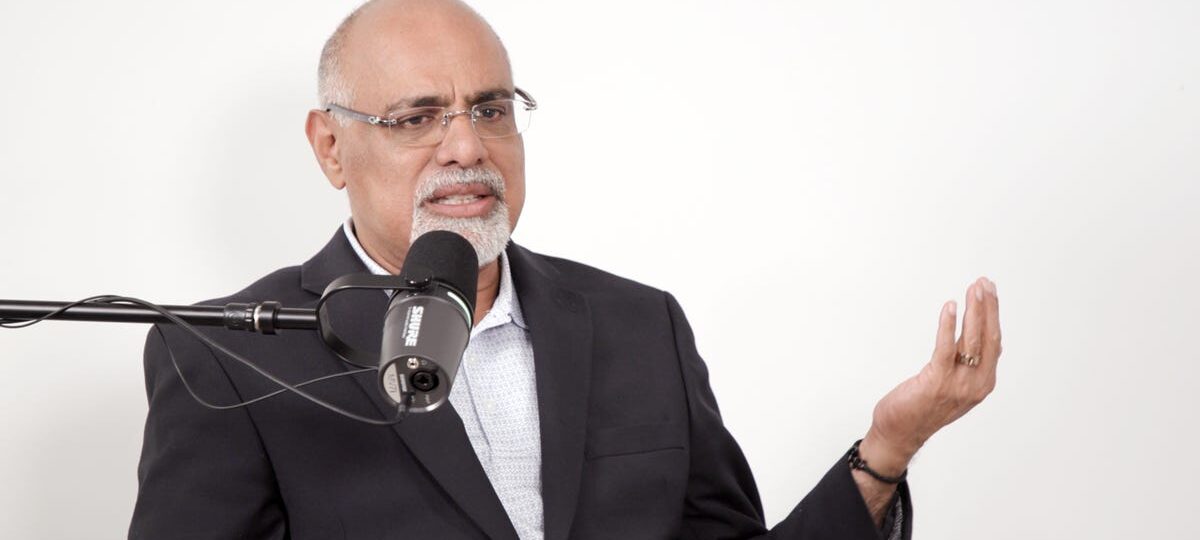
Raja Rajamannar, Mastercard’s former chief marketing and communications officer, spent more than a decade overseeing marketing for one of the world’s most recognizable brands.
During his tenure as CMCO from 2013 to the start of 2026, he made a decision that many marketers would consider unthinkable: He permanently cut Mastercard’s advertising budget by 70% as part of a progressive shift during Mastercard’s marketing transformation.
The move didn’t hurt the business, Rajamannar said.
Instead, he redirected much of that spending into experiences, sponsorships, and consumer engagement programs that he says delivered stronger returns.
In an interview on Business Insider’s upcoming “CMO Insider” podcast, Rajamannar says that traditional advertising no longer works the way marketers think it does.
Consumers are overwhelmed, distracted, and increasingly determined to avoid ads altogether.
As artificial intelligence floods the market with more content than ever, he argues that marketers will need to rely less on volume and more on creativity and human connection.
Rajamannar’s views come first from his own experience as a consumer. “As a consumer today, do I like advertisements?
I hate them,” he said. “They are an interruption to my experience.” He pointed to streaming services that offer consumers the option to pay more to avoid advertising.
To him, that reflects a broader reality: Many consumers would rather spend money than watch ads.
At the same time, consumers are inundated with marketing messages.
Rajamannar said the average person sees between 3,000 and 10,000 ads each day, creating information overload that causes people to tune them out.
He also cited shrinking attention spans.
Consumers’ attention spans have fallen, he says, leaving marketers with mere seconds to capture interest.
Taken together, he said, those trends raise a fundamental question about whether advertising remains the most effective way to communicate with consumers. “The need to communicate with the consumers doesn’t go away,” he said. “But the way we are communicating is not great.” Rather than continue investing heavily in traditional advertising, Mastercard shifted resources into other areas.
Under Rajamannar’s leadership, the company invested in platforms, including Priceless.com.
The strategy focused on creating experiences that consumers would remember and share. “We have taken permanently 70% of our advertising dollars out,” Rajamannar said. “Nothing happened to the business that is negative.” He said Mastercard’s standing improved during that period.
According to Rajamannar, the brand moved from No.
12 in BrandZ’s ranking of valuable brands and became one of the fastest-growing brands in the ranking.
The company also continued to compete against rivals with larger marketing budgets, he said.
For Rajamannar, the experience reinforced his belief that many companies are spending more on advertising than necessary. “Advertising dollars and marketing dollars today, they are huge,” he said. “In many cases, if we go through the details by taking them down, nothing negative is going to happen because, anyway, you are not investing them in the most effective and efficient fashion.” Rajamannar believes artificial intelligence is accelerating the need for change.
AI tools can generate large volumes of marketing content in minutes, lowering barriers for companies of all sizes.
But he argued that widespread access to the same tools creates a new problem. “What happens is the small companies are able to effectively now compete against the large companies,” he said. “Before you realize it becomes a sea of sameness.” That environment makes creativity and consumer understanding more valuable, not less, he argues.
Rajamannar says that marketers must become more fluent in technology and business results while continuing to understand human behavior.
He adds that marketers often lose credibility when they focus on awareness, reach, or other marketing metrics instead of business outcomes.
As AI spreads across the industry, he sees both risk and opportunity. “The biggest opportunity for marketers” is differentiating themselves through innovation and creativity, he said. “It is a human-to-human connection that sells your products and brands.”
Discover more from NAIRAVOICE.COM.NG
Subscribe to get the latest posts sent to your email.