
(For more exclusive content like this, you can subscribe here to On3)
As lawmakers return to Capitol Hill next week, a relocation is in order.
More than 25 Republican House of Representatives incumbents who lost to their Democratic counterparts will be evicted from their offices. The ousted lawmakers and their staffs will be asked to move from their spacious, multi-room, carpeted digs to makeshift cubicles within a windowless wing of the Rayburn office building — a sort of biennial occurrence after such election results.
“They f***** hate that shit,” quipped one House staff member. “In fact, that’s why some of them don’t even come back.”
On Tuesday night, the Democrats reclaimed the U.S. Senate by at least four seats and the U.S. House by a projected 80 seats. They flipped at least 35 seats in the House and another seven in the Senate. Though some of it was expected, few saw such a sweeping victory unfolding across the country.
The Democrats were 3-point favorites. They won by three touchdowns.
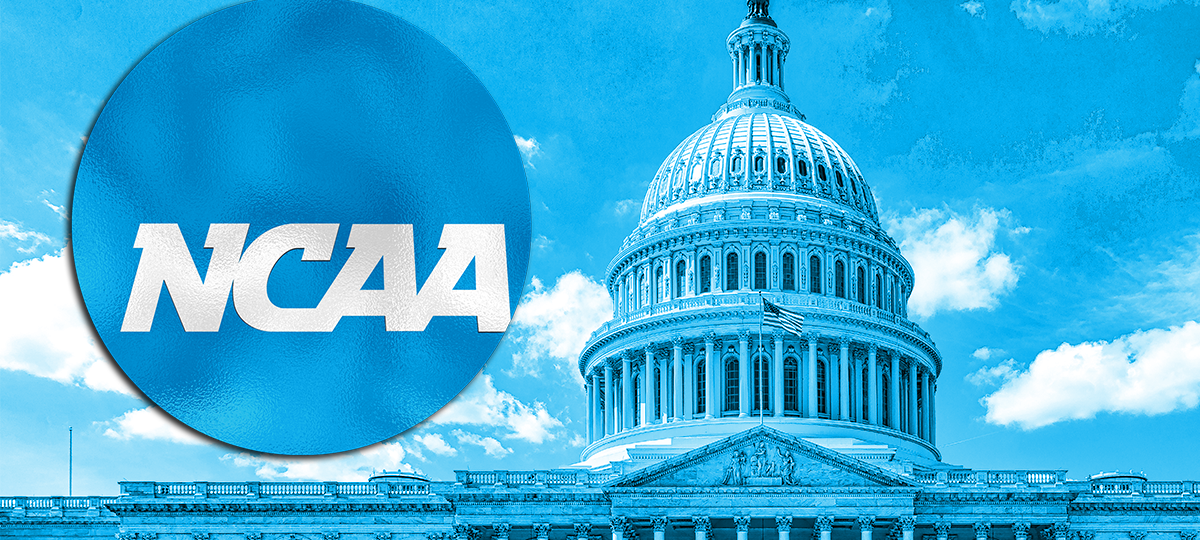
In fact, results were so lopsided that the college sports administrative community scrambled to get a question answered: What does this all mean for the Protect College Sports?
“The answer is nobody really knows. This was always a bipartisan bill,” said Randy Levine, the New York Yankees president and a man whom President Donald Trump charged with overseeing the White House’s college sports congressional effort.
It’s true. We don’t know for certain what the two-chamber majority flip means for the legislation’s prospects.
But, after more than a dozen calls with lawmakers, political lobbyists and congressional aides, we can paint a picture. And if you’re a proponent of the Protect College Sports Act, that picture isn’t very rosy — most notably because of the eviction exercise we referenced above.
Will enough House Republicans return next week?
“The challenge is that a lot of these guys who got booted may not show up to work,” said Cody Campbell, who, with Levine, heads the congressional effort for the White House.
Many in and around Capitol Hill — Republicans or Democrats — agree.
“The House does very little after elections like this,” said one.
“Sometimes they just won’t show back up for work,” said another.
The attendance issue may be the biggest obstacle in passing anything at all in the lame-duck session — let alone a down-the-agenda item such as college sports, despite its overwhelming Senate passage (77 votes). The margin in the House is razor thin. Republicans hold a four-seat majority in a Congress that lasts two more months. Attendance is important.
But there are plenty of other issues with any passage.
Even if enough Republicans return to work, the Protect College Sports Act has divided the caucus enough that some Democrats may be necessary to garner the majority needed for passage.
Why would any House Democrats vote for a bill while knowing that they control both chambers once the new Congress arrives in January?
They wouldn’t, says one senior Democrat aide in the House.
“If you want a quote, here it is,” the aide said, “the NIL bill is dead on f****** arrival.”
The Democrats now have the leverage. They can “cut a better deal,” the aide contends — perhaps a more left-leaning bill that might muster the 60-vote filibuster threshold in the Senate. Democrats could have as many as 56 Senate seats. It may not be so difficult convincing four Republicans to vote for a new, Democrat-authored version of the bill.
Sen. Maria Cantwell, not Sen. Ted Cruz, is expected to take over as the powerful chair of the Senate Commerce Committee — the group with legislative power over the college sports bill.
It’s her show now.
“They’ve only got to get four Republicans. It’s just a different environment,” the Democrat aide says. “The Republicans need us now and they want the bill more than we do.”
The House is backed up a bit, too. There are other more important items to tackle, including an agreement to, you know, keep the government operating, as well as authorization of military spending and leadership elections. Oh, and the planned impeachment proceeding of Secretary of Defense Pete Hegseth.
Time is running out to get to it all. The House only has 20 scheduled working days left before a new Congress takes over. After that, the Democrats take control and the legislation process starts over.
“There’s just no incentive to pass the bill unless Trump can get (House Speaker) Mike Johnson to put it on the floor and have the entire Republican caucus show up as they are getting evicted,” said another House staff member.
“It’s extremely hard to be optimistic,” said a Republican staffer. “How many Democrats are going to say, ‘We should eat this Republican win!'”
There is plenty of doubt about the bill passing from the college executive community. The Big Ten’s decision to create conference-wide cap policies last week, while an effort to prepare for the legislation’s passage, may serve as a contingency when/if the bill fails. The SEC and other leagues are exploring similar conference governance frameworks.
But optimism remains from various corners of the Hill.
Perhaps Democrats might want college sports legislation off their proverbial plates before a new Congress arrives, one person suggested. That could pave the way for an attempt to overturn Trump’s policies around healthcare and tariffs.
“(The election results) make it clear that something has to be done in this lame duck session, so people will finally feel the urgency to stop screwing around and playing games,” Campbell says.
But we haven’t even gotten to perhaps the highest hurdle that’s lingered even well before Tuesday’s results: several ACC schools, most notably two in Florida (Miami and FSU), are urging their state lawmakers to vote against the legislation because of a concept in the bill that makes it more difficult for them to move to the SEC or Big Ten.
More than 20 House members signed a letter sent to House leadership about the issue. House leaders have been clear that amendments are coming to the bill. And that means it has to return to the Senate, where it will almost certainly run out of time.
The moral of this story: If you’re a betting man or woman, in this case, don’t bet on the (lame duck) House.
Discover more from NAIRAVOICE.COM.NG
Subscribe to get the latest posts sent to your email.