

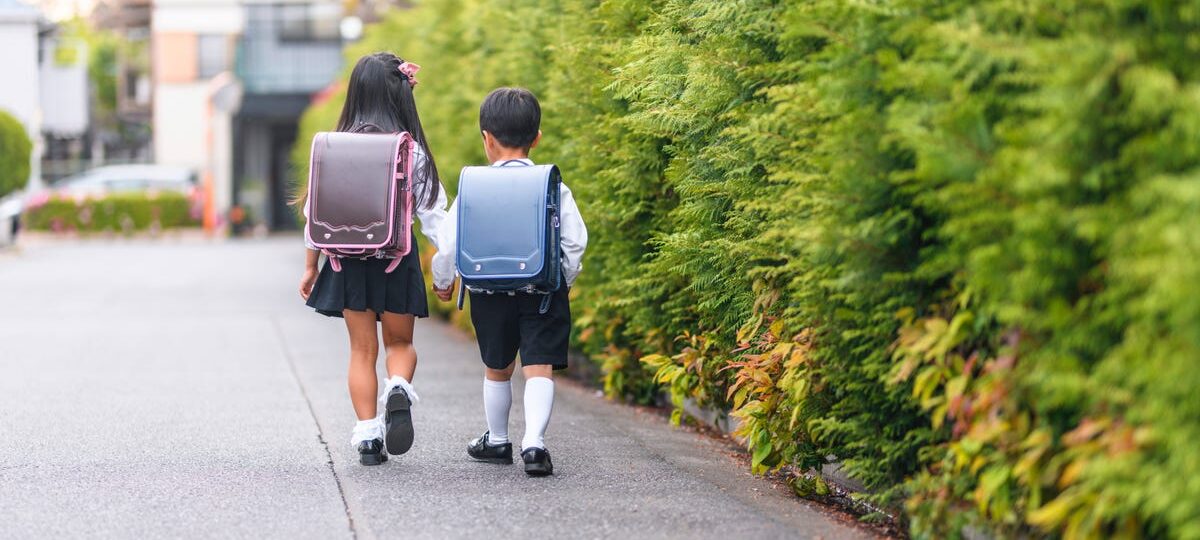

- I enrolled my daughter in a Japanese public school, and it changed how I think about raising an independent child.
- In Japan, kids walk to school, serve lunch, and clean classrooms daily.
- I’ve learned independence is about contributing to the community.
These lunchtime duties also provided my daughter with a vital social bridge. It was a shortcut to belonging that enabled her to transcend the language barrier and become an active member of her classroom.
Her growing independence has carried into our home life, turning constant reminders into something she now does automatically. By learning to be an active participant in her classroom, she has instinctively brought that same accountability home.
These lessons in responsibility don’t end with lunch, either. Once the plates are cleared and their outdoor play time finishes, another daily routine begins, involving manual labor that would make most Western school boards recoil.
My child is expected to clean her school every day
Yes, the rumors are true. Japanese school children really do clean their own schools.
From desks and windows to floors and even bathrooms, students from first to sixth grade participate in a daily 20-minute cleaning period called souji. There are no janitorial staff, and I realized just how seriously this is taken when my daughter’s school stationery list included two cleaning cloths. It was the first time I had ever seen cleaning supplies listed alongside pencils and notebooks.
I didn’t expect my daughter to enjoy cleaning at school. She still resists tidying her room at home, but she embraced the school routine quickly and even went through a phase of loving the classroom vacuum.
This daily practice teaches the children how to work within a group, an integral part of Japanese society. When children are responsible for their own spaces, they treat them with more care and are far more likely to take an active role in maintaining them.
Living in Japan forced me to rethink what it means to raise an independent child
I always thought independence meant “I can think for myself” and is largely internal. In Japan, it’s more external, defined by the ability to manage oneself responsibly within the collective, even when no one is watching.
Living here has forced me to recalibrate my understanding of raising independent children. I’ve always been a protective parent, but when my daughter asked why she couldn’t walk to the local shop alone like her classmates, the mirror was held up to me. I was raising an independent thinker, but I was also stifling her autonomy and confidence.
Balancing my instinct to protect with her need to grow is still a work in progress. But she’s learning something I’m still catching up to: independence isn’t about doing everything alone, it’s about showing up for your community with confidence in your ability to contribute.
Watching her navigate this new world has shown me that Japan’s schools don’t treat “growing up” as a distant goal, but as something children are already trusted to do.
Discover more from NAIRAVOICE.COM.NG
Subscribe to get the latest posts sent to your email.