
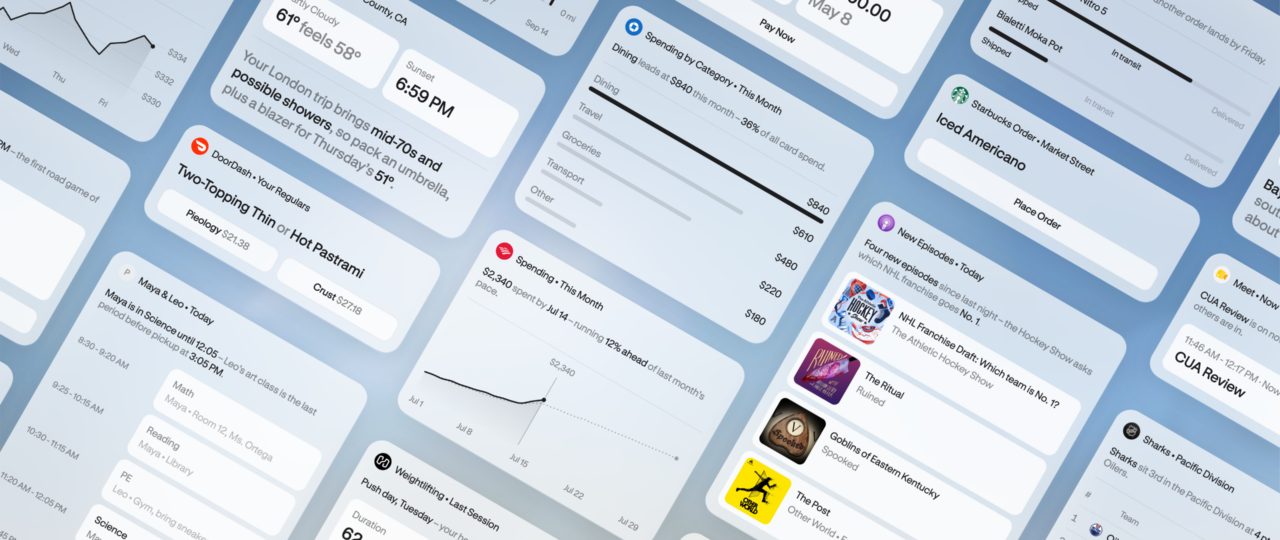
Asked about that kind of profiling, Chowdhury says that “we are doing work to understand you, and be helpful for what you need, but it’s really like task related—it’s really about how Hark can help take something off your plate and be useful.”
What sets Hark Pro apart from its competitors, Chowdhury says, is its effort to fully subsitute for your computer, but also his belief that it just works better.
“Please compare it to the others, be critical,” he says. “It might not be faster than Muse, but it will give you a better result, and it will work end-to-end instead of asking you to take over at a point.”
One open question is what kind of model best suits the AI personal assistant. Hark’s is explicitly trained for computer use, which makes it faster and cheaper at those tasks, but it’s not clear how much it is trading away the broader knowledge and capability of a frontier LLM.
This software is only half the promise of Hark; Chowdhury made his name designing devices at Apple and Hark promises to release an AI-native device to support its software in 2027.
They’re still cagey about the form it will take, with Chowdhury bemoaning the “creep factor” of wearable cameras. “I will give you this: the first product that we’re building is a product that’s never ever existed before,” he says. We’ll have to wait and see if this is mere hype and Hark puts out some retread tech instead of a truly novel product.
“It’s so hilarious to me that you have AI now, you have a chatbot, and you type stuff in with a keyboard,” Chowdhury says. “Fifty years later and the future of computing is still a terminal.”
Discover more from NAIRAVOICE.COM.NG
Subscribe to get the latest posts sent to your email.