

FIFA Article 27, explained: The little-known rule used to suspend Folarin Balogun’s World Cup ban originally appeared on The Sporting News.
Add The Sporting News as a Preferred Source by clicking here.
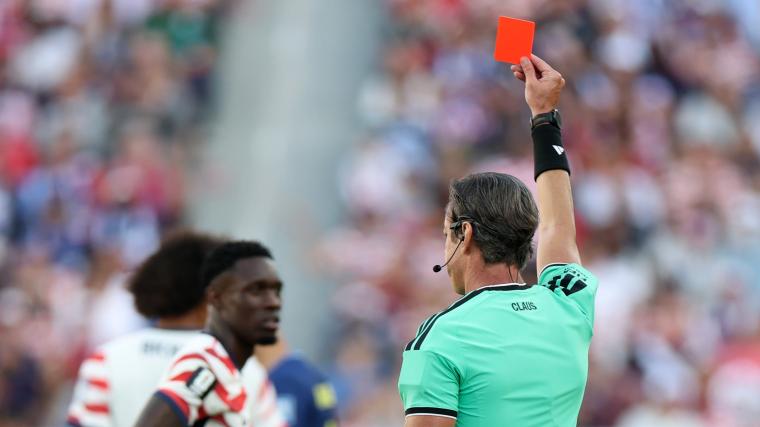
Folarin Balogun’s availability for the United States’ FIFA World Cup Round of 16 clash against Belgium became one of the tournament’s biggest talking points after the striker was cleared to play despite being sent off in the previous round.
FIFA’s decision was made under Article 27 of its Disciplinary Code — a little-known provision that allows sanctions to be suspended under certain circumstances and has rarely attracted widespread attention during a World Cup.
What is FIFA Article 27? How do World Cup red-card appeals work? And who decides whether a suspension should stand? The Sporting News explains.
2026 WORLD CUP HQ:Latest World Cup news | Full World Cup schedule | Buy World Cup tickets
What is Article 27 of FIFA’s disciplinary code?
Within the FIFA Disciplinary Code, Article 27 gives FIFA’s judicial bodies the authority to suspend the implementation of a disciplinary sanction, either in full or in part. Rather than cancelling a sanction, the provision allows its implementation to be suspended under specific conditions.
Any sanction suspended under Article 27 is subject to a probationary period of between one and four years. If the individual commits another infringement of a similar nature during that period, the suspended sanction is automatically reinstated alongside any new disciplinary action.
That was the mechanism FIFA used in Balogun’s case, allowing the United States forward to remain eligible for selection while placing his automatic one-match suspension under a one-year probationary period.
What are the World Cup rules about appealing against red cards?
The rules governing disciplinary matters at the tournament are set out in the 2026 FIFA World Cup Regulations. Article 9.6 states that teams cannot protest or appeal against a referee’s decision on incidents connected with play unless otherwise provided for in the FIFA Disciplinary Code.
A player shown a straight red card, or sent off after receiving a second yellow card, is automatically suspended for their team’s next World Cup match. FIFA’s disciplinary bodies are also allowed to impose additional sanctions depending on the nature of the offence.
In practice, that means teams cannot appeal a red card simply because they disagree with the referee’s decision, unlike, say, in the Premier League. Any exception must arise through the procedures set out in the FIFA Disciplinary Code rather than a challenge to the on-field decision itself.
However, the disciplinary committee decided to act in the Balogun situation and suspend his one-game ban by following the procedures laid out in Article 27. The wording of that article is quite vague and does not state that the committee has to explain its reasoning, which is why explanations for the Balogun decision have not been limited.
Who is on the FIFA disciplinary committee and how does it work?
Disciplinary cases at the FIFA World Cup are decided by the FIFA Disciplinary Committee, an independent judicial body responsible for enforcing the FIFA Disciplinary Code and ruling on breaches of FIFA regulations.
The committee consists of a chairperson, deputy chairpersons and several members appointed by the FIFA Congress. When considering a case, its members are required to act independently and impartially.
When a disciplinary matter is referred to the committee, it reviews the available evidence, applies the relevant FIFA regulations and determines whether disciplinary measures should be imposed, amended or, where permitted under the Disciplinary Code, suspended.
In tournament cases such as Balogun’s, the committee is responsible for interpreting the regulations and issuing the final disciplinary decision.
Mohammad Al Kamali, a lawyer from the United Arab Emirates who previously sat on the country’s Federal National Council, is the disciplinary committee chairman.
MORE WORLD CUP NEWS:
Discover more from NAIRAVOICE.COM.NG
Subscribe to get the latest posts sent to your email.