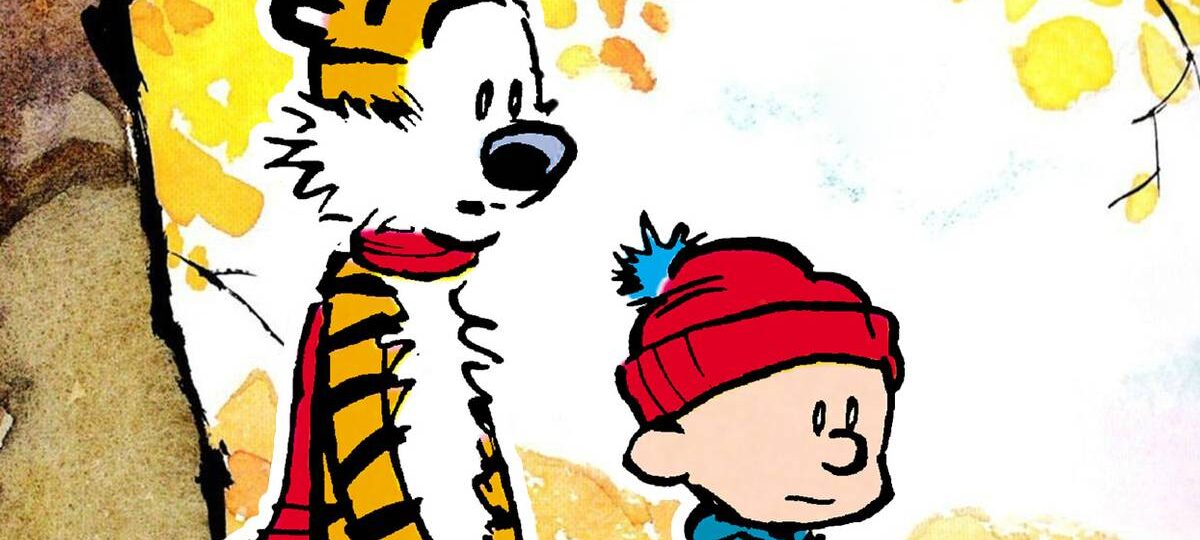
Calvin and Hobbes is a comic that’s full of surprises. At first glance, it just seems like a story about a six-year-old and his talking stuffed tiger. Over time, Bill Watterson introduced all manner of elements, from mind-bending science fiction to stories that blurred the line between fantasy and reality. This approach helped Calvin and Hobbes stand out from other comic strip staples like Peanuts and Family Circus, but it also let Watterson deliver an emotional gut punch when fans least expected it. One such case came in a series of Calvin and Hobbes strips that were released in 1987.
These nine strips find Calvin and his parents encountering a wounded baby raccoon and doing their best to nurse it back to health. Despite their efforts, the raccoon passes away, forcing Calvin to come to terms with his grief. This story stands out because, instead of the hyperactive antics Calvin and Hobbes usually get up to or the genre-bending madness of later strips, it digs deep into human emotions. Though Calvin and Hobbes was only two years into its run, the raccoon story proved it was a comic to watch.
‘Calvin and Hobbes’ Raccoon Story Doesn’t Shy Away From Deeper Themes
 Image via Bill Watterson
- Image via Bill Watterson
- Image via Bill Watterson
- Image via Bill Watterson
- Image via Bill Watterson
 Image via Bill Watterson
 Image via Bill Watterson
 Image via Bill Watterson
 Image via Bill Watterson
 Image via Bill Watterson
- Image via Bill Watterson
- Image via Bill Watterson
- Image via Bill Watterson
- Image via Bill Watterson
- Image via Bill Watterson
 Image via Bill Watterson
 Image via Bill Watterson
 Image via Bill Watterson
 Image via Bill Watterson
 Image via Bill Watterson
From the start of Calvin and Hobbes‘ “raccoon story,” Bill Watterson approaches death and grief with the gravity they deserve. Calvin throws everything he has into helping the raccoon; he runs to get his mom, he talks to Hobbes about his fate, and when his father tells him the raccoon dies, he bursts into tears. Two moments stand out: when Calvin’s father says that it was the raccoon’s time to go, Calvin responds, “I know. I’m crying because out there he’s gone. But he’s not gone inside me.” This quote speaks volumes, showing that Calvin is wise beyond his years while also presenting death in a way younger readers can understand.
The second moment comes toward the end of the story, where Calvin and Hobbes discuss the nature of death. Calvin says that his mother told him death is a part of the life cycle, and while we can’t understand it, “we just have to do the best we can with the knowledge we have.” Again, this is a surprisingly mature observation from a six-year-old about a heavy topic, but that’s why it stands out. Watterson later revealed in the Calvin and Hobbes Tenth Anniversary Book that the “raccoon story” is based on something that happened to him in real life, and it helped him bring more depth to the strip.
“My wife found a dead kitten outside one morning and this story almost wrote itself. Most of my earlier strips had simple gags, so this was a big departure in tone. Death, of course, is not a common subject for a “kid” strip. This story not only revealed new facets of Calvin’s personality but it also suggested to me that the strip was broad enough to handle a wide range of subjects, ideas, and emotions. The strip’s world suddenly opened up.”
“My wife found a dead kitten outside one morning and this story almost wrote itself. Most of my earlier strips had simple gags, so this was a big departure in tone. Death, of course, is not a common subject for a “kid” strip. This story not only revealed new facets of Calvin’s personality but it also suggested to me that the strip was broad enough to handle a wide range of subjects, ideas, and emotions. The strip’s world suddenly opened up.”
Four worlds and four completely different ideas of what a good life
looks like. This is where you belong, what it would ask of you, and what you would get back in
return.
You belong somewhere old enough that the mountains have names and
somebody can still tell you who gave them. Middle-earth is for people who think the right
thing is worth doing even when it will not be finished in their lifetime.
- This is the only world on the list where doing good is understood as a very long defeat,
fought anyway, by people who will never see how it ends. - You are drawn to grandeur, to white cities and deep forges and the sense that almost
everything you touch is older than your entire family line. - The Rings of Power is set in the last good age before it all goes wrong, which gives
every quiet scene in it a slightly unbearable weight. - You would take the hard road, and you would take it on foot.
You want the sea, a crew, and absolutely nobody telling you where
you are allowed to go. The Grand Line is the world for people whose main ambition in life is
finding out what is over there.
- One Piece has run for decades on one very simple engine, which is a group of people who
each want something impossible and have decided to go and get it together. - You collect people. Your ideal crew is a set of misfits who were each written off
somewhere else before you turned up and offered them a better idea. - The world is enormous and deliberately ridiculous, and the emotional gut punches land
harder because of that rather than in spite of it. - You would set sail knowing the map runs out, which is more or less the entire point of
it.
You would rather be feared and useful than liked and useless. The
Continent is a world where the monsters are the straightforward part of the job and the
people are where it all gets complicated.
- Witchers get paid to do what nobody else will and resented for existing at all, which is
a trade most people would refuse and you would probably accept. - You have no real illusions about which side is the good one, largely because on the
Continent that question tends to have a disappointing answer. - The best of these stories are not about the fighting. They are about somebody with a
rigid code being repeatedly cornered into caring about people. - You would take the coin, finish the job properly, and be out of town before the story
got told wrong.
You want the myths to be real and loose in the actual world, and
you want to find out at about thirteen that you were never anywhere near as ordinary as
everybody kept telling you.
- Percy Jackson takes the oldest stories we have and drops them into car parks and diners,
which makes the gods considerably funnier and a great deal worse. - You would be the kid every school gave up on, who turns out to have been built for
something nobody thought to test for. - The series is genuinely about friendship rather than destiny, and it says so out loud
every time a prophecy tries to get in the way. - Camp Half-Blood is the real fantasy here: a place where the thing that made you
difficult everywhere else is the thing that makes you belong.
By Keeping ‘Calvin and Hobbes’ Unpredictable, Bill Watterson Made It Everlasting
<<img src="https://static0.colliderimages.com/wordpress/wp-content/uploads/2026/09/calvin-and-hobbes-newspaper-1.avif?q=49&fit=crop&w=825&dpr=2" />
Image via Bill Watterson/ Andrews McMeel Publishing</figure>
The surprising depth of the “raccoon story” showed that, unlike other comic strips, Calvin and Hobbes wasn’t about one singular thing. One week, Calvin and Hobbes could muse on the intricacies of life, and the next they could run from mutant snowmen or travel through time. These shifts add plenty of depth to the series and make it worth re-reading, especially longer story arcs like the “raccoon story.” In his own way, Bill Watterson used this unpredictability to showcase how life itself is constantly shifting. Sometimes there’s triumph and sometimes there’s tragedy, but things are always in flux.
40 years have passed since Calvin and Hobbes made its debut, but it still remains one of the best comic strips ever made because it was willing to tackle the “tough” topics like death and grief. The “raccoon story” is perfect proof of that, as it remains just as stirring as when it was first published.
Discover more from NAIRAVOICE.COM.NG
Subscribe to get the latest posts sent to your email.