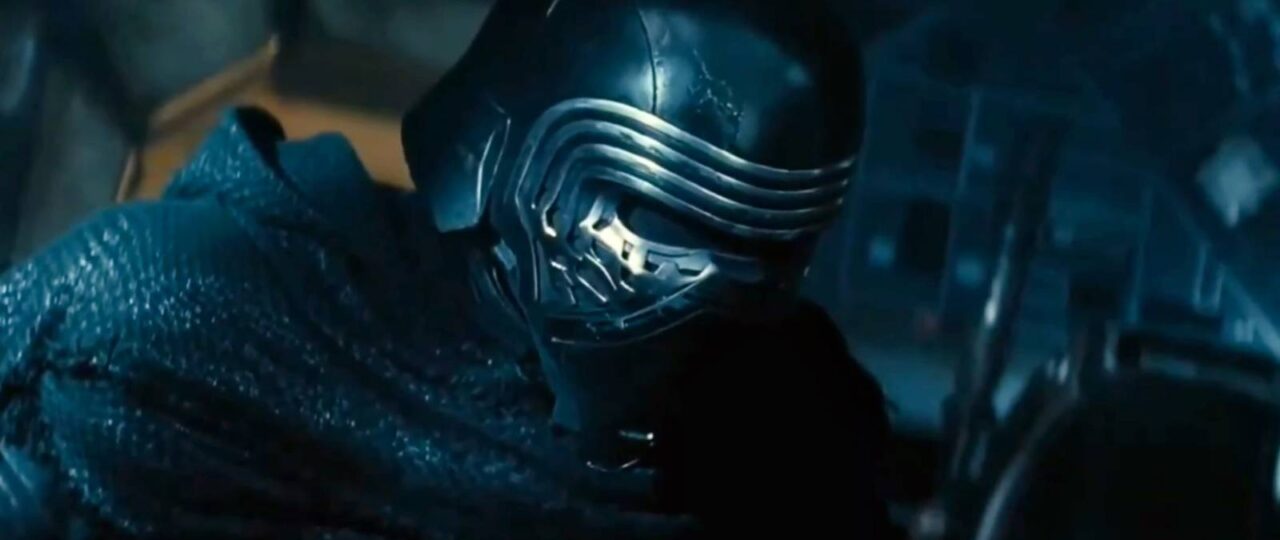
The Star Wars franchise made its grand return to movie theaters this year, after seven years away. The Mandalorian and Grogu, directed and co-written by Jon Favreau, marked the first time that audiences have journeyed to a galaxy far, far away since the conclusion of the sequel trilogy with The Rise of Skywalker in 2019.
The Mandalorian and Grogu was a very different project from the sequel trilogy films, however. The Jon Favreau-directed film had a much smaller scale, telling an isolated story in the lives of its title characters. Therefore, The Mandalorian and Grogu was less interested in telling a story with galaxy-wide stakes, and instead honed in on just Din Djarin and Grogu.
As such, The Mandalorian and Grogu also featured a much smaller budget than previous Star Wars movies (especially those released since Disney took over the franchise). Not only was the film’s scale smaller, but the production budget reflected this as well; additionally, The Mandalorian and Grogu’s budget was still dwarfed by the likes of The Force Awakens and Solo: A Star Wars Story, even when taking into account the funds given to advertising for the former title.
The Force Awakens and Solo: A Star Wars Story are two of the highest Star Wars projects budget wise, as both managed to cost more than any of George Lucas’ Star Wars films. Solo is also a special case in that it ballooned over budget after the firing of original directors Phil Lord and Chris Miller. Interestingly, Lucas also had issues with overspending on the very first Star Wars film, A New Hope. Overall, the Star Wars franchise has some of the most expensive movies ever made (along with a few smaller-costing projects like The Mandalorian and Grogu).
Star Wars: The Clone Wars — $8.5 Million
<<img src="https://static0.srcdn.com/wordpress/wp-content/uploads/2023/09/anakin-and-ahsoka-in-the-clone-wars-movie.jpg?q=70&fit=crop&w=825&dpr=1" />
</figure>
The smallest Star Wars film budget wise is Star Wars: The Clone Wars, the animated film from 2008, which was directed by Dave Filoni. The Clone Wars movie was the launching pad for the subsequent animated series of the same name, and effectively served as a backdoor pilot for the show.
Despite its small production cost, The Clone Wars movie remains a monumental story in the Star Wars galaxy, however. The film featured the first appearance of Ahsoka Tano, who was created for the movie and whose journey was continued in The Clone Wars TV series. Ahsoka’s first appearance was divisive among audiences, but the character has since gone to become a fan favorite.
Interestingly, a big reason for The Clone Wars movie’s relatively small budget is to do with the original plans for the project’s release. George Lucas initially planned on airing The Clone Wars movie as an extended pilot on Cartoon Network, but decided only months before that he wanted to shift gears and release the film in theaters instead.
Star Wars: Episode IV – A New Hope — $11 Million
<<img src="https://static0.srcdn.com/wordpress/wp-content/uploads/2026/09/star-wars-episode-iv-a-new-hope_676639.jpg?q=49&fit=crop&w=825&dpr=2" />
MovieStillsDB</figure>
The very first Star Wars movie ever made, Star Wars: Episode IV — A New Hope (or just Star Wars, as it was originally titled upon release) came out in theaters in May 1977 and changed the landscape of cinema forever. George Lucas’ fantasy space opera became an immediate hit upon release, with audiences blown away by the film’s innovative special effects, the realistic world building, and captivating characters like Luke Skywalker, Han Solo, and Darth Vader.
The success of A New Hope came as a surprise to many in the industry, however. At the time, George Lucas was a relatively inexperienced filmmaker, and someone who was still in the process of proving himself capable of directing big projects. Additionally, problems during filming, and in post-production, led some to lose confidence in the film altogether.
Lucas himself, for example, was reportedly not satisfied with the original cut, and it was only when his then wife, Marcia Lucas, created a new edit of the project that he became more confident. 20th Century Fox were also concerned by the project, not only because of early cuts of the film, but its budget as well; A New Hope famously went over budget during filming, proving to be a far more costly investment for the studio than they initially realized. Therefore, even as A New Hope is, comparatively speaking, one of the cheapest Star Wars movies ever made, it was still considered to have a significant budget in 1977.
Star Wars: Episode V — The Empire Strikes Back — $30.5 Million
<<img src="https://static0.srcdn.com/wordpress/wp-content/uploads/2026/06/david-prowse-as-darth-vader-talking-to-jerermy-bulloch-as-boba-fett-in-the-empire-strikes-back.jpg?q=49&fit=crop&w=825&dpr=2" />
Image by Moviestillsdb.com</figure>
A New Hope went on to gross over $700 million at the worldwide box office (including a number of high profile and very successful re-releases). As a result, the studio granted George Lucas’ sequel, titled The Empire Strikes Back, a much higher budget. The Empire Strikes Back had a budget of around $30.5 million, almost triple that of A New Hope.
The budget went into making The Empire Strikes Back a film with even greater stakes and scale. The film featured plenty of new planets, including Hoth, Bespin, and more. Not only were the planets new, but the environments were very different from those in the first film, too. The snow setting of the film’s opening act proved a marked departure from the warmer atmosphere that dominated much of A New Hope, for example.
Star Wars: Episode VI – Return of the Jedi — $32.5 Million
<<img src="https://static0.srcdn.com/wordpress/wp-content/uploads/2026/07/luke-and-anakin-return-of-the-jedi.jpg?q=49&fit=crop&w=825&dpr=2" />
Credit: MovieStillsDB</figure>
Rounding out the original trilogy of Star Wars films was Return of the Jedi, which released in May 1983. Even as it was marketed as the final film of the trilogy, fans knew that the franchise was far from over; Mark Hamill, for example, fielded many questions during the press tour for The Empire Strikes Back and Return of the Jedi about George Lucas’ open desire to make prequel films in the future.
Still, even as he had clear plans to make prequels, Lucas wanted to ensure that Return of the Jedi felt monumental and like a true finale. The Death Star II was a prime example of this — a space weapon that was bigger than its predecessor, and posed an even greater threat to the Rebel Alliance.
Ultimately, Return of the Jedi reportedly had a slightly larger budget than The Empire Strikes Back. However, even with these increased funds, Lucas was unable to complete his original vision. For example, Lucas originally wanted the final act to take place on the home world of the Wookiees, but transitioned to Endor and the Ewoks due to budget and logistical concerns.
Star Wars: Episode I – The Phantom Menace — $113.8 Million
<<img src="https://static0.srcdn.com/wordpress/wp-content/uploads/2026/05/ray-park-as-darth-maul-wielding-his-lightsaber-in-star-wars-episode-i-the-phantom-menace.jpg?q=49&fit=crop&w=825&dpr=2" />
(Image via MovieStillsDB)</figure>
In the 1980s, Lucas stated that he wanted to wait until technology progressed more before he started work on his planned prequel films. Roughly ten years after the release of Return of the Jedi, Lucas did just that, beginning to prep for what would become Star Wars: Episode I – The Phantom Menace, the first of a trilogy of prequels.
Excitement for The Phantom Menace was sky-high, and it was arguably one of the most anticipated movie releases of all time. George Lucas planned for this, however, as Episode I was given a considerably higher budget than any movie of the original trilogy, even when accounting for inflation.
The budget for The Phantom Menace clocked in at around $115 million (rounding up), which made it one of the most expensive films ever made at the time. Most of these funds went to the film’s computer-generated effects, or CGI. The Phantom Menace featured the first major motion capture character in Jar Jar Binks, and many of the film’s villains, such as the droids, were also brought to life with VFX.
Star Wars: Episode II – Attack of the Clones — $115 Million
<<img src="https://static0.srcdn.com/wordpress/wp-content/uploads/2026/09/the-battle-of-geonosis-in-attack-of-the-clones.jpg?q=49&fit=crop&w=825&dpr=2" />
</figure>
Ultimately, despite the rapturous reception the film received from fans initially, The Phantom Menace received lackluster reviews from critics and audiences. The film was criticized for its messy plot, its boyish portrayal of Anakin Skywalker, and the decision to include Jar Jar Binks. Yet, despite this intense backlash, the Star Wars franchise remained incredibly popular, and the next installment of the trilogy, Attack of the Clones, was still highly anticipated.
As a result, Attack of the Clones had a similarly large budget as The Phantom Menace (the two had roughly the same production budget, in fact). Once again, most of these funds went to the CGI in Attack of the Clones, which was used with even greater frequency in the film.
Star Wars: Episode III – Revenge of the Sith – $115 Million
<<img src="https://static0.srcdn.com/wordpress/wp-content/uploads/2026/09/anakin-skywalker-in-revenge-of-the-sith.jpg?q=49&fit=crop&w=825&dpr=2" />
Credit: MovieStillsDB</figure>
Attack of the Clones received a similar reception, if not even worse, than that of The Phantom Menace. Yet, once again, the Star Wars franchise remained steadfast, so the budget for the final film in the prequel trilogy, Revenge of the Sith, was roughly the same as the other two entries. And, once again, the budget went predominantly towards the CGI in Revenge of the Sith, which was used with even greater frequency than Attack of the Clones.
Revenge of the Sith had numerous planets created entirely with CGI, for example. The Order 66 sequence alone featured a number of unique locations, all of which were computer generated; this included planets like Felucia, unique parts of Coruscant, and more.
Star Wars: The Mandalorian And Grogu — $165 Million
<<img src="https://static0.srcdn.com/wordpress/wp-content/uploads/2026/09/pedro-pascal-as-din-djarin-in-the-mandalorian-and-grogu.jpg?q=49&fit=crop&w=825&dpr=2" />
</figure>
After Revenge of the Sith, the next most expensive movie in the Star Wars franchise is the aforementioned The Mandalorian and Grogu. The Jon Favreau-directed film was granted a budget by Disney that was much more akin to the prequel trilogy, for example, than most of the other projects commissioned by the studio.
One can certainly tell that The Mandalorian and Grogu has a smaller budget than the sequel trilogy, for example, but that’s not to say that it looks cheap by any means. The 2026 film features a smaller number of locations, most of which were filmed using the Volume technology. Additionally, the film was shorter in length than any of the sequels, clocking in at just over two hours ten minutes.
Star Wars: Starfighter — $226.5 Million
<<img src="https://static0.srcdn.com/wordpress/wp-content/uploads/2026/02/star-wars-starfighter-ryan-gosling-movie-1.png?q=49&fit=crop&w=825&dpr=2" />
</figure>
After The Mandalorian and Grogu, the next Star Wars film to release in theaters is Star Wars: Starfighter, which is due in May 2027, just in time for the franchise’s fiftieth anniversary. Details are currently scarce on Starfighter, as is the case with most Star Wars projects before release, with Disney typically tight-lipped in order to avoid key story points.
Yet, there are some things that have been shared. Starfighter is set five years after The Rise of Skywalker, and features a new cast of characters. Ryan Gosling stars in the leading role, playing Cade Ondor, a former X-Wing pilot who is tasked with escorting his nephew across the galaxy. The story is said to be standalone in nature, but theories are rampant that the film will connect with the upcoming Star Wars: Episode X.
Despite the standalone nature of the story, Starfighter still has a sizable budget, clocking in at roughly $225 million. However, Starfighter crucially received tax credits from the U.K. Government, which takes its budget down to about $175 million; the film also received similar credits from the Italian government, but the exact number of these remains unclear.
Rogue One: A Star Wars Story – $280 Million
<<img src="https://static0.srcdn.com/wordpress/wp-content/uploads/2026/06/jyn-erso-and-k2-so-in-rogue-one-a-star-wars-story.jpg?q=49&fit=crop&w=825&dpr=2" />
Credit: Walt Disney Studios Motion Pictures via MovieStillsDB</figure>
The very first standalone Star Wars movie to ever release was Rogue One in 2016. Much was riding on this film at the time, as Disney sought to secure the Star Wars franchise’s future beyond the Skywalker Saga. The studio wanted to prove that the franchise they had, at the time, recently purchased for over $4 billion from George Lucas was capable of being successful beyond the Skywalker family. Rogue One was the first effort in this cause, and, despite many production issues, the film proved worth it in the end, making over $1 billion on a $280 million budget.
Discover more from NAIRAVOICE.COM.NG
Subscribe to get the latest posts sent to your email.