

The pillows were going to be an issue.
As the staff of the Embassy Suites in Chattanooga, Tennessee, prepared to host hundreds of Spaniards this summer – including the 26 players hoping to produce Spain’s first World Cup title since 2010 – there were plenty of details to attend to, from the temperature of the steak to the ergonomics of the chairs.
But first: those pillows. The team wanted fresh ones, never been used, and firm. So 500 new pillows it was.
“They are as particular as can be because it’s the comfort of these players,” said Lori Jenkins, regional sales and marketing director for Vision Hospitality Group, which operates the Embassy Suites. “Obviously, they want them to feel at home, and that’s where we come in.”
Across North America, 48 national soccer teams arrived in recent weeks to settle into temporary digs while they try to survive the opening stage of this summer’s World Cup. FIFA, soccer’s global governing body, assembled a list of 62 approved locations across the three host countries, and each team went through its own decision-making process to select the ideal spot.
At hotels ranging from the Four Seasons in Boston, where star-studded France is based, to Algeria’s digs at the DoubleTree in Lawrence, Kansas, each stay represents the culmination of months of painstaking work by the cities, federations and on-the-ground partners to ensure each team has exactly what it needs.
The Spanish soccer federation considered several sites two hours away in Atlanta, where luxury hotels abound and Atlanta United’s MLS training facilities were an option. But Spain, the sportsbooks’ favorites to win the 48-team competition, chose an Embassy Suites in the Appalachian foothills. Chattanooga, which started putting together its pitch to FIFA three years ago, offered a combination of privacy, quality facilities and proximity to Atlanta that ultimately won Spain over.
“It feels like we’re in the middle of nowhere, in a good way,” said Chris Angel, the head of school at Baylor, the college prep boarding school where the team will practice. “I think that appealed to the team in a major way.”
The Spanish soccer federation bought out the 184-room downtown Embassy Suites hotel and has taken over a large portion of Baylor’s athletic complex, including converting the indoor tennis facilities into an off-field training center and a media center to accommodate the 125-plus media personnel who cover Spain. Under World Cup regulations, FIFA is required to pay for each delegation’s flights and lodging; extra details, like the work on the tennis facilities, are at the Spanish federation’s expense.
“In Chattanooga, they are our big fish, right?” Jenkins said. “Not just a fish in the pond. They are our pond.”
Pulling it all together took months of work at the hotel and school. Besides the pillows, all of the artwork and signage around the property, down to the decorative knickknacks in each room, were swapped out for Spain’s own branding, trophies and books.
The retail space on the hotel’s ground floor was undergoing renovations. Federation staff envisioned not the Mediterranean restaurant the hotel had planned, but a fitness center for its star-studded team, which includes Barcelona phenom Lamine Yamal. The would-be restaurant was transformed into a gym, with a poured rubber floor and all the equipment fit for a favorite.
“It even has that gym smell,” Jenkins said. “And then when they leave at the end of the month, we rip all that back out and go back to making it a marketplace.”
When it comes to feeding the team, the attention to detail, Jenkins said, is “as specific as you can imagine.” Fruits and vegetables for the smoothie station are to be cut into two-centimeter cubes. Four hundred pounds of jamón ibérico arrived from Spain. Olive oil is allowed, but no seed oils, and certainly nothing fried. The team’s preferred recipes for bread were sent to the hotel’s culinary staff in advance, and Spain’s team chef and maître d’ both made regular visits to keep track of the progress.
Four espresso machines were delivered to the hotel, and Jenkins said the team’s maître d’ knows how each player takes his coffee and what temperature he likes his steak.
The linens, dishes and cutlery were all closely inspected and went through several rounds of changes before Spain settled on the perfect items. But even with all the pre-planning, when the federation’s staff arrived a few days ahead of the team, they decided the tables in the dining room weren’t going to work.
“They said the players won’t be comfortable,” Jenkins said. “So we ordered new tables.”
Just over three miles away at Baylor, the work to ensure that the grass fields met the team’s specifications for training began last fall. Baylor has two natural grass fields and one artificial turf field in its soccer complex. The school’s own teams used the turf field more frequently than normal to protect the grass for Spain.
“They have exact height requirements for the blades of grass,” Angel said. The team also requires a certain density of the grass, measured by the number of blades per square inch – Angel likened it to the thread count of sheets – to ensure that the field performs as expected.
Baylor’s drainage system was up to snuff, which was part of the attraction for Spain. The athletic facilities on campus are also accessible by a separate gate from the front entrance, allowing the team to have maximal seclusion as they prepare for their games. The back area is surrounded by a six-foot privacy fence and has controlled access points; only those approved will be able to get anywhere near the team’s workspace.
The indoor tennis facilities became a strength, conditioning and recovery space, as well as a media center. Baylor installed air conditioning in both spaces.
“Cranes are coming in, delivering these massive HVAC systems to put in, and it’s temporary – temporary air-conditioning systems for both of those facilities,” Angel said. “And then all that goes away … and so it’s like, ‘Wow, they’ve thought about everything.'”
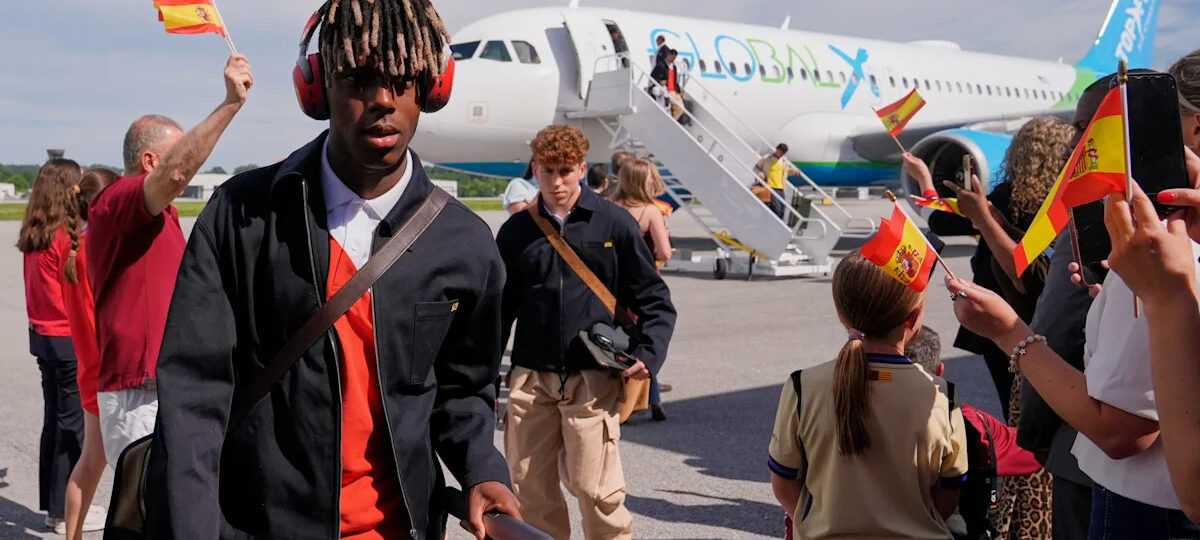
Spain will travel to and from its base a few times during the group stage, including for its opening game Monday in Atlanta, and every time the team returns, the hotel plans to have a surprise waiting. There’s plenty to choose from: Third-graders at a local school decorated cards and drawings; Chattanooga Whiskey donated bottles; the logistics company across the street will hang a banner from its balcony.
The downtown aquarium and children’s museum have offered to set up special access so Spain’s superstars can have quiet moments with their families.
It all adds up to unprecedented level of care for 26 men who kick a ball for a living. Still, it felt familiar enough to Jenkins: “True Southern hospitality,” she called it.
Related Content
Discover more from NAIRAVOICE.COM.NG
Subscribe to get the latest posts sent to your email.