Miniseries are shows that tell a complete, self-contained story over the course of a predetermined, limited number of episodes without any intention of returning for future seasons. The format peaked as an American broadcasting phenomenon around the 1970s, though its roots trace further back to British television. In fact, as far as science fiction in particular goes, the first sci-fi miniseries in history is widely agreed to have been 1953’s The Quatermass Experiment.
We have come a long way since then. Over the years, there have been eight science fiction miniseries in particular which have arguably been downright perfect, fully worthy of a 10/10. From cult classic sequels like Farscape: The Peacekeeper Wars to fully original masterpieces like Scavengers Reign, these shows prove beyond a shadow of a doubt that genre television gets along remarkably well with the miniseries format.
8
‘Farscape: The Peacekeeper Wars’ (2004)
<<img src="https://static0.colliderimages.com/wordpress/wp-content/uploads/2026/10/farscape-peacekeeper-wars-1.jpeg?q=49&fit=crop&w=825&dpr=2" />
Image via SYFY</figure>
Created by Rockne S. O’Bannon and co-produced by The Jim Henson Company and Hallmark Entertainment, the Australian sci-fi adventure series Farscape is one of the biggest cult classics that the genre has delivered for the small screen in years. The series’ cancellation was untimely and tragically ended on a cliffhanger; so, producer Brian Henson secured the rights to the franchise in order to make the three-hour miniseries Farscape: The Peacekeeper Wars and wrap things up in a satisfying way.
The result ended up being not only satisfying, but downright flawless. Indeed, Peacekeeper Wars is one of those sci-fi miniseries that are perfect from start to finish, a tremendous achievement of something that may have initially seemed nearly impossible: to take one of the most chaotic and emotionally intense sci-fi universes in television history and bring it to a close in only three hours. Years later, it’s still one of the most beloved miniseries sci-fi has ever produced.
7
‘Years and Years’ (2019)
<<img src="https://static0.colliderimages.com/wordpress/wp-content/uploads/2025/10/tcdyean_ho004.jpg?q=70&fit=crop&w=825&dpr=1" />
Image via HBO</figure>
Russell T Davies has long been one of the biggest titans in the entire British television landscape, and he further enshrined himself on that throne in 2019 when he created and wrote Years and Years, a dystopian drama unlike any other. Whereas futuristic sci-fi tends to find its stories several decades or centuries from now, this co-production between the BBC and HBO refuses to give audiences that comfort. Instead, its depiction of a terrifyingly transhumanist world begins in a chillingly near future.
It’s one of the most near-perfect BBC sci-fi miniseries that deserve to be rediscovered, with a star-studded cast and six episodes that are all perfectly written, perfectly directed, and perfectly paced. It’s dystopian sci-fi at its most horrifyingly prescient, with a level of political and thematic complexity that very rarely does the genre see to this degree. What kind of world are we leaving behind, and how complicit are we in its collapse? It’s the key question that fuels Years and Years‘ story, and it doesn’t let viewers off the hook with any kind of ease.
6
‘Watchmen’ (2019)
<<img src="https://static0.colliderimages.com/wordpress/wp-content/uploads/2026/02/watchmen-regina-king-angela-abar-sister-night.jpg?q=49&fit=crop&w=825&dpr=2" />
Image via HBO</figure>
There is no overstating the cultural importance of Alan Moore and Dave Gibbons‘ 1986 DC Comics series Watchmen, truly one of the most foundational and influential pieces of work in the history of comics. Damon Lindelof‘s HBO miniseries of the same title is technically a sequel to Moore and Gibbons’ comics, pitched by Lindelof himself as a sort of “remix” of the source material. The result? Praised by many as one of the best sci-fi miniseries of all time.
Like most great sci-fi shows worth their salt, Watchmen is not without its fair share of detractors; but, for the most part, it tends to be hailed as one of the best sci-fi shows of the 2010s, miniseries or otherwise. It takes a postmodern graphic novel that many used to believe was impossible to adapt and transforms it into an intellectually brilliant, emotionally devastating recontextualization of superhero genre tropes. Masterfully written and full of excellent performances, it’s a hard-hitting critique of modern systemic racism, vigilantism, and the cycle of violence.
5
‘Adventure Time: Distant Lands’ (2020–2021)
<<img src="https://static0.colliderimages.com/wordpress/wp-content/uploads/2025/08/adventure-time-distant-lands-2020-1.jpeg?q=70&fit=crop&w=825&dpr=1" />
Image via HBO Max</figure>
There’s a very strong argument to be made in favor of Adventure Time being not only the biggest cult classic that Cartoon Network has ever broadcast, but perhaps even one of the biggest cult classic shows in the history of animation. After the series came to a close, the newly launched HBO Max wanted to help build its subscriber base and test audience interests, so they got Adventure Time writers to take partially developed ideas for unproduced episodes and come up with Adventure Time: Distant Lands.
One of the best sci-fi anthology shows of the last decade, Distant Lands takes the cosmic canvas that had already been laid out by its predecessor over the course of several delightful years, and spends its four special episodes expanding on the lore, world, and characters in all sorts of enthralling ways. Mind-bending, creative, emotional, mature, and full of unforgettable moments, it’s a must-see for anyone who ever saw even just a few episodes of Adventure Time and enjoyed them.
- The Wachowskis’ 1999 film won four Academy Awards, including Visual Effects and Film
Editing. - Bullet time was shot with a rig of roughly 120 still cameras firing in sequence around the
actors. - Keanu Reeves trained in martial arts for about four months before a frame was shot,
recovering from neck surgery the whole time. - It opened the same year as Fight Club and eXistenZ, in a run of films about not trusting the
world in front of you.
- Mad Max: Fury Road won six Academy Awards in 2016, more than any other film that year.
- George Miller storyboarded the entire film as roughly 3,500 panels before there was a
script. - The chase was shot almost entirely practical in the Namib Desert, with real vehicles and
real stunt performers. - Anya Taylor-Joy and Chris Hemsworth carried the prequel, Furiosa: A Mad Max Saga, in 2024.
- Blade Runner 2049 won Roger Deakins his first Oscar for cinematography, on his fourteenth
nomination. - The film also took Best Visual Effects, 35 years after Ridley Scott’s 1982 original.
- Villeneuve shot it on large-format film and kept the fog and rain practical on set wherever
he could. - Three short films by Luke Scott and Shinichiro Watanabe bridge the 30-year gap between the
two movies.
- Denis Villeneuve’s Dune won six Academy Awards in 2022, including Cinematography and
Original Score. - Hans Zimmer turned down Christopher Nolan’s Tenet so he could score Dune instead.
- Dune: Part Two arrived in 2024 and brought in Austin Butler, Florence Pugh and Christopher
Walken. - David Lynch’s 1984 version and Alejandro Jodorowsky’s unmade one are both their
own legends by now.
- The 1977 original won six Academy Awards plus a special achievement award for sound effects.
- John Williams’ score was recorded by the London Symphony Orchestra and became the
best-selling symphonic film soundtrack ever. - Andor took the galaxy somewhere colder and earned Emmy nominations for drama series in both
seasons. - The saga now runs across eleven feature films and a growing shelf of series on Disney+.
4Enjoying this article? Support our work with a small crypto donation.
‘Takopi’s Original Sin’ (2025)
<<img src="https://static0.colliderimages.com/wordpress/wp-content/uploads/2025/07/takopi-s-original-sin.jpg?q=70&fit=crop&w=825&dpr=1" />
Image via Enishiya</figure>
Though the miniseries format was born in the Western world, and it’s there that it’s most typically used, Japanese television—anime in particular—has also produced some exceptional miniseries over the years. Case in point: Takopi’s Original Sin, one of those modern anime series where every episode’s a masterpiece. Based on the web manga series written and illustrated by Taizan 5, it’s a six-episode web anime miniseries that’s among the highest-rated sci-fi and animated TV shows of all time on IMDb.
The alien that stands at the narrative core of Takopi’s Original Sin is friendly, but the miniseries as a whole subverts the “friendly alien visit” subgenre of sci-fi by offering a dark, deeply devastating psychological drama rather than any sort of bright, cute, or feel-good story. Here, sci-fi genre tropes are carefully but scathingly employed to examine themes of trauma, abuse, isolation, and the farthest limits of empathy and connection.
3
‘Garth Marenghi’s Darkplace’ (2004)
<<img src="https://static0.colliderimages.com/wordpress/wp-content/uploads/2025/06/garth-marenghi-s-darkplace-2004.jpg?q=49&fit=crop&w=825&dpr=2" />
Image via Channel 4</figure>
Created by the hilarious Richard Ayoade and Matthew Holness, Garth Marenghi’s Darkplace is a horror parody series inspired by the stage show Farth Marenghi’s Fright Knight by Ayoade and Holness themselves. Hysterically funny and brilliantly meta, the series is, at its core, a spoof playfully poking fun at the low-budget horror and sci-fi series from the ’80s, as well as the self-aggrandizing “auteurs” who created such shows.
It’s almost universally recognized as one of those miniseries that are absolutely perfect masterpieces, and for good reason. It’s one of the most entertaining cult classics that the genre has ever produced, both a love letter to pulp and a loving critique of it. It’s campy, it’s exceptionally well-written, and it’s bolstered by one of the funniest cast ensembles that have ever participated in a sci-fi miniseries. How could it not be a 10/10?
2
‘Scavengers Reign’ (2023)
<<img src="https://static0.colliderimages.com/wordpress/wp-content/uploads/2023/10/scavengers-reign-key-art.jpg?q=70&fit=crop&w=825&dpr=1" />
Image via HBO Max</figure>
Streaming platforms have unfortunately, thus far, had a pretty terrible record when it comes to appreciating their animated sci-fi masterpieces. Case in point: Scavengers Reign, which was canceled after only one season by HBO Max, only to then be picked up by Netflix, but then not renewed by the streaming giant. But even though both fans and creators Joe Bennett and Charles Huettner would still very much love to see more Scavengers Reign, the series was originally pitched as a self-contained miniseries anyway, so it’s a perfectly satisfying experience from start to finish.
Over the course of 12 episodes, with some of the most atmospheric and enrapturing world-building that the genre has ever seen, Scavengers Reign is one of those near-perfect forgotten HBO miniseries that deserve another chance. It’s not your traditional alien planet adventure, but rather a slow-paced avant-garde masterpiece that manages to build an alien ecosystem that feels complete, well-rounded, and utterly mesmerizing throughout.
1
‘Battlestar Galactica’ (2003)
<<img src="https://static0.colliderimages.com/wordpress/wp-content/uploads/2025/08/battlestar-galactica-miniseries-2003-1.jpeg?q=70&fit=crop&w=825&dpr=1" />
Image via SYFY</figure>
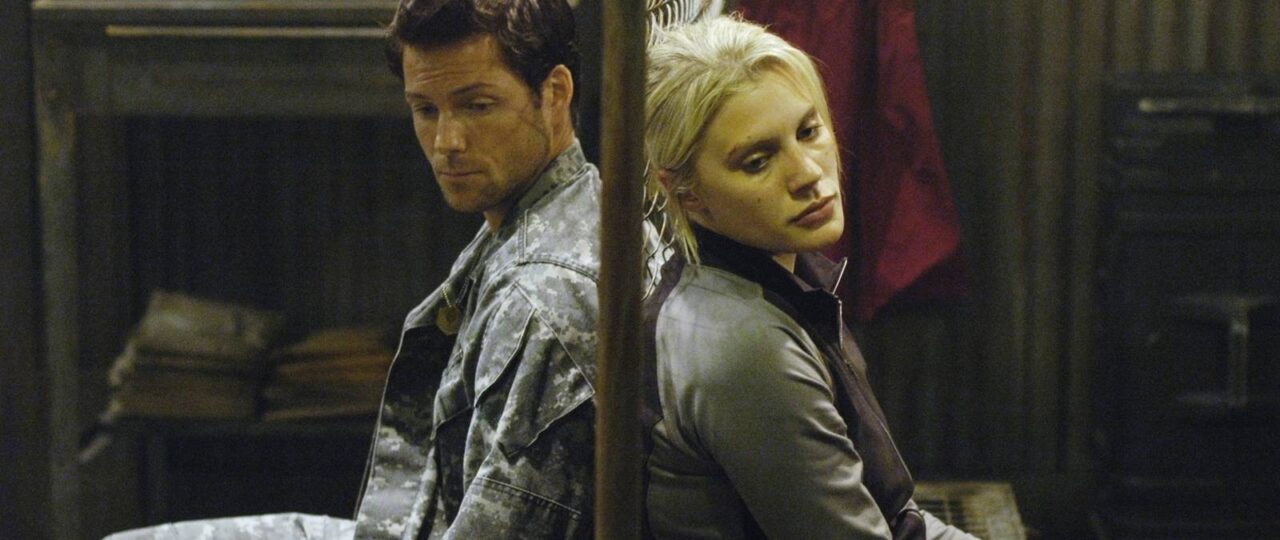
There are sci-fi classics so masterful that they would be better left untouched, but there are others which have come to feel somewhat dated and would very much benefit from a re-imagining. Back in 2003, 1978’s Battlestar Galactica belonged to that latter camp. So, after several attempts to continue the story of the original series, Universal Pictures decided to go with a remake instead. Enter 2003’s Battlestar Galactica, a two-episode gem that was designed as the backdoor pilot for the iconic 2004 full-length TV series of the same name.
One of the best sci-fi shows with 10 episodes or less, Battlestar Galactica is a must-see not only for those interested in then going into the 2004 and thus experiencing one of the greatest shows in the history of sci-fi, but for fans of the genre in general. It was a watershed moment in genre television history, a space opera which redefined how seriously science fiction could tackle real-world geopolitics and philosophy on the small screen. All in all, it’s an absolutely perfect epic and one of the finest miniseries in history, regardless of genre.
Discover more from NAIRAVOICE.COM.NG
Subscribe to get the latest posts sent to your email.