 The blue wave that hit Capitol Hill could sweep away the Protect College Sports Act.
Massive gains by Democrats in both chambers of Congress in the midterm elections dealt a significant blow to supporters of the wide-ranging, bipartisan bill to bring some of college sports’ most chaotic systems under control, which is backed by President Donald Trump.
For months, polls forecast Republicans to lose control of the House of Representatives.
That was expected, but the huge margins won by Democrats in both the House and Senate make passing the bill during a six-week lame-duck session an even more daunting task than it was when the legislation passed the Senate on Sept. 28.
“I had this at about 25-30 percent in October,” Kyle Saunders, a political science professor at Colorado State, wrote on his Substack about the bill’s chances to become law. “I’m moving it to 5 to 10 percent for some version of the PCSA passing this Congress.”
The Democrats have gained nearly 40 seats in the House and currently hold 253 of 435 seats, with more than 20 races still to be determined.
The Athletic spoke to 10 people who have been involved in some way with the PCSA to assess its prospects following the midterm elections, and most agreed with Saunders’ general assessment: The PCSA, which has survived a few near-death experiences to get this far, is definitely not dead, but the odds are stacked against it passing into law.
“The energy for this bill mostly came from the Republicans,” said one person involved in the process, speaking on condition of anonymity for a candid assessment of the situation.
Now, as every source noted, there is no telling how many Republicans who were voted out on Tuesday will even return to Washington to finish their terms. Conferences have already engaged fallback plans for the bill not passing, discussing various forms of self-governance that could avoid the antitrust scrutiny the NCAA faces.
College sports leaders have invested years of work and millions of dollars into lobbying Congress to take up a college sports bill that would help regulate how athletes can be compensated and provide antitrust protections that would allow the NCAA to enforce eligibility and transfer rules. Sponsored in the Senate by the unlikely duo of Ted Cruz (R-Texas) and Maria Cantwell (D-Wash.) and supported by the full weight of the White House, the PCSA provided an imperfect solution to at least some of what ails college sports.
The bill would limit how frequently athletes can transfer and play right away (just once prior to obtaining their degree, with limited exceptions); place a “hard cap” on how much schools can spend on their athletes’ revenue-sharing deals (around $48 million, including $22.5 million to retain their rosters and $5 million earmarked for women’s and non-revenue sports); and cap agents’ commissions on NIL deals at 5 percent.
A federal college sports bill has never been so close to passage, despite the mounting obstacles. Those who support it have no choice but to keep trying to push it over the finish line.
“Student-athletes from across the country and all three NCAA Divisions worked hard to advance this legislation and thanks to their advocacy, the bill received a massive, bipartisan vote in the Senate,” said Tim Buckley, NCAA senior vice president of external affairs. “Not acting on the Protect College Sports Act this session would mean not enshrining these transformative student-athlete benefits into federal law, and we will continue to see opportunities for young people to access college sports erode as professionals return to college and steal roster spots from college students.
“The Association looks forward to working with the House to get this bill across the finish line.”
If the PCSA doesn’t become law before Democrats assume power in January, the bill is dead. The fact that it passed the Senate is moot. The process would have to restart, with no guarantee lawmakers will want to revisit the issue.
“It’s got enormous support across the board,” said New York Yankees president Randy Levine, who was appointed by President Trump to shepherd the PCSA through Congress. “Just about every university in America, every conference in America, is supportive of it. They’ve all written letters to Congress. So hopefully we get it across the goal line before the end of this Congress. Because if we don’t, I think that you’ll never get anything through.”
What’s the path?
The bill has virtually no chance of being considered on its own and receiving a standalone vote during the lame-duck session. For that to happen, the PCSA would need to be hassle-free and a priority for House leadership. It is neither.
Even before the election results, the bill’s supporters were dealing with a potential roadblock. The presidents of four ACC schools — Florida State, Clemson, North Carolina and Miami — sent a letter to House Speaker Mike Johnson objecting to a section of the bill designed to temper conference realignment. They asked the House to amend the limit on conference members from 20 to 22 and remove language that would require schools to go independent for three years before changing conferences, a requirement in the Senate bill that would expire after six years.
“You cannot lock us into a conference,” Miami president Joe Echevarria told Yahoo! Sports last month.
Changing the bill this late would require sending it back to the Senate for approval, where Democrats also gained a large majority in the midterms.
“It either passes as is, or not at all,” said a source involved in the discussions.
The bill passed the Senate with 77 votes, and the House could have voted in October when Republicans held a slim majority. But Johnson, facing pressure from some in his own party to impeach Secretary of Defense Pete Hegseth, suspended the session in September and sent members home to campaign for the midterms.
There was hope among PCSA supporters that enough Democrats were ready to vote for the bill unchanged to make up for holdouts on the right, especially from those ACC schools’ states. Even in a lame-duck session. But the midterms changed the math.
And those numbers change even before the House actually flips to Democratic control. Many lawmakers simply don’t return to Washington after being voted out. They lose their physical office space starting next week.
“There are a lot of people who lost elections that are not going to be compelled to show up for a clean-up bill,” a Senate aide said.
The PCSA’s best hope of passing is to be attached to another piece of legislation that the House needs to get done before the end of the year, like funding the government or defense spending.
A so-called clean-up bill is meant to clear the decks of any pending legislation for when the House flips and Democrats take over.
A few factors are working against the PCSA being part of a clean-up bill:
Republican leadership in the House still is not prioritizing PCSA. Trump wants the bill passed, but the President’s influence within his own party has waned along with his approval rating. If Republicans aren’t fighting for the PCSA, there are not many reasons for Democrats to do so.
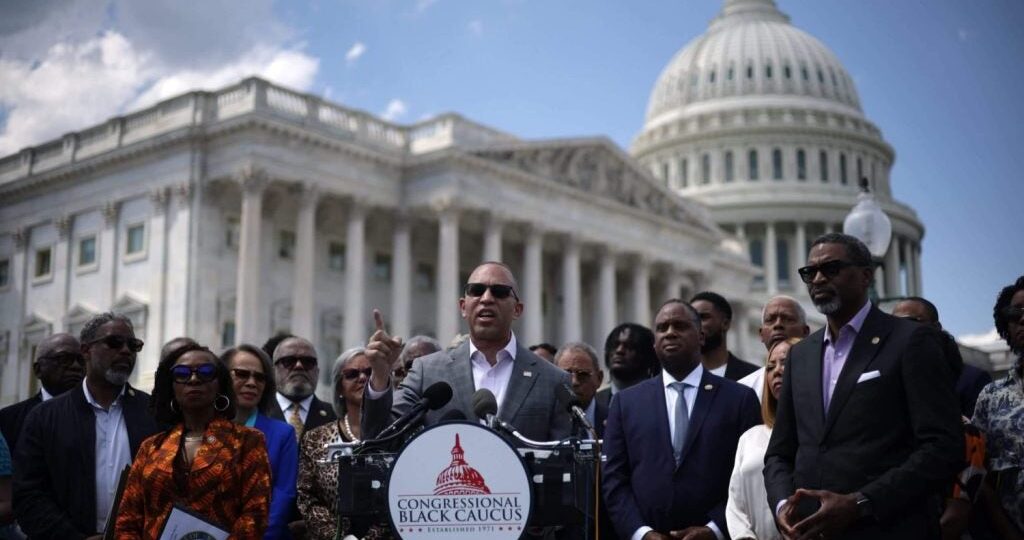
If anything, Democratic leadership is more likely to persuade members who have indicated support to back off. If they want to take on the college sports issue, why not do it while in the majority? Some on the left have criticized the bill for putting too many restrictions on athlete compensation. The Congressional Black Caucus has been the bill’s most vocal opponent. “The coalitions that are opposed to this are getting stronger (after the midterms),” the Senate aide said.
The continued insistence of ACC schools on removing conference realignment provisions.
The clock is working against the PCSA, too. Lawmakers are still pushing for impeachment hearings for Hegseth in the House, which could take days. Any time not spent on legislation hurts a bill that seems to lack champions in the House.
For those who have pushed for and put so much effort into the Protect College Sports Act, the message seems to be: It’s now or never.
“There is no realistic path to secure the same broad bipartisan support for a new bill in 2027 and beyond,” said a spokesperson for the Senate Committee on Commerce, which is led by Cruz. “Passing the Senate-approved bipartisan bill through the House and sending it to the President’s desk during the lame duck Congress gives House Republicans an opportunity to close out the 119th Congress with a significant win for President Trump, HBCUs, women’s sports, and student athletes. An attempt to amend it would be a surefire defeat for the colleges and fans counting on PCSA’s enactment.”
This article originally appeared in The Athletic.
College Football, Men’s College Basketball, Sports Business, Women’s College Basketball, College Sports
2026 The Athletic Media Company
Discover more from NAIRAVOICE.COM.NG
Subscribe to get the latest posts sent to your email.