Chris is a UK-based film and TV writer, editor and occasional filmmaker. For more than a decade, he has written news, reviews and features covering movies, television and pop culture. He has also made short films and worked in video production, giving him experience on both sides of the screen. Chris runs the We Love Movies More Than You TikTok channel and has a particular interest in overlooked and short-lived TV shows.
Each decade of television builds on what came before, adding new ideas and fresh talent while adapting to an ever-changing world. The 1970s proved to be an adventurous and progressive time for sitcoms. Enduring classics like All in the Family, MAS*H, and The Jeffersons explored more socially conscious topics throughout their long and critically acclaimed runs. Yet not every attempt to test the robust sitcom format turned into TV gold that lasted hundreds of episodes.
None of the sitcoms on this list made it that far. Some didn’t reach double-digit episodes, and none of them ran longer than a single season—well, at least not in a live-action form. Sitcoms set in space, a wild animal moving into the suburbs, ghosts getting busted, and a robotic police detective that runs on motor oil. All these ’70s sitcoms tried something different, but were too strange to last.
5
‘Come Back Mrs. Noah’ (1977-1978)
<<img src="https://static0.colliderimages.com/wordpress/wp-content/uploads/2026/11/come-back-mrs-noah.jpg?q=70&fit=crop&w=825&dpr=1" />
Image via BBC</figure>
Mollie Sugden was already a household name in the UK, starring as Mrs. Slocombe in Jeremy Lloyd and David Croft‘s Are You Being Served? Five years into that show’s run, Lloyd and Croft cooked up this space oddity for Sugden, Come Back Mrs. Noah. Set in 2050, the show presents a very 1970s view of the 21st century. After winning first prize in a baking contest, Mrs. Gertrude Noah (Sugden) is granted a tour of the soon-to-launch Britannia 7 spacecraft, televised on the news show Far and Wide. Naturally, disaster strikes when the vessel accidentally launches with Mrs. Noah, two physicists, a maintenance worker, and a befuddled TV news reporter (Ian Lavender) on board.
Much of Lloyd and Croft’s work was farcical and relied relentlessly on double entendres—a style still present here—but the duo leans further into slapstick and finds the jokes quickly wear thin. Most episodes find a way to place the usually composed Mrs. Noah into increasingly compromised positions, from being trapped in an escape tube to floating around in zero gravity. It’s hard not to feel sorry for Sugden as she does her best not to look too uncomfortable as she’s hoisted around on wires. The BBC didn’t ask Mrs. Noah to come back after its six episodes aired, and it remains a strange short-lived experiment from a creative team at the height of their popularity.
4
‘The Ghost Busters’ (1975)
<<img src="https://static0.colliderimages.com/wordpress/wp-content/uploads/2026/11/ghost_busters_1975.jpg?q=70&fit=crop&w=825&dpr=1" />
Image via CBS</figure>
Nearly a decade before Ivan Reitman‘s iconic movie, Filmation‘s The Ghost Busters arrived on CBS with a man in a gorilla suit and a decidedly less catchy theme tune performed by two of its stars. Jake Kong (Forrest Tucker), Eddie Spencer (Larry Storch), and their gorilla Tracy (Bob Burns) are a trio of inept paranormal investigators sent on weekly missions via tape-recorded message from their unseen boss Zero. Their ghost-busting often takes them to the same castle to battle werewolves, Frankenstein’s monster, Dracula, and a variety of spectral entities that wouldn’t be out of place on Scooby-Doo.
All sitcoms have an element of repetition, but The Ghost Busters takes it to maddening extremes, recycling sets, story beats, and the self-destructing message gag in every episode. That said, it was a Saturday morning sitcom aimed at children, so the formulaic structure makes sense even if the series itself doesn’t. The Ghost Busters was short-lived with 15 episodes and could have become just another forgotten sitcom if Columbia Pictures hadn’t licensed the name for their hit comedy starring Bill Murray. Filmation agreed, but two years after Ghostbusters became a blockbuster, they brought the show back as an animated sequel series. The movie’s official cartoon spin-off debuted less than a week later with the deliberately clear title of The Real Ghostbusters.
3
‘Me and The Chimp’ (1972)
<<img src="https://static0.colliderimages.com/wordpress/wp-content/uploads/2024/10/ted-bessell-me-and-the-chimp.jpg?q=70&fit=crop&w=825&dpr=1" />
Image via CBS</figure>
Before he brought the world Happy Days, Garry Marshall co-created Me and the Chimp, continuing the long, patchy history of animals starring in sitcoms. While out playing, two children bring home a stray chimpanzee named Buttons. Successful dentist Mike Reynolds (Ted Bessell) does what any rational parent would do: tries to find its owner. When that instantly fails, he goes to the back-up plan and makes the undomesticated animal part of the family. That was very much the way with animal-based sitcoms—and it’s usually best not to expect details that hold up to logic.
CBS canceled Me and the Chimp after 13 episodes, during which Buttons brings the Reynolds family all sorts of light-hearted mischief: he steals Mike’s alarm clock, briefly joins the school basketball team, and disrupts a paint company’s home makeover. If that sounds lackluster, it is. The show mostly runs out of jokes in each episode before the halfway point, and the ones that do arrive struggle to land. Toward the end of its run, it’s revealed that Buttons was part of the space program, but by then the reveal offers little to make Me and the Chimp anything other than another strange animal-led sitcom that didn’t last long.
Britain makes more detective television than any country has any
business making, and somehow almost all of it is good. Here is the one you belong in, what it says
about you, and the case for it being the best of the four.
You want the tea, the gossip and the vicar behaving oddly.
Midsomer is a county where the scenery is beautiful, the fete is on Saturday and the murder
rate is roughly that of a small war, and absolutely nobody involved thinks this is strange.
- You are sociable, curious and the first to notice that somebody has changed their
routine. - It has been running since 1997 and sells to well over two hundred territories worldwide.
- John Nettles handed over to Neil Dudgeon in 2011 and the show did not miss a step.
- Your flaw is that the line between caring about people and enjoying the gossip is
thinner than you admit.
You feel other people’s grief as if it were handed to you
personally. Broadchurch is less a whodunnit than a study of what a small town does to itself
when it finds out that the answer was always going to be somebody everybody already knew.
- You are the one people tell the truth to, and you carry all of it afterwards.
- Olivia Colman won the BAFTA for Best Actress for the first series and David Tennant has
never been better. - Chris Chibnall wrote it before taking over Doctor Who, and took Jodie Whittaker with
him. - Your risk is absorbing so much of other people’s pain that nobody notices yours.
You go through things rather than around them. John Luther is the
best detective in London and a liability to everybody who works with him, and the show is
completely honest that those two facts are the same fact.
- You are the one people call when the normal approach has already failed.
- Idris Elba won a Golden Globe for it in 2012 and it made him a film star more or less
overnight. - Luther: The Fallen Sun arrived on Netflix in 2023 and took the character properly
cinematic. - Your weakness is that doing the right thing your way still leaves a mess for somebody
else.
You say the thing and you do not dress it up. Vera Stanhope turns
up in a hat and a mac, is rude to almost everybody, and is the only person in the room
prepared to ask the question that the family has been waiting years for somebody to ask.
- You have no patience for performance, and the people who like you really like you.
- Brenda Blethyn played her for fourteen series before stepping away, and ITV ended the
show rather than recast. - Ann Cleeves wrote the novels, and also wrote the books behind Shetland, which is the
same trick in a colder place. - Your flaw is that blunt and kind can be the same thing, but only if people already know
you.
2
‘Holmes & Yoyo’ (1977)
<<img src="https://static0.colliderimages.com/wordpress/wp-content/uploads/2024/10/holmes-and-yoyo-john-schuck.jpg?q=70&fit=crop&w=825&dpr=1" />
Image via ABC</figure>
An early entry in the robots-as-law-enforcement genre finds Detective Alex Holmes (Richard B. Shull) in dire need of a new partner as his ongoing bad luck has injured everybody he’s ever been paired with in the precinct. That’s when the department introduces him to a top-secret project: Gregory ‘Yoyo’ Yoyonovich (John Schuck), a one-of-a-kind robotic prototype. Rather than take the potentially cost-effective route of retraining or dismissing Holmes, the department pairs him with Yoyo, but Holmes can’t tell anybody that his new partner is a robot.
For a show with such an absurd premise, Holmes & Yoyo‘s bizarre commitment to repeating the same basic jokes over and over again quickly becomes tiresome. When he’s not printing pictures from his photographic memory, tweaking the control system in his chest, or getting confused by magnets, all Yoyo wants is to be a good cop and a decent friend. John Schuck plays Yoyo with an endearing, childlike innocence, yet the wafer-thin material rarely gives audiences much to laugh about. Poor reviews and disastrous ratings made ABC pull the plug on Holmes & Yoyo after just 13 episodes.
1
‘Quark’ (1977-1978)
<<img src="https://static0.colliderimages.com/wordpress/wp-content/uploads/2024/10/quark-richard-benjamin.jpg?q=70&fit=crop&w=825&dpr=1" />
Image via NBC</figure>
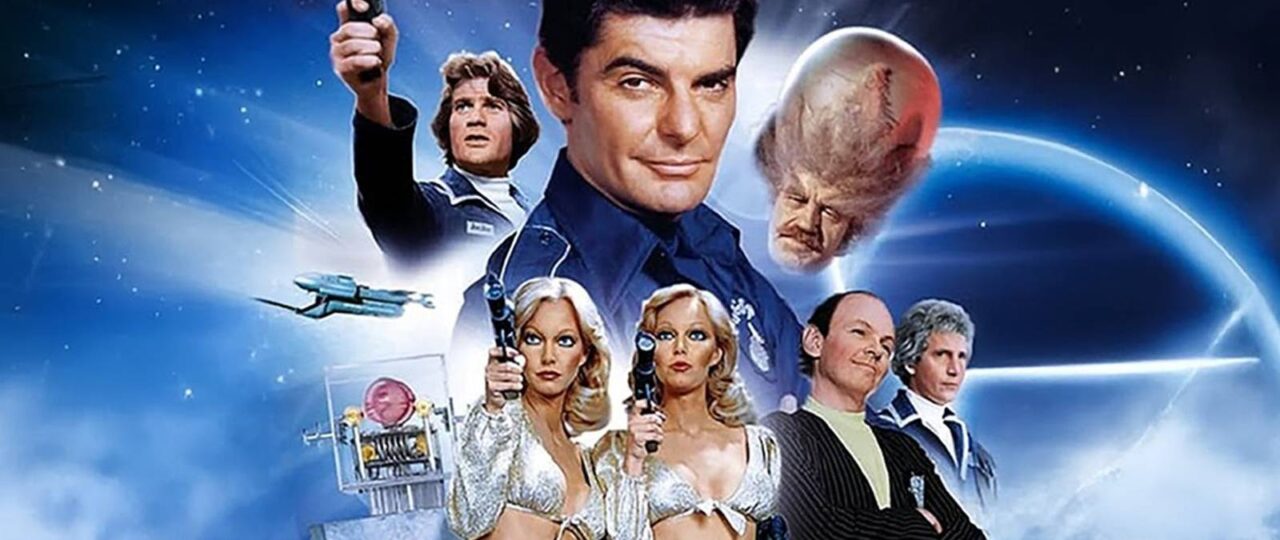
This list ends the way it started, with a short-lived sitcom set in space. However, Quark was ahead of its time by focusing on the mundane side of space travel as a workplace comedy. Created by Buck Henry (Get Smart), the series stars Richard Benjamin (Westworld) as Captain Quark of the United Galaxies Sanitation Patrol Cruiser, which is boldly going to collect debris and garbage from all over the universe. Quark’s dream of more heroic quests becomes reality when he’s drafted in for occasional missions against the evil Gorgons.
Buck Henry wasn’t really involved beyond the pilot, and the show underwent some reworking before it returned in 1978. Quark is an affectionate parody of Star Trek, with Richard Kelton‘s Spock-adjacent science officer Ficus (a plant-based humanoid that has mastered deadpan) as a high point. As you’d expect from many comedies from the 1970s, some of its jokes, particularly those about gender and sexuality, have aged like yogurt left out in the sun. For all its silliness and satire, NBC canceled Quark after 8 episodes, proving it was far too strange to last on network television.
-
<
Barbara Rhoades
Uncredited
-
<
Buck Henry
Dignitary (Uncredited)
-
<
Daina House
Adam Quark
-
<
Richard Benjamin
Ficus Pandorata
Discover more from NAIRAVOICE.COM.NG
Subscribe to get the latest posts sent to your email.