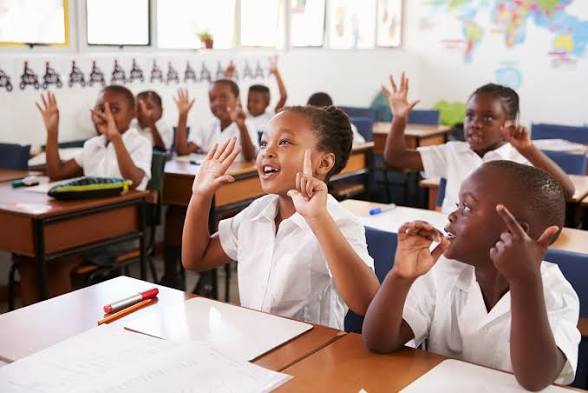
A student’s confidence can influence how they participate in class, respond to challenges, interact with others and approach new learning experiences. Some students readily ask questions, volunteer answers and take on leadership responsibilities, while others remain silent even when they have valuable ideas to contribute. The difference is not always ability. In many cases, it reflects how students see themselves and whether they feel safe enough to express what they know.
Schools play an important role in shaping these perceptions. Beyond teaching academic subjects, they create environments where students learn to recognise their strengths, manage mistakes, communicate their ideas and believe they can improve. A child who receives encouragement, fair treatment and opportunities to succeed is more likely to develop the confidence to attempt unfamiliar tasks. Conversely, constant criticism, public embarrassment, bullying and unrealistic comparisons can make students doubt their abilities.
Building students’ confidence does not mean convincing every child that they are always right or shielding them from difficult tasks. It means helping them understand that their abilities can develop through effort, guidance and practice. Schools can achieve this by making confidence-building part of everyday teaching, assessment, discipline and student participation rather than treating it as an occasional motivational activity.
1. Create a Safe Learning Environment
Students find it easier to express themselves when they feel physically and emotionally safe at school. A learner who expects to be laughed at for giving a wrong answer may choose silence over participation, even when attempting the question could help them understand the subject better. Similarly, a child who fears harsh punishment for admitting a mistake may hide difficulties instead of seeking help.
Schools can build confidence by establishing classroom cultures where students are treated with respect and mistakes are regarded as part of learning. Teachers should correct misunderstandings without insulting learners, while school leaders should address bullying, intimidation and discrimination promptly. Students must understand that they can ask questions, disagree respectfully and seek assistance without becoming targets of ridicule.
Safety also involves ensuring that quieter learners and children with disabilities are not excluded from classroom activities. A supportive environment gives students different ways to participate, including speaking, writing, demonstrating a skill or working with a partner. When learners know that their contributions will be considered fairly, they have more opportunities to develop confidence in their abilities.
Research on school belonging published by the UK Department for Education in 2026 identified safety, inclusion, positive relationships and individual recognition as important dimensions of pupils’ sense of belonging. The findings from 16 primary and secondary school case studies also highlighted the connection between belonging, academic engagement and pupils’ willingness to take learning risks.
2. Praise Effort and Improvement
Recognition can encourage students to continue working towards their goals, particularly when they are struggling with a subject or learning a new skill. However, the way schools offer praise matters. If teachers only celebrate the highest marks, students who consistently perform below the class average may begin to believe that their efforts are not worth recognising.
Schools should acknowledge progress, perseverance, thoughtful questions and the willingness to try again after a setback. A teacher might recognise a student who has improved in mathematics, even if the student has not yet achieved the highest score. This communicates that improvement matters and that academic ability is not the only basis for recognition.
Praise should also be specific and sincere. Telling a learner that they have worked carefully through a difficult problem provides more useful information than offering general compliments without explaining what the student did well. Similarly, acknowledging that a student has become more confident when speaking during discussions helps them recognise a change in their own behaviour.
However, praise should not become excessive or disconnected from genuine achievement. Students need encouragement that helps them understand their strengths, alongside honest guidance about what they can improve. When recognition is fair and meaningful, it can help learners develop a more realistic sense of their abilities and motivate them to keep learning.
3. Give Students a Voice
Confidence grows when students know their opinions matter. In some schools, classroom communication moves almost entirely in one direction, with teachers speaking and students expected to listen, copy notes and answer questions when called upon. Although direct instruction has an important place in education, students also need opportunities to express ideas, ask questions, make suggestions and contribute to decisions that affect their learning.
Schools can create these opportunities through classroom discussions, debates, presentations, student councils, clubs and feedback sessions. Teachers can also invite students to suggest ways of approaching an assignment or reflect on which parts of a lesson they found difficult. Such practices help learners become more comfortable expressing their thoughts while learning to listen to and respect different viewpoints.
Student participation should extend beyond activities that involve only outspoken or academically strong learners. A confident student may volunteer to speak before a large audience, while another may feel more comfortable contributing through a written response or a small-group discussion. Offering different ways to participate allows more learners to practise expressing themselves without unnecessary pressure.
In addition, schools should demonstrate that student feedback can lead to meaningful action. If learners raise concerns about bullying, classroom facilities or the organisation of school activities, school leaders should respond appropriately and explain what can be done. When students see that their contributions are taken seriously, they learn that their voices have value. This sense of agency can strengthen their confidence in school and in other settings.
4. Teach Students to Learn from Mistakes
Fear of failure can prevent students from attempting tasks they find difficult. A child who has been mocked for giving a wrong answer may avoid participating in future lessons, while a student who repeatedly receives poor marks may conclude that there is little point in trying. When schools treat mistakes as evidence of inability rather than opportunities to improve, they risk discouraging the very effort that learning requires.
Teachers can help change this perception by showing students how mistakes reveal gaps in understanding. When a learner gives an incorrect answer, the teacher can guide them through the reasoning, identify where the misunderstanding occurred and encourage another attempt. This approach corrects the error while showing the student that a wrong answer does not define their ability.
Assessment practices can support the same principle. Instead of returning marked assignments without further discussion, teachers can explain common errors and allow students to correct their work where appropriate. Students then have an opportunity to act on feedback rather than viewing a disappointing mark as the final judgement of their abilities.
This does not mean lowering academic standards or pretending that errors do not matter. Students need to understand the importance of accuracy, preparation and responsibility. However, they should also learn that improvement is possible when they respond constructively to feedback. A school that combines high expectations with patient guidance helps students approach difficult tasks with greater courage and a willingness to persevere.
5. Provide Opportunities to Succeed
Confidence develops when students have opportunities to discover what they can do. Academic results are important, but they represent only one aspect of a learner’s abilities. Some students may struggle with written examinations yet demonstrate considerable talent in music, sports, public speaking, creative arts, practical projects, technology or organising group activities.
Schools should therefore provide a broad range of meaningful activities through which learners can discover and develop their strengths. Science exhibitions, reading competitions, cultural activities, sports, drama, coding projects and community service can help students explore interests that may not be fully expressed during ordinary classroom lessons.
These opportunities should not be reserved for students who already perform well. A learner who has never represented their class in an activity may benefit from being given a manageable responsibility with appropriate support. For example, a student who is nervous about speaking publicly could begin by introducing a group presentation before gradually taking on a larger role. Such experiences allow confidence to develop through practice rather than pressure.
Schools should also recognise different forms of achievement without making every activity a competition. When recognition is limited to first place, many students may feel that participation has little value. Celebrating improvement, creativity, cooperation and commitment allows more learners to experience progress. Over time, these experiences can help students identify their strengths and become more willing to attempt unfamiliar challenges.
Read also:
6. Train Teachers to Give Constructive Feedback
The feedback students receive from teachers can influence how they understand their abilities and what they believe they need to do to improve. A learner who is repeatedly told that they are weak, careless or incapable may begin to accept those descriptions as permanent truths. By contrast, feedback that identifies a specific difficulty and explains how to address it can help the student see a practical way forward.
Schools should support teachers in providing feedback that is clear, respectful and focused on learning. Instead of writing only that an answer is wrong, a teacher can explain which part of the reasoning needs attention and suggest what the student should try next. Similarly, when a student produces good work, the teacher can identify the strength of the response and explain how the learner can build on it.
The Education Endowment Foundation’s guidance on teacher feedback emphasises that effective feedback should help learners understand the gap between their current performance and the intended learning goal. It also warns that feedback can be unhelpful when poorly delivered. The purpose is not simply to comment on students’ work but to provide information they can use to improve.
Teachers should also be mindful of correcting students in ways that preserve their dignity. Publicly ridiculing a learner for a mistake can make the child more concerned about embarrassment than understanding the lesson. Where possible, sensitive feedback should be given privately, especially when it concerns repeated difficulties or personal behaviour. Constructive feedback combines honesty with respect, helping students recognise their weaknesses without losing sight of their capacity to improve.
7. Stop Unhealthy Comparisons
Comparing students solely by their marks, speed of learning or position on a class list can damage confidence, particularly among learners who consistently fall behind their peers. Although assessment helps teachers understand progress, constant public ranking can create the impression that a student’s value depends on outperforming others.
Schools can maintain high academic expectations without making comparison the main source of motivation. Teachers should help learners understand their individual progress, recognise areas of strength and set realistic goals for improvement. A student who moves from struggling to answer basic questions to solving more complex problems deserves to recognise that progress, even if another learner still achieves higher marks.
This approach is particularly important in classrooms where students have different learning needs, levels of prior knowledge and access to educational support. Some learners may need additional explanations or more time to master a concept. Treating these differences as evidence of inferiority can discourage them, whereas providing appropriate support can help them participate more confidently.
In addition, schools should avoid using academic performance to label students as naturally intelligent or incapable. Such labels can influence how learners see themselves and how others treat them. Teachers can instead focus on demonstrated skills, progress and the next steps needed for improvement. When students are encouraged to measure progress against meaningful goals rather than constantly against their classmates, they are more likely to develop a healthier and more realistic sense of achievement.
8. Encourage Positive Peer Relationships
Students do not develop confidence through interactions with teachers alone. Their classmates also influence how safe they feel expressing opinions, joining activities and showing their abilities. A supportive peer group can encourage a shy learner to participate, while teasing, exclusion and social pressure can make even a capable student reluctant to stand out.
Schools should deliberately promote respectful relationships among students. Group assignments can be structured so that every member has a meaningful role, while classroom discussions can teach learners to disagree without insulting one another. Teachers should also intervene when they observe bullying, persistent exclusion or behaviour that makes particular students feel inferior.
Peer support can be useful when it allows students to learn from one another without turning the classroom into a competition. For instance, learners can work in pairs to explain concepts, review assignments or practise presentations. Students who understand a topic can help classmates who are struggling, while the learners receiving assistance can ask questions in a smaller setting that may feel less intimidating.
However, schools should avoid assigning students permanent identities as either the helper or the one who always needs help. Every learner has strengths and areas for development. Creating opportunities for students to contribute in different ways helps them recognise one another’s abilities and understand that asking for support is a normal part of learning. A culture of mutual respect gives students greater freedom to participate without fearing that a mistake will cost them their social standing.
9. Make Leadership Accessible to Everyone
Leadership opportunities can help students develop confidence in decision-making, communication, teamwork and responsibility. However, when these opportunities are restricted to a small group of high-performing or popular students, many learners miss the chance to discover what they can do.
Schools can broaden participation by allowing students to take on different responsibilities in classroom projects, clubs, sports teams and school events. A learner who is not ready to serve as a school prefect, for example, could coordinate a group assignment, help organise a reading activity or take responsibility for a specific part of a class project. These smaller experiences can provide a foundation for greater responsibility later.
Teachers should also guide students as they learn to lead. Giving a learner responsibility without explaining expectations or providing support can create unnecessary anxiety, especially when the task is unfamiliar. Clear instructions, opportunities to ask questions and constructive feedback can help students learn from the experience while becoming more comfortable making decisions.
Leadership should not be treated as a reward for academic excellence alone. A student may demonstrate reliability, creativity, empathy or the ability to bring classmates together even if their examination scores are average. Recognising these qualities helps schools identify potential that might otherwise go unnoticed. When more students have opportunities to contribute meaningfully, they can develop a stronger belief in their ability to influence their surroundings.
10. Work with Parents and Caregivers
Students receive messages about their abilities both at school and at home. When teachers and parents provide consistent encouragement, children are more likely to receive the support they need to manage academic difficulties and recognise their progress. However, conflicting expectations can leave students confused about what achievement means and whether they are valued beyond their results.
Schools can strengthen this relationship by communicating with parents about students’ progress, learning needs and emotional well-being. Parent-teacher meetings should provide opportunities to discuss not only examination scores but also participation, behaviour, interests and areas where the child needs encouragement. When difficulties arise, schools and families can work together to identify practical support rather than simply blaming the student.
Parents can also be guided on how to respond to poor marks or setbacks. Children need to understand that disappointing results require attention, but they should not feel that a single examination determines their worth or future. Encouraging them to review their mistakes, improve their preparation and seek help where necessary can make setbacks easier to manage. Schools can reinforce these messages through workshops, newsletters and conversations with families.
It is equally important for schools to recognise that students do not all have the same support at home. Some parents may have limited time, resources or familiarity with the school curriculum. Schools should therefore communicate in accessible ways and avoid assuming that every family can provide the same level of academic assistance. By working with caregivers while continuing to support students directly, schools can create a stronger network around each learner.
Conclusion
Building students’ confidence is not achieved through motivational speeches or occasional praise alone. It requires consistent experiences that teach learners they are valued, capable of improving and entitled to participate in their education. The way teachers respond to mistakes, the opportunities schools provide and the relationships students experience can all influence whether learners approach challenges with confidence or withdraw out of fear.
Schools do not need to wait for students to become confident before giving them opportunities to speak, lead, create and learn from difficult experiences. Instead, they can build confidence through those experiences, providing appropriate guidance and support along the way. A student who is encouraged to try again, trusted with responsibility and treated with respect gradually has more opportunities to recognise their own capabilities.
Ultimately, confident students are not those who never feel nervous or never make mistakes. They are learners who can ask for help, express their ideas, face challenges and continue working towards improvement. When schools make these qualities part of everyday learning, they support not only academic progress but also the development of young people who are better prepared to navigate life beyond the classroom.
Discover more from NAIRAVOICE.COM.NG
Subscribe to get the latest posts sent to your email.