While many of the best hard sci-fi films of all time are decades old at this point in history, the past 10 years have not shied away from delivering on plenty of engaging and unique hard sci-fi movies themselves, continuing this subgenre onwards into a new age. With the sci-fi genre covering so much ground as a whole, the hard sci-fi term is one used to denote sci-fi releases that are more focused on scientific accuracy, usually around the “practical” or “hard” more physically-focused sciences like physics or astronomy.
Of course, this means that many of the biggest sci-fi movies in recent history – like the Dune series or the Avatar series – do not apply here, as a result of their more fantastical natures and approaches to storytelling. Plenty of the biggest and best examples of hard sci-fi movies – such as Moon, Gattaca, or 2001: A Space Odyessy – also don’t apply here, though this is because they were crafted far before 2016 instead.
While some of the most interesting examples of hard sci-fi movies in the past decade have gone more under the radar compared to the biggest sci-fi hits of this time period, that arguably makes them only more intriguing to look at now, especially since they often delve into very different storylines and topics compared to their peers.
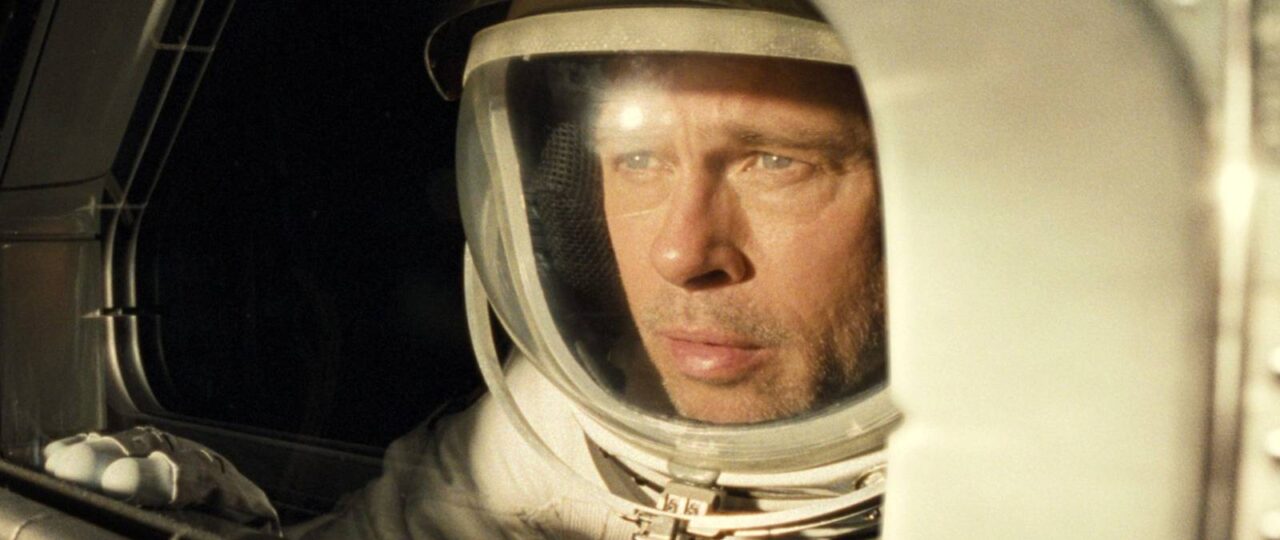
Ad Astra
<<img src="https://static0.srcdn.com/wordpress/wp-content/uploads/2026/01/brad-pitt-as-ron-in-a-soundproofed-room-in-ad-astra.jpg?q=49&fit=crop&w=825&dpr=2" />
</figure>
Ad Astra‘s tale of space missions and antimatter threats envelops the narrative in real-world scientific concepts that keep its story feeling like hard sci-fi, even in some of its more fantastical moments.
The plot of 2019’s Ad Astra also takes care to blend world-ending threats with more relatable matters. Astronaut Roy Richard McBride starts the narrative being sent to Mars to try and reestablish contact with a space station near Neptune that it’s believed may have the answers to why dangerous cosmic-ray bursts have been appearing from that part of the cosmos. This is particularly key for Roy because his father was last seen on said station, giving him even more personal stakes in the matter.
Ad Astra isn’t a universally beloved film, but it does by and large attempt to ensure the spacefaring side of it feels as though it could happen in the real world, with details like the long time it takes crews to travel to Neptune adding a sense of believability and actual science to the film.
The Creator
<<img src="https://static0.srcdn.com/wordpress/wp-content/uploads/2026/01/two-robots-in-the-creator.jpg?q=49&fit=crop&w=825&dpr=2" />
</figure>
Though much of the visuals of The Creator are larger than life, its story explores a generally believable disaster scenario wherein a US AI is believed to have detonated a nuclear warhead over California. This devastates a good portion of the world, and further divides its denizens on whether AI should be wiped out altogether or not, with many taking to the task of hunting remaining AI down.
Protagonist Taylor is one such figure. Or, rather, he can be considered to fit this mold up until he discovers that the dangerous futuristic weapon he’s been tasked with taking out is a young robotic simulant girl, which complicates things for him on a few levels, and leads to a series of other twists and turns that flips the entire story on its head by the time of The Creator‘s ending.
The Creator is a movie meant to reflect modern concerns around technological advancements and AI, which makes it very salient today. With that said, it’s also a movie that has a notably more optimistic perspective on this matter in some ways compared to many of its peers, which may also make it a welcome watch for hard sci-fi fans who want a little lighter fare after seeing many of the genre’s bleaker offerings.
<<img src="https://static0.srcdn.com/wordpress/wp-content/uploads/2023/11/john-david-washington-in-tenet.png?q=70&fit=crop&w=825&dpr=1" />
</figure>
Much like many of director Christopher Nolan’s movies, Tenet‘s story and execution are couched in real science in a major way, thanks to Nolan recruiting theoretical physicist Kip Thorne to help craft the movie, following Thorne’s previous work on Interstellar beforehand.
Though any movie based around time travel and time distortion generally can’t draw entirely from real-world science – since we notably can’t skip forwards and backwards through time in reality quite yet – Tenet‘s narrative of a secret agent tasked with getting to the bottom of how artifacts with inverted entropy (moving backwards through time) are appearing and why still feels tangible overall.
Tenet‘s story is thus one inherently tied into both particle physics and theoretical physics, giving the narrative a whole lot to work with, and plenty of real-world studies and research to draw from in order to ensure even a time-travel story can feel decidedly plausible scientifically.
Stowaway
2021’s Stowaway is perhaps the most plausible movie on this list. Rather than a story delving into far-flung worlds or conceptual science, Stowaway instead follows the possible but nightmarish scenario wherein astronauts discover an engineer has accidentally come into space with them, having become trapped between two modules before falling unconscious.
Michael Adams’ surprise trip to space also comes with the added detriment of destroying the device that scrubs CO2 from the ship’s air. A series of disasters begin to unfold from this point onward, challenging the crew’s skillset and preparation for the unexpected, and making the movie a tense experience from start to end.
Stowaway proves that a hard sci-fi film that keeps things simple is just as capable of keeping its audiences engaged as the grandest sci-fi worlds of all time in this way, as the many misfortunes that befall the astronauts and their accidental addition to the crew leave you rooting for them even when all hope seems lost.
Aniara is one of the more bleak hard sci-fi films in recent history, but this is arguably what makes it so impactful, too. Adapting the epic science-fiction poem of the same name from Swedish writer Harry Martinson, Aniara follows the lives of those who inhabit the titular ship after Earth is made uninhabitable by global warming and pollution, forcing humanity to take to the stars.
Things swiftly go wrong, and the Aniara ends up being moved off course by space debris, leading the ship on a far less planned course through space. As the passengers and crew come to realize the prior plans of the ship going to Mars have been effectively canceled, tensions and trauma continue to rise, leading to more and more unhinged behavior from those onboard.
Aniara is overall a quite unrelenting and at points harrowing film, but it wouldn’t pack half the punch it does if it didn’t commit to some of its more unsettling scenes. It’s also this more psychological look at what would happen to people put into this scenario that cements it as a hard sci-fi must-watch, even if aspects of its story like the Aniara being unable to contact outside entities when near Earth and Mars seem to be more crafted for drama than scientific accuracy.
Prospect
The final frontier of space opens humanity back up to become prospectors in the fittingly named 2018 western sci-fi movie Prospect, bolstered by the performances of Sophie Thatcher, Jay Duplass, and Pedro Pascal.
The retrofuturistic style of Prospect helps sell the idea of a universe wherein humanity has taken to the stars to requisition valuable materials from the galaxy, and where a young prospector may end up having to work with one of the men who tried to kill her father. All in all, the gritty sci-fi setting wherein futuristic technology exists, but you may still have to amputate your own limb to survive, works well, and helps the movie feel all the more like a hard sci-fi story rather than anything more fantastical.
Project Hail Mary
<<img src="https://static0.srcdn.com/wordpress/wp-content/uploads/2026/10/ryan-gosling-in-project-hail-mary.jpg?q=49&fit=crop&w=825&dpr=2" />
Amazon MGM Studios</figure>
Project Hail Mary‘s extensive focus on the fictional microbe known as astrophage and the science around the concept of the material and its deadly capabilities balance out the fact that the story also features a rock-like alien as one of its two main characters, allowing the movie to be a hard sci-fi film all the same.
Project Hail Mary is the most fiscally successful hard sci-fi film in recent history, as its $684 million box office results clearly attest to. While a good portion of said success is down to audiences connecting with Grace and Rocky and their quests to save their respective worlds, it has to be said that some of these results can also be attributed to the way the sci-fi leans into using scientific concepts and premises at the forefront of its story.
Be that in the work to find a way to deal with the astrophage, or simply Grace learning how to handle space while having amnesia, the Project Hail Mary movie shares the original book’s willingness to deal with the science of space, which helps keep things interesting.
The Challenge
<<img src="https://static0.srcdn.com/wordpress/wp-content/uploads/2026/11/an-astronaut-out-in-space-in-the-challenge-2023.jpg?q=49&fit=crop&w=825&dpr=2" />
</figure>
The Challenge is a decidedly hard release for audiences to actually watch in a fair portion of the world, but it’s a key film to consider in terms of hard sci-fi films that do something different all the same. This is first and foremost because the movie is considered to be the first feature-length film shot in space (as per The New York Times and The Guardian), which makes it a hard sci-fi film in a pretty literal sense, having shot on set so to speak in a way that’s not the norm for sci-fi films.
The Challenge‘s story itself also qualifies the film further to be a notable hard sci-fi entry. The 2023 movie follows a scenario wherein an astronaut becomes so ill after he and his fellow crewmembers arrive in space that a surgeon has to be sent to work on him in zero gravity, as he’s too unwell to do otherwise, meaning both the in-universe and real-world story behind the movie is interesting.
<<img src="https://static0.srcdn.com/wordpress/wp-content/uploads/2026/10/m-lanie-laurent-as-liz-in-a-cryogenic-chamber-in-the-movie-oxygen.jpg?q=49&fit=crop&w=825&dpr=2" />
</figure>
The claustrophobic plot of Oxygen manages to be particularly grounded in a thrilling and terrifying way, depicting the trials of its unfortunate protagonist as she wakes up in a cryogenic unit that is losing oxygen rapidly. Trapped inside the pod and dealing with memory loss, it’s hard to imagine a worse scenario for the film’s hero to be placed into at the start of the story, though she’s able to overcome a wide range of obstacles armed with only her wit.
Oxygen contains a few more dramatic sci-fi concepts, but all of them are made more believable and scientific by the way they reflect modern technology of today and its own limitations, as our protagonist’s greatest enemy for most of the story is the very AI assistant meant to help her.
<<img src="https://static0.srcdn.com/wordpress/wp-content/uploads/2025/11/amy-adams-in-arrival.jpg?q=49&fit=crop&w=825&dpr=2" />
</figure>
Arrival takes the story of Earth’s first major encounter with extraterrestrials and turns it into a linguistic dream and nightmare, as the world’s nations seek to understand what exactly the aliens are trying to convey, and what that means for their lives.
This explores territory that sci-fi often avoids, either by having universal translators, or simply having its aliens speak Earth languages for whatever reason.
Arrival ensures this narrative decision has far more significance to its story than just being a fun quirk of its aliens, too, making things feel even more interconnected and set up in a way that makes its complex overall timeline feel pretty clear and coherent throughout. This also initially somewhat conceals the more hard sci-fi aspects of its story, which delve into physics and the concept of time and human perception, and which are unveiled steadily as things grow more complex.
Altogether, Arrival feels like a hard sci-fi that embraces what this subgenre can ideally be, in that it gives us an opportunity to consider what this kind of scenario might be like were it to truly happen in reality, and the complexities that might arise from something like translating alien speech.
Discover more from NAIRAVOICE.COM.NG
Subscribe to get the latest posts sent to your email.