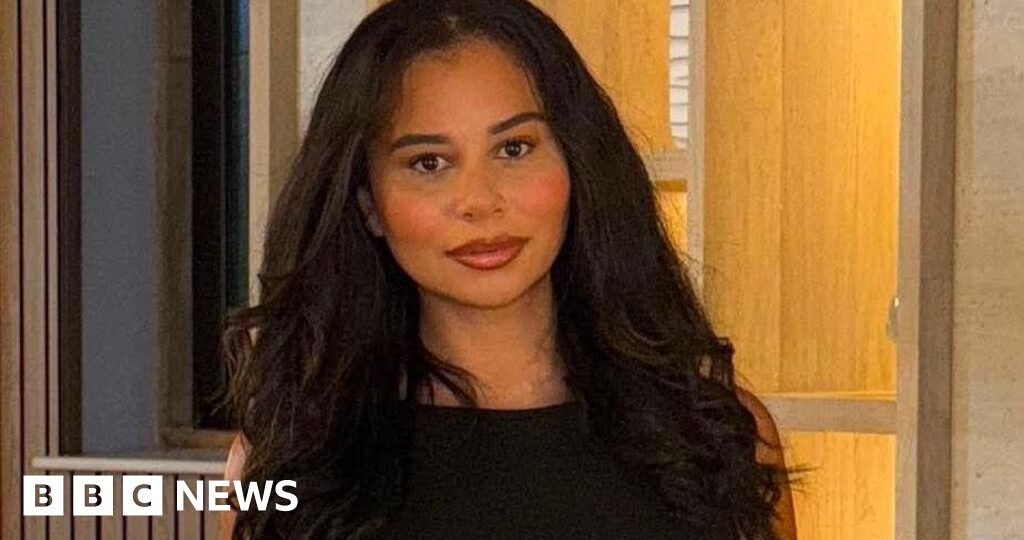

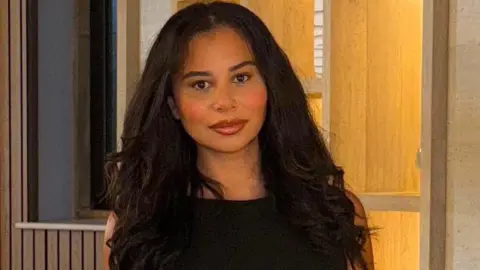
 Rochelle Lewis
For Rochelle Lewis, it took years to confirm the reason why she had pains, excessive facial hair, bloatedness – and it was “absolutely devastating” when she found out it could affect her chances of being a mother.
She was one of more than 170 million women globally to be diagnosed with polycystic ovary syndrome (PCOS), a condition in which they have higher levels of male hormones in their bodies.
Lewis got her diagnosis last February which she said was a “long time coming” following years of symptoms and tests.
She was told it could affect her chances of becoming pregnant, leaving her feeling “like my whole world had come to an end”.
“One of the things that I’ve always wanted in life was to become a mum,” she added.
“When you have an idea of your life and how it’s going to pan out from a little girl, to then be told ‘actually, the one thing that you want most is most likely not going to happen’. It’s absolutely devastating.”
Lewis, who was inspired by her experiences to set up her own wellness business, was later able to conceive her son, who is now three months old.
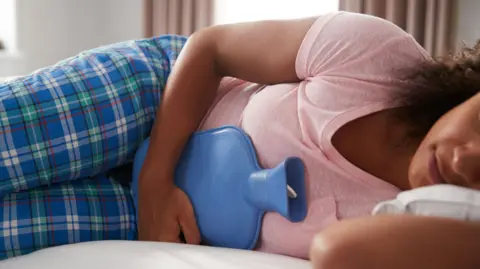 Getty Images
Earlier this month, the condition was renamed, from PCOS to to polyendocrine metabolic ovarian syndrome (PMOS), with the International PCOS Network saying they hoped the change would improve understanding and help with treatment and diagnoses.
For Lewis, who was going “back and forth” to doctors from around the age of 18, she hoped the name change would “open the door” to more women being diagnosed quickly, but was not convinced it would bring about wider change.
“I just think that we get told that you have PCOS and you get left to it,” the 31-year-old, from Birmingham, said.
The NHS says the common condition affects up to one in 10 women in the UK with symptoms including irregular periods, excess hair growth and weight gain.
PCOS name change ‘more representative of condition’
Kate Morris, from the charity Verity PCOS, said she hoped the change would lead to more women being referred to specialists who recognise its endocrine and metabolic nature.
“It will give patients the leverage to say… ‘it’s in the name, what’s happening to me is metabolic and endocrinological’,” she said.
The hormonal disorder, which has no cure other than treatment to alleviate some symptoms, features higher levels of male hormones in the body and can result in difficulty getting pregnant.
PCOS/PMOS is also associated with high insulin levels and an increased risk of type 2 diabetes in later life, the NHS said.
 Shireen Forster
Shireen Forster was diagnosed with the condition at the age of 18 and was inspired to set up LaserMeOut, which has a site in Birmingham, after experiencing excessive hair growth herself.
She said many of the women at her clinics struggled with confidence due to the distressing symptoms, with the excessive hair growth often on their faces, chests and backs.
“It completely took away their confidence,” she said.
The 33-year-old, from London, welcomed the name change, adding it better reflected the condition as a full-body issue, rather than something limited to the ovaries.
“This is not just cysts in women’s ovaries,” she said.
“This is your metabolic – the way your body produces energy. This is your endocrine system… your hormonal system. It’s all these things linked.”
Forster, who gave birth to her first child last year, said she felt “proud” of the name change and it would help shift understanding of the condition.
However, she added that more peer support was needed, saying women wanted more opportunities to meet others with the condition and share experiences.
“There needs to be more of a community. All they want to do is meet up with other women who are going through this and just sit down and [and] have a talk.” she added.
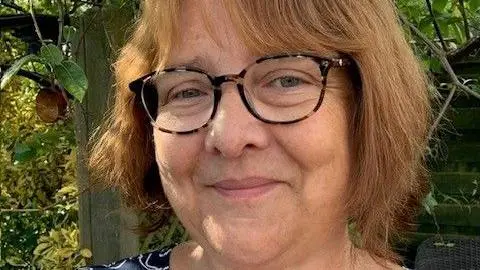 Kate Morris
Verity PCOS, which has a number of volunteer-run support groups, including in Coventry and Warwickshire, Staffordshire and Worcestershire, has campaigned for the name to change for over a decade.
Volunteer and former trustee Kate Morris, from Meriden near Coventry, was diagnosed with the condition when she was 19.
The 59-year-old described unsuccessful attempts to get a diagnosis in the 1980s, before she was officially diagnosed after seeing a locum GP.
“I wasn’t happy. I knew my body wasn’t functioning properly and I wasn’t prepared to just put up with it,” she said.
“She then said: ‘Come back when you want to have children’ – which is what people always hear at the time.”
Morris, who set up the support group in Coventry and Warwickshire, said the name change was “momentous” for those with the condition.
She said she wanted it to help more women get referred for specialist help, including endocrinology, the management of hormone-related conditions.
“When I meet a new patient, one of the first things I do is tell them that the name is nonsense,” Morris said.
“The name is misleading, this isn’t about your ovaries and that’s one of the massive dangers.”
Follow BBC Birmingham on BBC Sounds, Facebook, X and Instagram.
PCOS name change ‘more representative of condition’
Women with painful condition ‘ignored’ by doctors
Advice for PCOS has not changed for 30 years, says patient
Ovary syndrome solution ‘identified’
Verity PCOS
LaserMeOut
Discover more from NAIRAVOICE.COM.NG
Subscribe to get the latest posts sent to your email.