
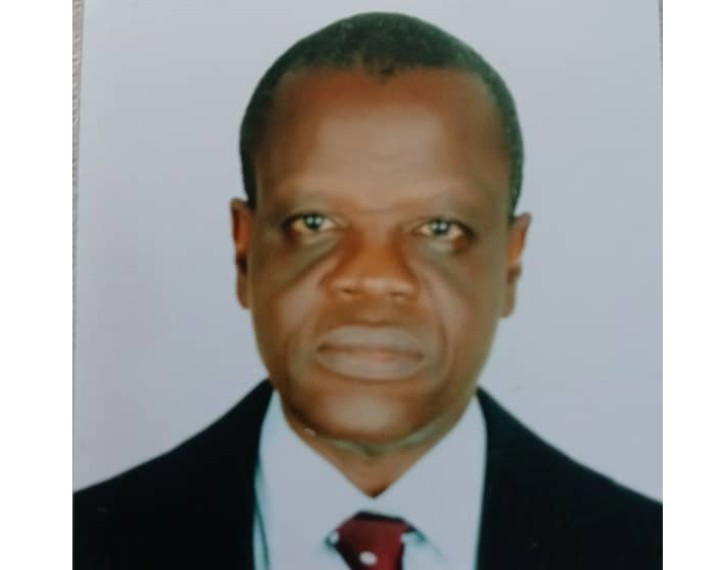
David Umahi, Nigeria’s Minister of Works and former governor of Ebonyi State, has built much of his political argument around infrastructure delivery, loyalty to President Bola Tinubu and his disagreement with Peter Obi’s presidential ambition. Yet, a statement he made during the run-up to the 2023 elections continues to raise questions about consistency, political loyalty and the place of South-East interests in Nigeria’s power equation.
In June 2022, following the All Progressives Congress (APC) presidential primary, Umahi expressed anger that South-East delegates had failed to rally behind an aspirant from their region. He had polled 38 votes, while Tinubu won the ticket with 1,271 votes. Umahi argued that the contest was about more than his personal ambition: it was an opportunity for the South-East to demonstrate its capacity and determination to produce Nigeria’s president.
“I continue to let them know that he that sells his brother or sister, even the buyers will not trust him,” Umahi said.
He also declared that the outcome was a shame for a region whose leaders had consistently complained of marginalisation.
The remark was powerful because it framed political support as a question of solidarity and trust. Umahi maintained that delegates should have voted for any South-East aspirant, irrespective of personal preference, to send a message that the region was qualified to lead the country. He accused delegates of trading their votes and warned that those who betrayed their own would eventually struggle to earn the confidence of others.
But political history rarely offers the comfort of simple loyalties. Umahi himself had left the Peoples Democratic Party (PDP) for the APC in November 2020, after serving as governor, deputy governor and party chairman under the PDP. His defection was publicly linked to his conviction that the South-East needed a fair opportunity to produce the president. He subsequently sought the APC ticket, but his 38 votes exposed the limits of regional solidarity within a national party whose delegates had their own calculations.
The question now is whether the principle Umahi invoked in 2022 should apply only to the pursuit of a South-East presidency or also to broader questions of political representation, fairness and national inclusion.
Following the 2023 election, Umahi joined Tinubu’s federal cabinet as Minister of Works. He has since defended the administration’s infrastructure agenda and argued that federal projects demonstrate the President’s commitment to the South-East. In June 2025, he reportedly cited federal appointments and projects in the region as evidence of what he described as Tinubu’s commitment to national integration.
There is nothing inherently contradictory about a South-East politician serving in a government led by a president from another region. Nor should ministerial appointments be reduced to an ethnic headcount. A minister’s primary responsibility is to Nigeria as a whole, and the performance of the Works Ministry should be judged by the quality, cost, timeliness and public value of infrastructure projects.
Nevertheless, Umahi’s earlier argument about regional fairness makes it legitimate to ask how consistently he raises concerns about representation and opportunity across the federation.
If he once insisted that the South-East should not surrender its presidential aspiration without a fight, Nigerians may reasonably ask whether he applies comparable scrutiny to questions of inclusion within the administration he now serves.
This question becomes particularly relevant in his exchanges with Peter Obi.
Obi’s 2023 presidential campaign drew substantial support in the South-East, where he defeated Tinubu and Atiku Abubakar in the presidential election.
Umahi later said members of his own family had voted for Obi, describing the development as a surprise. The comment offered a glimpse of how deeply Obi’s appeal had penetrated even communities where Umahi had exercised considerable political influence.
Umahi has continued to criticise Obi’s positions on infrastructure and the Tinubu administration. In June 2026, he challenged reports that Obi had promised to halt some of Tinubu’s legacy projects, describing the alleged position as painful while expressing hope that Obi had not made the statement. Umahi also questioned Obi’s record and urged comparisons between their respective approaches to governance.
More recently, Umahi has argued that the South-East cannot produce a president through what he described as deception, insisting that national leadership requires a verifiable record of service. Yesterday, he was also on Arise News Television on an unbridled agenda to destroy Peter Obi, a man he once called his brother.
These are arguments he is entitled to make. Obi, like any presidential aspirant, must be open to scrutiny over policy, performance and the feasibility of his proposals.
But scrutiny should be reciprocal.
Umahi’s own political record, his earlier appeal for regional solidarity and his current defence of the administration should also remain open to examination. Political disagreement is healthy; what weakens public debate is the impression that principles are invoked selectively depending on who benefits from them.
There is also a practical question for the Minister of Works. Nigeria’s road network remains a major concern for motorists, businesses and communities, and the ministry faces enormous demands across the country. Umahi’s time and political energy are public resources. While he is entitled to express political views, Nigerians are equally entitled to demand sustained attention to road rehabilitation, project costs, contract delivery and the condition of federal highways.
Ultimately, the issue is not whether Umahi must support Obi, nor whether the South-East must vote as a bloc. Democracy allows people from the same region to disagree, compete and support different parties. Regional solidarity cannot mean automatic loyalty to one politician, just as political disagreement should not be treated as betrayal.
The enduring lesson of Umahi’s 2022 warning is that trust depends on consistency. If the South-East deserves fairness, that principle should be defended without selective application. If national development must transcend ethnicity, that standard should also apply to appointments, policies and political alliances.
Umahi is free to defend Tinubu and criticise Obi. But the public is equally free to compare his present position with his earlier declarations and ask whether the principles he once advanced still guide his politics. In a democracy, no politician’s words should be exempt from the test of his subsequent choices.
Discover more from NAIRAVOICE.COM.NG
Subscribe to get the latest posts sent to your email.