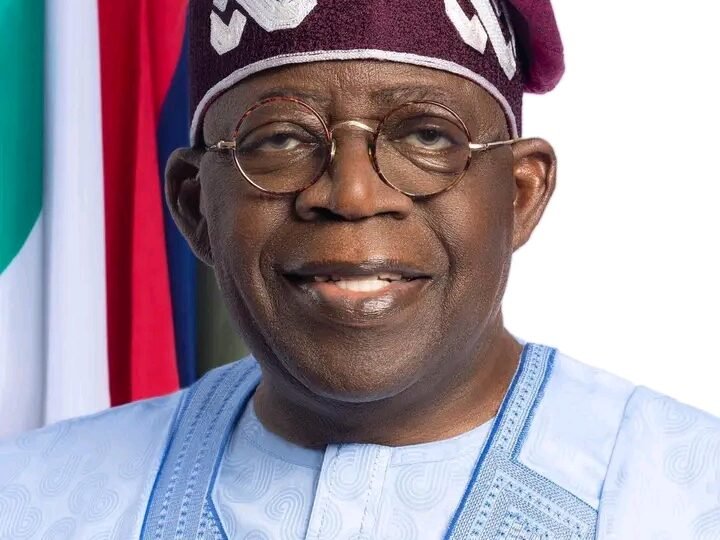
Economists and financial experts have expressed mixed opinions on President Bola Ahmed Tinubu’s economic scorecard in the last three years.
On May 29, 2026, President Tinubu marked three years in office.
In the last three years, Tinubu’s government has rolled-out economic reforms which have resulted in mixed impacts on Nigerians.
Upon the kickoff of President Tinubu’s administration, he had announced the implementation of twin policies, namely, fuel subsidy removal and naira liberalization.
Effects of the policies had thrown many Nigerians into hardship.
Fuel prices skyrocketed before May 29, 2023, from N238 to over N1340 per liter as of today.
Nigerian Exchange rate rose sharply from N460 per dollar three years ago to N1,366 per dollar as of June 1, 2026.
Exchange rate and fuel price rise directly impacted on the prices of food and services nationwide, which tripled till date.
Headline and food inflation stood at 15.69 percent and 16.06 percent for April 2026 as cost of living bites harder for many Nigerians with N70,000 monthly minimum wage.
While the hardship persists for many Nigerians, economic data have shown signs of gradual recovery with Gross Domestic Product growing to 3.89 percent in first Quarter 2026, and foreign reserves surged to $49.58 billion.
The Centre for the Promotion of Private Enterprise in a statement at the weekend by its Chief Executive Officer, Dr Muda Yusuf, relying on the above data, had noted that the country is on the part of gradual recovery.
Speaking with DAILY POST exclusively on the subject matter, prominent economists, Okechukwu Unegbu, former President of the Chartered Institute of Bankers of Nigeria (CIBN), professor of accounting and finance at Lead City University, Godwin Oyedokun and CEO of SD & D Capital Management, Gbolade Idakolo gave Tinubu 20-60 percent out of 100 percent on economic performance.
The economic experts were, however, on the same page regarding the worsened hardship Nigerians face.
Nigerians are worse off under Tinubu – Unegbu
On his part, Unegbu rated President Bola Tinubu’s economic performance at 20 percent, citing rising inflation, high fuel prices, and worsening living conditions for Nigerians.
He said the gains recorded in the country’s Gross Domestic Product, GDP, have not translated into improved welfare for ordinary citizens.
“I will rate him only 20 percent because despite the so-called GDP that has risen, you cannot trace that to the marketplace,” he said.
According to him, the reality of the Nigerian economy is reflected in the struggles faced by citizens rather than official economic figures.
“How are Nigerians feeling? How do they get food? Food is very expensive. You go to the market now, the inflation rate is so very high,” he stated.
Unegbu also questioned the accuracy of inflation figures released by the National Bureau of Statistics, arguing that they do not reflect the true economic situation in the country.
“What the Bureau of Statistics is publishing is not real. It’s not real at all. It is not reflective of reality,” he added.
The economist said Tinubu’s administration has performed poorly in managing the economy over the past three years despite taking some bold policy decisions.
He, however, acknowledged that the removal of fuel subsidy was a necessary step because the regime was riddled with corruption.
“On fuel subsidies, it was good because fuel subsidies were laden with corruption.
“But if you remove it, you must think of alternatives. How do you make people a little bit better?” He asked.
Unegbu further argued that Nigeria’s economic situation would have been worse without the efforts of the Governor of the Central Bank of Nigeria, Olayemi Cardoso.
“Without economists like the governor of the Central Bank of Nigeria, Olayemi Cardoso, the Nigerian economy would be worse off,” he said.
He lamented the rising cost of fuel and housing, saying they have placed additional pressure on households across the country.
“Look at fuel; it is about N1,400 per litre, which is very, very high.
“Also, if you consider the market crisis, consider the rent paid by people on houses, consider almost everything is in shambles,” Unegbu stated.
Nigerians yet to feel relief under Tinubu – Prof Oyedokun
Also speaking, Oyedokun rated Tinubu’s economic performance over the past three years at between 55 and 60 percent, saying the administration’s reforms have recorded some successes but are yet to significantly improve the welfare of ordinary Nigerians.
He described the administration’s record as a “work in progress,” noting that key reforms have helped lay the foundation for long-term economic stability.
According to him, the removal of fuel subsidies, reforms in the foreign exchange market, improved government revenues, growing investor confidence, and moderate economic growth are signs that the government is making progress toward addressing structural economic challenges.
“Three years into President Bola Ahmed Tinubu’s administration, the verdict on the economy remains mixed. While the government has undertaken bold reforms aimed at correcting long-standing structural distortions, many Nigerians are yet to feel the benefits in their daily lives,” he said.
Oyedokun noted that the reforms have attracted positive reviews from economic analysts and international financial institutions, which consider them necessary for building a more sustainable economy.
However, he stressed that the impact of the reforms has not translated into meaningful relief for many citizens.
“Rising food prices, high transportation costs, increased energy expenses, inflation, and declining purchasing power have significantly affected household welfare.
“For the average citizen, economic conditions today are arguably more difficult than they were in 2023, despite improvements in key macroeconomic indicators,” he stated.
The accounting professor argued that the administration’s biggest challenge remains converting economic reforms into visible improvements in living standards.
“The central challenge facing the administration is translating economic reforms into tangible improvements in living standards.
“Economic growth means little to citizens if it does not lead to lower inflation, better jobs, higher incomes, and improved access to basic necessities,” he said.
Oyedokun maintained that while the government deserves credit for pursuing difficult reforms, the persistence of economic hardship among millions of Nigerians cannot be ignored.
“Overall, President Tinubu’s economic performance can be described as a work in progress.
“The reforms have laid foundations for long-term stability, but the immediate impact on the welfare of ordinary Nigerians remains limited,” he stated.
He added: “On a scale of 100, a balanced assessment would place the administration’s economic performance at about 55–60 percent, reflecting commendable reform efforts but also acknowledging the persistent hardship facing millions of Nigerians.”
Oyedokun further noted that the ultimate measure of the administration’s success would be its ability to improve the quality of life of Nigerians.
“The success of these reforms will ultimately be judged not by economic statistics alone, but by whether they improve the quality of life of ordinary Nigerians in the years ahead,” he added.
Hardship persists for Nigerians – Idakolo
On his part, the CEO of SD & D Capital Management, Gbolade Idakolo, said President Tinubu’s reforms prevented economic collapse, but Nigerians are worse off now than in 2023.
Idakolo gave Tinubu’s administration a 50 percent performance rating, saying the government’s economic reforms have helped avert fiscal collapse but have left many Nigerians grappling with severe hardship.
He said the removal of the fuel subsidy and deregulation of the foreign exchange market were painful but necessary measures that rescued the country from a looming financial crisis.
According to him, the two policies triggered widespread economic challenges for citizens, even as they improved government finances and stabilized key macroeconomic indicators.
“The administration of President Tinubu in the last three years has been very challenging for Nigerians economically.
“The twin policies of subsidy removal and exchange rate deregulation have caused untold hardship on Nigerians, but they have saved the government from bankruptcy,” he said.
Idakolo noted that before Tinubu assumed office, several state governments struggled to meet salary obligations, while the Federal Government was spending more than 80 percent of its revenue on debt servicing.
He argued that the Nigerian economy had been operating in an unsustainable “bubble” and that the reforms exposed underlying weaknesses that had long been masked.
“Many state governments could hardly pay salaries and other obligations consistently before this administration, and the federal government had reached a point of using over 80 percent of its revenue for debt servicing.
“The Nigerian economy had been operating in a bubble, and these harsh policies freed the economy, albeit to the detriment of ordinary Nigerians,” he stated.
The financial analyst acknowledged efforts by the government to stabilize the economy through increased foreign reserves, exchange rate stability, and measures aimed at boosting investor confidence.
However, he maintained that the benefits of these reforms have not translated into improved living conditions for most Nigerians.
“Nigerians are economically worse off than before 2023, and the present realities are not offering any relief.
“The administration has battled to stabilize the economy by increasing foreign reserves, stabilizing the naira and improving investors’ confidence,” Idakolo said.
He added that the government’s promised palliative measures had failed to provide the expected relief for struggling households.
“All these achievements have been sacrificed on the altar of better living conditions for Nigerians, as the various palliatives promised have not brought the needed succour,” he added.
Assessing the administration’s overall performance, Idakolo said: “On a scale of 1 to 100 percent, I will realistically score this administration 50 percent.”
Discover more from NAIRAVOICE.COM.NG
Subscribe to get the latest posts sent to your email.