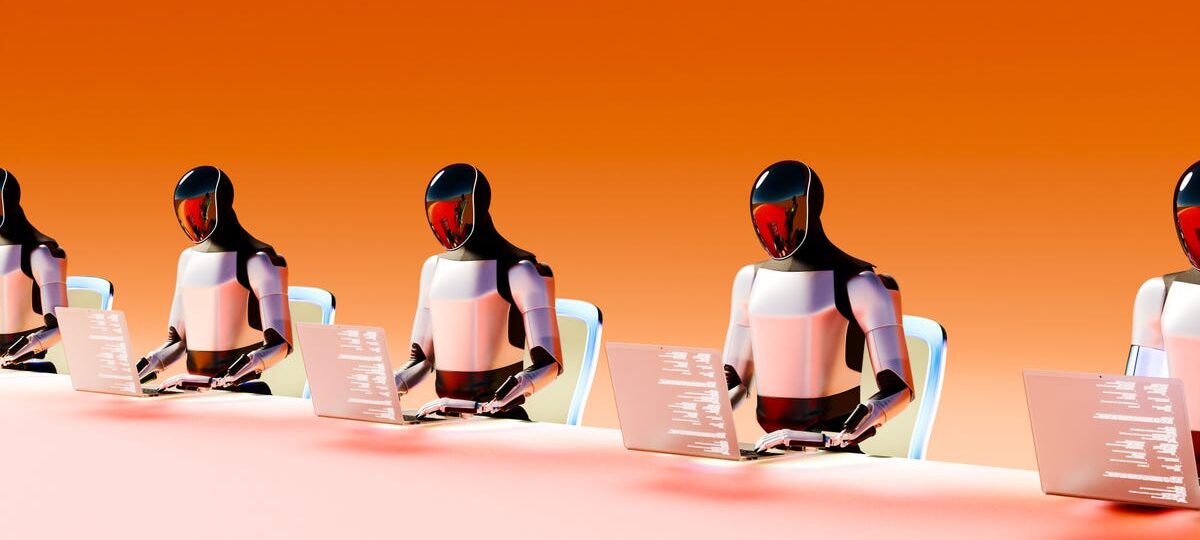
Robots don’t just rock; they also draw a ton of investment.
The French musicians who famously donned robot helmets retired five years ago, but Silicon Valley’s obsession with robotics is reaching a fever pitch.
Robotics and physical AI companies raised $33.4 billion globally in the first half of 2026.
It’s a stunning rise for a sector that didn’t even hit $5 billion in funding in all of 2020.
Rya Jetha, our resident robotics expert, wrote about why Silicon Valley is betting billions on a robot revolution.
It’s the first installment in Robonomics, our new series examining the rise of robots and their impact on business, jobs, and everyday life.
The size of the market that robotics can address is a big draw.
The need for physical labor is so vast — from construction sites to at-home butlers — the possibilities are almost endless.
Nvidia CEO Jensen Huang, a huge proponent of physical AI, valued the industry at … $50 trillion.
Just because the opportunity is there doesn’t mean it’ll be easy to realize.
Here are some of the biggest pain points standing in the way of the robotics revolution:Not an easy hand-off: When talking about robots, the discussion typically starts and ends with human hands.
It turns out our paws are pretty special, and quite difficult to recreate.
Granted, not every company wants to replicate the human hand.
But a lot of tasks require the dexterity we have.
Figuring out how to build those capabilities into robots hasn’t been easy.
Hardware is hard: Building robots has gotten considerably cheaper than years ago thanks to advancements in computing and hardware.
It’s still a much more expensive endeavor than most software work, though.
It’s one thing to rewrite some code.
It’s another to build an entirely new prototype.
Those problems get magnified as you try to scale up physical production.
The smallest mistake becomes a bigger problem if it gets too far down your supply chain.
Human pushback: Companies often pitch AI tools as a way to enhance, not eliminate, human workers.
Whether that’s the reality is up for debate.
Building robots to perform the same physical labor as humans leaves less room for interpretation.
Some still don’t see it as a zero-sum game.
Edward Mehr, the CEO of robotics startup Machina Labs, previously told me his new factory had the same number of human workers as one at a robot-free facility.
If robots do start replacing humans, they’ll have to navigate another nuance specific to the blue-collar world: unions.
AI has benefited some blue-collar workers, including those involved in building AI data centers.
That construction has been a boon for tradespeople, with some national labor unions even siding with developers.
They’ll be a lot less friendly if robots mean replacing their members, though.
Discover more from NAIRAVOICE.COM.NG
Subscribe to get the latest posts sent to your email.