Feel free to connect with him or check out his work. He’s everywhere — Upwork, YouTube, Spotify, SoundCloud, Collider, LinkedIn, Instagram.
Horror lists built around the question “Which movie scared you the most?” are almost always bad. Fear is too personal and subjective for that. Sometimes the movie that follows me home is the one that barely raises its voice. Sometimes it is a face, a sound from another room, a character making one decision I desperately wanted them not to make.
That is what these eight have done to me. I have watched them enough times to know exactly where the bodies are buried, and somehow they still have power. The scares remain, obviously, but so do the performances, the moral ugliness, the ideas underneath the violence, and those tiny human reactions that make everything hurt more than a monster ever could. These are hands down, the 8 most amazing horror movies ever made.
8
‘Get Out’ (2017)
<<img src="https://static0.colliderimages.com/wordpress/wp-content/uploads/2025/10/allison-williams-and-daniel-kaluuya-in-get-out-2017-1.jpg?q=70&fit=crop&w=825&dpr=1" />
Image via Universal Pictures</figure>
Chris Washington (Daniel Kaluuya) spends a weekend meeting the wealthy white family of his girlfriend Rose (Allison Williams), expecting awkward questions and passive-aggressive liberalism. Get Out gradually turns those discomforts into something much worse when Chris notices that the Black people working around the estate behave strangely, Rose’s mother offers him hypnosis, and the family’s fascination with his body begins feeling considerably less innocent.
What destroys me is how long Chris is socially pressured into ignoring instincts that are completely correct. Jordan Peele wrote and directed the film, and he understands that politeness can become its own kind of trap. Chris keeps giving people opportunities to explain themselves because walking out would make him appear unreasonable. Then Logan (LaKeith Stanfield) briefly breaks character at the party and screams at Chris to “get out,” and suddenly every uncomfortable little interaction snaps into place. It is frightening, hilarious, furious, and so controlled that even the jokes sharpen the horror rather than interrupting it.
7
‘The Texas Chain Saw Massacre’ (1974)
<<img src="https://static0.colliderimages.com/wordpress/wp-content/uploads/2024/10/the-texas-chain-saw-massacre-1200-1200-675-675-crop-000000.jpg?q=70&fit=crop&w=825&dpr=1" />
Image Via Bryanston Distributing Company</figure>
The Texas Chain Saw Massacre follows Sally Hardesty (Marilyn Burns), her brother Franklin (Paul A. Partain), and their friends through rural Texas, where an innocent detour eventually brings them to a farmhouse occupied by Leatherface (Gunnar Hansen) and his deeply disturbed family. There is barely any elaborate mythology. People enter the wrong house, and the nightmare starts almost immediately.
The first hammer killing is nasty. It happens abruptly with almost no ceremony. A door slides open, Leatherface appears, somebody collapses, and the door closes again. Tobe Hooper directed the film. He apparently made everything feel hot, dirty, exhausted, and horribly plausible even when the situation becomes grotesque. The dinner scene. Sally’s screaming becomes so constant. The entire movie feels physically oppressive. Then morning arrives, she escapes, and Leatherface dances with the chainsaw in the road while she laughs hysterically from the back of a truck. That ending does not feel victorious. It feels like somebody’s nervous system has snapped.
6
‘Psycho’ (1960)
<<img src="https://static0.colliderimages.com/wordpress/wp-content/uploads/2023/03/psycho-janet-leigh-marion-crane.jpg?q=70&fit=crop&w=825&dpr=1" />
Image via Paramount Pictures</figure>
This film follows Marion Crane (Janet Leigh) who steals $40,000 from her employer and flees town, eventually stopping at the isolated Bates Motel. There she meets Norman Bates (Anthony Perkins), a shy young proprietor apparently dominated by his unseen mother. Alfred Hitchcock‘s Psycho initially seems to be following Marion’s crime and guilt, then abruptly makes the motel itself far more important than the money she stole.
Perkins is the real weapon, though. Norman can appear fragile, embarrassed, friendly, and faintly wrong inside the same conversation. Watch him talk to Marion about his mother while birds loom around the parlor. Nothing outwardly outrageous is happening, but every sentence makes the room less comfortable. The shower murder became the icon. Norman’s nervous smile is what stays with me.
5
‘The Exorcist’ (1973)
<<img src="https://static0.colliderimages.com/wordpress/wp-content/uploads/2023/10/the-exorcist-2.jpg?q=70&fit=crop&w=825&dpr=1" />
Image via Warner Bros.</figure>
The Exorcist begins with actress Chris MacNeil (Ellen Burstyn) watching her daughter Regan (Linda Blair) undergo increasingly frightening physical and psychological changes that doctors cannot explain. Eventually, she turns to Father Damien Karras (Jason Miller), a priest and psychiatrist already struggling with his faith, who begins to suspect that Regan may be possessed.
I have never thought the pea soup was the frightening part. The horror is Chris exhausting every rational possibility and realizing none of them can help her child. William Friedkin directed the film with an almost clinical seriousness, which keeps the supernatural material from turning theatrical. Karras matters just as much because the demon attacks the exact wound he carries, especially his guilt surrounding his mother’s death. The final exorcism works because it is spiritual warfare conducted through incredibly human weaknesses. Everybody enters that room already damaged. That is why the possession feels personal rather than decorative.
Four franchises, four completely different ways of getting underneath
your skin. This is the one built out of your particular fear, why it works so well on you, and what
it would leave behind.
Your nightmare does not wait outside the door. It waits for you
to close your eyes, which you are going to have to do eventually, because nobody has ever
won that particular argument.
- Freddy is horror’s cruellest idea: a threat that lives in the one place you cannot
guard, cannot lock, and cannot avoid forever. - You are the one who is fine during the film and wide awake at two in the morning. Your
own head is where this does its damage. - These films understood exhaustion as a horror engine. The kids on Elm Street do not lose
because they are weak. They lose because they are tired. - You can lock every door in the house. You still have to sleep.
Your nightmare is not really the doll. It is the face of the
person you tell, and the way they decide, very kindly, that you have imagined all of it.
- Chucky works precisely because he is absurd. That is the trap: the more accurately you
describe him, the less anybody is going to believe you. - You are the one shouting at the screen because the characters are not listening. You
know that feeling from real life too. - The franchise is at its best when the adults in the room are the real obstacle, and you
have met those adults. - By the time somebody finally believes you, you will have handled most of it on your own.
Your nightmare has your number, knows your name, and has almost
certainly been inside your house before. The worst part is that you already know them.
- Scream is the only one of these where the killer takes the mask off and turns out to be
somebody who was at the party. - You are the person who calls the twist out loud before it lands. You watch people the
same way you watch films. - The franchise made the rules of horror part of the plot, which means the survivors are
the ones paying attention. You would be paying attention. - Everybody is a suspect, including the person who just offered to walk you home.
Your nightmare is not really about you. It is about the people
asleep down the hall, and the feeling that whatever is here is not interested in leaving.
- The Conjuring films are domestic horror. The house, the family, the perfectly ordinary
room that quietly stops feeling ordinary. - Your instinct is to get everybody into one room. Your fear is protective rather than
personal, which is rarer than it sounds. - This is the one franchise where belief is the weapon. The people who come through it are
the ones who are not alone and refuse to be. - Whatever is here did not come for you. It came for the household, and you are the one
standing in the hallway.
4
‘Alien’ (1979)
<<img src="https://static0.colliderimages.com/wordpress/wp-content/uploads/2025/09/alien-sigourney-weaver.jpg?q=70&fit=crop&w=825&dpr=1" />
Image via 20th Century Studios</figure>
The crew of the Nostromo is returning to Earth when Alien diverts them toward a mysterious transmission on a hostile planet. Kane (John Hurt) encounters an unknown organism, the crew brings him back aboard, and warrant officer Ellen Ripley (Sigourney Weaver) soon discovers that the creature now loose inside their ship is only part of the danger. Ridley Scott directed this like space travel had finally become a blue-collar job. On a lighter note, with all the reptilian aliens chit chatter, it is the perfect time to watch a horror film like this.
In Aliens, people complain about pay. Machinery looks used. Corridors feel practical rather than futuristic. Then the chestburster tears through Kane at dinner, and that normal working environment becomes impossible to trust again. I also love that Ripley survives partly because she was the person insisting on quarantine rules everyone else considered inconvenient. She is not “chosen.” She pays attention.
3
‘The Shining’ (1980)
<<img src="https://static0.colliderimages.com/wordpress/wp-content/uploads/2025/06/the-shining-jack-nicholson.jpg?q=70&fit=crop&w=825&dpr=1" />
Image via Warner Bros.</figure>
Stanley Kubrick helmed The Shining with an almost inhuman visual precision, making the Overlook feel too orderly to be safe. Writer Jack Torrance (Jack Nicholson) takes a winter job as caretaker of the isolated Overlook Hotel, bringing his wife Wendy (Shelley Duvall) and young son Danny (Danny Lloyd) with him. Danny possesses a psychic ability called “the shining,” which exposes him to the hotel’s violent past while isolation begins feeding something terrible inside Jack.
What gets me now is Wendy. People talk endlessly about the twins, Room 237, the elevator of blood, and Jack smashing through the bathroom door, but Shelley Duvall gives the film its bruised human reality. Wendy is the opposite of that control. She panics, cries, swings the bat awkwardly, and keeps moving because Danny needs her. Horror movies often make survival look cool. Wendy survives while looking absolutely terrified, which is far more convincing.
2
‘The Thing’ (1982)
<<img src="https://static0.colliderimages.com/wordpress/wp-content/uploads/2023/09/kurt-russell_the-thing-1982.jpg?q=70&fit=crop&w=825&dpr=1" />
Image via Universal Pictures</figure>
John Carpenter‘s The Thing traps an American research team in Antarctica with an extraterrestrial organism capable of perfectly copying other living beings. Once MacReady (Kurt Russell) and the others understand what it can do, the problem becomes horrifyingly simple. The creature may already look exactly like somebody they trust.
I could recommend this movie purely for the blood test. Everyone is tied down. Nobody knows who is human. MacReady heats a wire and touches each blood sample because he believes every piece of the organism will instinctively protect itself. The waiting becomes unbearable. Rob Bottin‘s effects are still magnificently disgusting, but the paranoia is why I keep coming back. Even the ending refuses to rescue us from it. MacReady and Childs (Keith David) sit together in the freezing ruins with no reliable way to prove either is human. After everything, distrust has outlived the monster.
1
‘The Silence of the Lambs’ (1991)
<<img src="https://static0.colliderimages.com/wordpress/wp-content/uploads/2025/09/silence-of-the-lambs-anthony-hopkins.jpg?q=70&fit=crop&w=825&dpr=1" />
Image via Orion Pictures</figure>
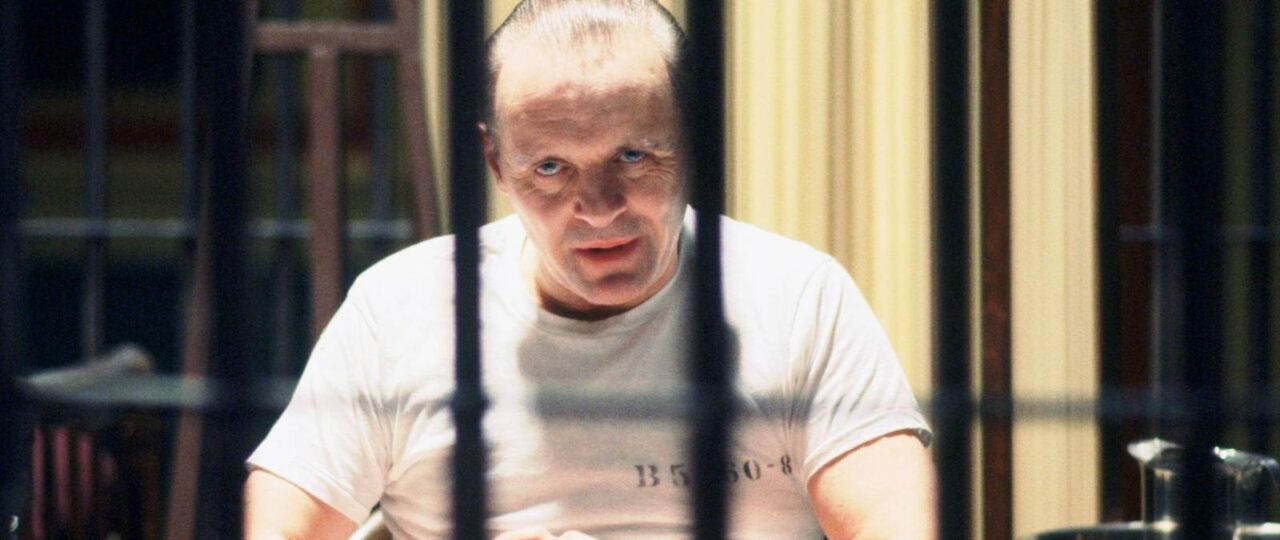
FBI trainee Clarice Starling (Jodie Foster) is sent to interview imprisoned psychiatrist and serial killer Hannibal Lecter (Anthony Hopkins) because investigators hope his insight can help them catch another murderer, Buffalo Bill (Ted Levine). The Silence of the Lambs becomes a psychological duel between Clarice and Lecter while another woman’s life depends on Clarice understanding what Bill is doing before time runs out.
Jonathan Demme directed the film. The film has those extraordinary direct-to-camera close-ups that make conversation feel invasive. Lecter looks straight into Clarice and seems capable of reading whatever she hoped to conceal. Yet Clarice never becomes intellectually passive around him. Foster lets you see the nerves and the steel at once. Then the final hunt places Clarice inside Bill’s dark basement while he watches her through night-vision goggles, reaching toward her without her knowing how close he is. I still tense up even though I know every movement. That is why this sits at number one. The film gives me brilliant detective work, psychological warfare, genuine terror, and a great heroine without wasting a single minute.
Discover more from NAIRAVOICE.COM.NG
Subscribe to get the latest posts sent to your email.