Feel free to connect with him or check out his work. He’s everywhere — Upwork, YouTube, Spotify, SoundCloud, Collider, LinkedIn, Instagram.
Imagine being given an entire universe where absolutely anything is possible and somehow making it boring. You can invent creatures, rewrite the laws of nature, resurrect the dead, and have two gods fight over a mountain. And what do some filmmakers do with that freedom? They either overdo a great story or are genuinely unable to be critical of what they’ve created.
I have a particular grudge against terrible fantasy movies because the genre demands that audiences make an enormous initial investment. We agree to learn your invented history, memorize ridiculous names, and believe in whatever supernatural rules you’ve established. Breaking that agreement is a serious offense. These ten films repeatedly ask us to invest in worlds their own filmmakers barely seem interested in understanding.
10
‘The Dark Tower’ (2017)
<<img src="https://static0.colliderimages.com/wordpress/wp-content/uploads/2021/09/the-dark-tower-idris-elba-matthew-mcconaughey.jpg?q=70&fit=crop&w=825&dpr=1" />
Image via Columbia Pictures</figure>
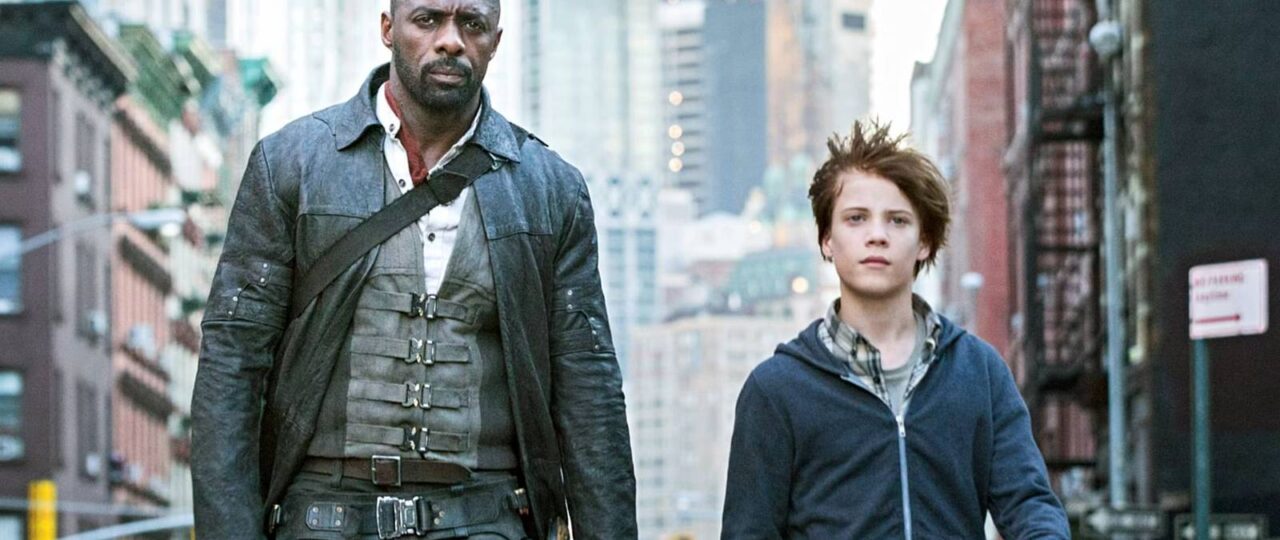
Stephen King spent decades constructing an enormous mythology around Roland Deschain, a gunslinger pursuing the mysterious Man in Black across a dying world. Naturally, The Dark Tower decides that the ideal way to introduce this universe is through Jake Chambers (Tom Taylor), a troubled teenager experiencing visions of Roland (Idris Elba), Walter (Matthew McConaughey), and a mysterious tower holding reality together. Jake eventually crosses into Roland’s world, where the gunslinger must overcome his obsession with revenge to prevent Walter from destroying the tower.
Where the hell is the actual journey? Director Nikolaj Arcel compresses King’s sprawling mythology into approximately 95 minutes, leaving Roland with barely enough time to develop an interesting relationship with Jake. The world feels like a collection of locations connected by exposition, while Walter has remarkably little personality beyond possessing supernatural abilities and generally behaving unpleasantly. Worst of all, the film turns an extraordinarily strange literary universe into a generic battle over saving existence. You could remove almost every reference to King’s novels and still have essentially the same disposable fantasy adventure.
9
‘Eragon’ (2006)
<<img src="https://static0.colliderimages.com/wordpress/wp-content/uploads/2023/11/eragon-arya-ed-speleers-sienna-guillory-1.jpg?q=70&fit=crop&w=825&dpr=1" />
Image via 20th Century Studios.</figure>
A teenage farm boy discovers a mysterious dragon egg, accidentally becomes one of the legendary Dragon Riders, and finds himself opposing a tyrannical king. Eragon follows its young protagonist (Ed Speleers) as he bonds with the dragon Saphira (Rachel Weisz), trains under former Rider Brom (Jeremy Irons), and eventually joins a rebellion against King Galbatorix (John Malkovich). Christopher Paolini‘s novel gives their relationship and the complicated history of the Riders considerable importance. The adaptation apparently decided that all this character development sounded exhausting.
Saphira literally transforms from a baby into an enormous dragon during a single flight. Think about that decision. The relationship that should anchor the entire adventure loses one of its most important developmental stages because the movie cannot be bothered to spend time building it. Director Stefen Fangmeier hurries through Eragon’s training with similar impatience, leaving the rebellion and its supporting characters desperately underdeveloped. Even the conflict with Durza (Robert Carlyle) feels like another obligatory fantasy showdown. Watching Eragon is like seeing somebody race through a beloved novel’s chapter summaries while occasionally remembering to show us a dragon.
8
‘Dragonball Evolution’ (2009)
<<img src="https://static0.colliderimages.com/wordpress/wp-content/uploads/2026/04/dragonball-evolution-2009-1-1.jpg?q=70&fit=crop&w=825&dpr=1" />
Image via 20th Century Fox</figure>
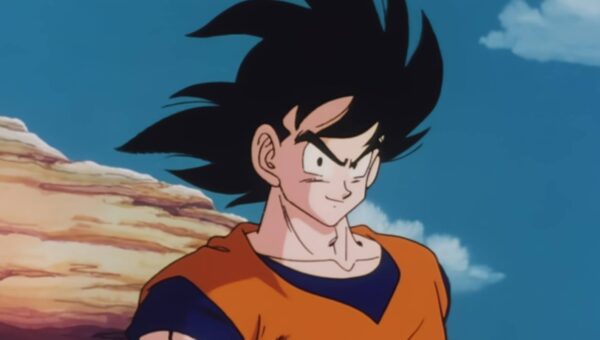
I would love to know who looked at Akira Toriyama‘s wonderfully ridiculous creation and decided it desperately needed an American high-school makeover. Dragonball Evolution introduces Goku (Justin Chatwin) as an awkward teenager dealing with bullies and romantic difficulties before his grandfather’s murder sends him searching for seven magical Dragon Balls. He recruits allies, trains under Master Roshi (Chow Yun-fat), and attempts to prevent the villainous Piccolo (James Marsters) from acquiring the artifacts and conquering Earth.
The problem extends considerably beyond the adaptation’s infamous departures from its source material. James Wong directed a film that barely understands what makes its own protagonist interesting. Goku’s infectious enthusiasm for martial arts becomes generic teenage insecurity, while the fighting possesses remarkably little of the exaggerated physical inventiveness that defines the franchise. Piccolo barely develops into a convincing threat, and the adventure feels like a collection of fantasy clichés awkwardly connected to a school romance. Even viewers unfamiliar with the original series deserve a protagonist with charisma and action sequences worth remembering. This adaptation disappoints on both counts.
7
‘Artemis Fowl’ (2020)
<<img src="https://static0.colliderimages.com/wordpress/wp-content/uploads/2024/11/judi-dench-in-a-green-suit-in-artemis-fowl.jpg?q=70&fit=crop&w=825&dpr=1" />
Image via Disney+</figure>
Artemis Fowl should have been an absolute nightmare for the fairies unfortunate enough to encounter him. In Eoin Colfer‘s books, he is an extraordinarily intelligent twelve-year-old criminal mastermind willing to kidnap fairy officer Holly Short and exploit an entire supernatural civilization for financial gain. Artemis Fowl instead presents Artemis (Ferdia Shaw) as a relatively conventional young hero trying to rescue his kidnapped father. He discovers the hidden fairy world, searches for a powerful artifact, and becomes entangled with Holly (Lara McDonnell) and the underground authorities.
Kenneth Branagh directed an adaptation that somehow eliminates the very characteristic that made its protagonist worth adapting. Turning Artemis into a standard heroic child destroys the delicious conflict between his intelligence, criminality, and eventual moral development. The frantic plot then introduces magical technology, supernatural organizations, and an assortment of creatures without allowing any of them to become particularly interesting. Josh Gad‘s Mulch Diggums supplies seemingly endless narration, frequently explaining material the audience can already see. I cannot think of many adaptations that have worked this hard to make their central character less distinctive.
6
‘The Legend of Hercules’ (2014)
<<img src="https://static0.colliderimages.com/wordpress/wp-content/uploads/2025/07/kellan-lutz-legend-of-hercules.png?q=70&fit=crop&w=825&dpr=1" />
Image via Lionsgate</figure>
Hercules is the son of Zeus. His mythology contains twelve extraordinary labors, monstrous creatures, divine interference, and a protagonist whose superhuman strength regularly produces spectacular consequences. The Legend of Hercules looks at that extraordinary material and concentrates instead on a relatively uninspired romantic conflict. Hercules (Kellan Lutz), originally known as Alcides, falls in love with Princess Hebe (Gaia Weiss), whose marriage to his older brother is being arranged. His hostile stepfather subsequently sends him away, forcing him into slavery and gladiatorial combat before he can return to reclaim his destiny.
Renny Harlin directed the film with an almost embarrassing determination to imitate the visual style of other historical action spectacles. The slow-motion fighting repeatedly attempts to manufacture excitement that the choreography rarely earns. Hercules himself has remarkably little personality beyond being extremely muscular and understandably annoyed with his family. Even the divine mythology seems secondary to recycled gladiator confrontations and tedious romantic complications. Imagine possessing the entire Hercules legend and producing an adventure in which its most memorable characteristic is how obviously it wants to resemble 300.
Four worlds and four completely different ideas of what a good life
looks like. This is where you belong, what it would ask of you, and what you would get back in
return.
You belong somewhere old enough that the mountains have names and
somebody can still tell you who gave them. Middle-earth is for people who think the right
thing is worth doing even when it will not be finished in their lifetime.
- This is the only world on the list where doing good is understood as a very long defeat,
fought anyway, by people who will never see how it ends. - You are drawn to grandeur, to white cities and deep forges and the sense that almost
everything you touch is older than your entire family line. - The Rings of Power is set in the last good age before it all goes wrong, which gives
every quiet scene in it a slightly unbearable weight. - You would take the hard road, and you would take it on foot.
You want the sea, a crew, and absolutely nobody telling you where
you are allowed to go. The Grand Line is the world for people whose main ambition in life is
finding out what is over there.
- One Piece has run for decades on one very simple engine, which is a group of people who
each want something impossible and have decided to go and get it together. - You collect people. Your ideal crew is a set of misfits who were each written off
somewhere else before you turned up and offered them a better idea. - The world is enormous and deliberately ridiculous, and the emotional gut punches land
harder because of that rather than in spite of it. - You would set sail knowing the map runs out, which is more or less the entire point of
it.
You would rather be feared and useful than liked and useless. The
Continent is a world where the monsters are the straightforward part of the job and the
people are where it all gets complicated.
- Witchers get paid to do what nobody else will and resented for existing at all, which is
a trade most people would refuse and you would probably accept. - You have no real illusions about which side is the good one, largely because on the
Continent that question tends to have a disappointing answer. - The best of these stories are not about the fighting. They are about somebody with a
rigid code being repeatedly cornered into caring about people. - You would take the coin, finish the job properly, and be out of town before the story
got told wrong.
You want the myths to be real and loose in the actual world, and
you want to find out at about thirteen that you were never anywhere near as ordinary as
everybody kept telling you.
- Percy Jackson takes the oldest stories we have and drops them into car parks and diners,
which makes the gods considerably funnier and a great deal worse. - You would be the kid every school gave up on, who turns out to have been built for
something nobody thought to test for. - The series is genuinely about friendship rather than destiny, and it says so out loud
every time a prophecy tries to get in the way. - Camp Half-Blood is the real fantasy here: a place where the thing that made you
difficult everywhere else is the thing that makes you belong.
5
‘Mortal Kombat: Annihilation’ (1997)
<<img src="https://static0.colliderimages.com/wordpress/wp-content/uploads/2025/02/jax-briggs-in-mortal-kombat-annihilation.jpg?q=70&fit=crop&w=825&dpr=1" />
Image via New Line Cinema</figure>
The first film ended with Liu Kang (Robin Shou) and his allies defeating Shang Tsung. Mortal Kombat: Annihilation immediately introduces Shao Kahn (Brian Thompson), who launches an invasion of Earthrealm and threatens to merge it with Outworld. Earth’s surviving champions must defeat his forces before the worlds merge, encountering familiar fighters and supernatural enemies along the way. Johnny Cage (Chris Conrad) is killed almost immediately, removing one of the previous movie’s most entertaining characters before the new adventure has properly begun.
That decision perfectly captures this sequel’s astonishing inability to distinguish between genuine dramatic stakes and arbitrary developments. John R. Leonetti directed a movie that introduces recognizable fighters with extraordinary enthusiasm before disposing of several of them almost immediately. The confrontations frequently resemble hurried demonstrations of costumes and special moves, while the increasingly convoluted family revelations surrounding Rayden (James Remar) and Shao Kahn contribute little meaningful drama. And then comes the climactic transformation into dreadful computer-generated creatures. This is an adaptation of a fighting game whose principal attraction should be the fighting. Somehow, even that fundamental responsibility proves too demanding.
4
‘Dungeons & Dragons’ (2000)
<<img src="https://static0.colliderimages.com/wordpress/wp-content/uploads/2023/12/dungeons-and-dragons-justin-whalin-zoe-mclellan.jpg?q=70&fit=crop&w=825&dpr=1" />
Image via New Line Cinema</figure>
A fantasy adventure based on a game famous for imaginative storytelling, unpredictable decisions, and wildly different characters should practically write its own entertainment. Dungeons & Dragons follows thieves Ridley (Justin Whalin) and Snails (Marlon Wayans), who become involved in a quest to obtain a powerful magical artifact. The object could help Empress Savina (Thora Birch) maintain control of her kingdom and defeat Profion (Jeremy Irons), an evil mage seeking political domination through his command of dragons.
I have rarely seen a movie misunderstand the appeal of its source material quite this thoroughly. Director Courtney Solomon presents a fantasy world populated by characters who possess the depth of unfinished character sheets. Ridley is painfully generic, the supporting adventurers receive insufficient development, and Jeremy Irons’ Profion behaves like a man competing to see how loudly he can deliver every available line. The elaborate political conflict ultimately becomes a struggle involving differently colored dragons, while the potentially fascinating relationships between magic users and ordinary citizens barely develop. The greatest pleasure of the tabletop game is discovering that practically anything might happen. This adaptation somehow makes every encounter feel predetermined.
3
‘Highlander II: The Quickening’ (1991)
<<img src="https://static0.colliderimages.com/wordpress/wp-content/uploads/2026/04/highlander-ii_-the-quickening-1-1.jpg?q=70&fit=crop&w=825&dpr=1" />
Image via InterStar</figure>
Remember when immortality was a mysterious supernatural condition connecting warriors across centuries? Highlander II: The Quickening apparently found that concept insufficiently interesting. The theatrical version reveals that Connor MacLeod (Christopher Lambert) and his mentor Ramírez (Sean Connery) originated on a distant planet called Zeist, where they were punished for participating in a rebellion. Years later, an elderly MacLeod lives on a polluted Earth protected by an artificial atmospheric shield, until the arrival of new immortal enemies restores his youth and forces another confrontation with his extraterrestrial past.
This is considerably worse than an ordinary disappointing sequel because it actively damages the mythology that made its predecessor compelling. Director Russell Mulcahy introduces an elaborate science-fiction backstory that reduces the original film’s supernatural mystery to an increasingly absurd series of explanations. Ramírez returns through an astonishingly convenient resurrection, while the conflict involving Earth’s protective shield feels almost entirely disconnected from the emotional appeal of immortal warriors. Even the central rules become difficult to take seriously. The original created considerable excitement around the possibility that only one immortal could remain. The sequel apparently interpreted that conclusion as an invitation to invent an entirely different franchise.
2
‘The Nutcracker in 3D’ (2010)
<<img src="https://static0.colliderimages.com/wordpress/wp-content/uploads/2025/01/the-nutcracker-in-3d.jpg?q=70&fit=crop&w=825&dpr=1" />
Image via G2 Pictures</figure>
Imagine taking one of the most recognizable Christmas fantasies in existence and deciding that what it desperately needs is imagery inspired by twentieth-century fascism. The Nutcracker in 3D follows Mary (Elle Fanning), who receives an enchanted nutcracker from her uncle (Nathan Lane) and discovers that the toy is actually a prince trapped under a magical curse. She subsequently enters his extraordinary kingdom, where the villainous Rat King (John Turturro) has established a brutal regime and intends to destroy the world of toys.
The genuinely bewildering creative decisions begin when the Rat King’s forces start confiscating children’s toys and burning them in enormous industrial furnaces. Their destruction produces smoke that blocks the sunlight, giving the film a grotesque visual vocabulary completely at odds with its supposed holiday enchantment. Andrei Konchalovsky directed this catastrophe, supplementing Tchaikovsky‘s magnificent music with awkward songs featuring lyrics by Tim Rice. The elaborate computer-generated environments rarely develop any convincing magical atmosphere, while John Turturro’s Rat King belongs to a considerably darker production. I struggle to imagine the intended audience. Children expecting Christmas magic receive disturbing authoritarian imagery, while adults receive a musical adventure that seems completely confused about its own identity.
1
‘The Last Airbender’ (2010)
<<img src="https://static0.colliderimages.com/wordpress/wp-content/uploads/2026/04/noah-ringer-as-aang-in-the-last-airbender-1.jpg?q=70&fit=crop&w=825&dpr=1" />
Image via Paramount Pictures</figure>
This one genuinely annoys me because the filmmakers already had an extraordinary story waiting for them. The Last Airbender follows Aang (Noah Ringer), a young boy who emerges from a century trapped in ice and discovers that the Fire Nation has spent his absence attempting to conquer the world. As the Avatar, Aang must master the elements and restore balance, traveling with siblings Katara (Nicola Peltz) and Sokka (Jackson Rathbone) while the exiled Prince Zuko (Dev Patel) pursues him to reclaim his honor. The animated series provides exactly the emotional development, worldbuilding, and carefully constructed character relationships a fantasy filmmaker should desperately want.
Night Shyamalan directed an adaptation that systematically drains the personality from practically everything it touches. Aang’s playful nature virtually disappears, Sokka loses much of his humor, and the friendship between the central characters receives nowhere near enough attention to become emotionally convincing. The elemental combat fares little better, with elaborate physical movements frequently producing disappointingly unimpressive effects. The casting also attracted understandable criticism for placing white actors in several central roles drawn from Asian and Indigenous-inspired cultures. And compressing an entire television season into a single feature leaves the dialogue struggling to explain a world the film barely allows us to experience. That final failure is what makes this my number-one choice. The filmmakers possessed an established fantasy universe with memorable characters, extraordinary possibilities, and a genuinely affecting central conflict. Somehow, the adaptation makes nearly all of it feel lifeless.
Discover more from NAIRAVOICE.COM.NG
Subscribe to get the latest posts sent to your email.