Rod Serling‘s groundbreaking series, The Twilight Zone, changed the landscape of small-screen entertainment forever with its unwavering dedication to imaginative storytelling and unforgettable performances, making it a defining contribution to classic television. Originally airing in 1959 and running for five seasons, The Twilight Zone understood that terror doesn’t need a monster or excessive violence to lure viewers in and relied on the simplicity of a ticking clock, a secret that someone is desperate to keep, or a truth that no one will believe. While the majority of episodes incite a certain level of anticipation or intensity, there are some stories from the Fifth Dimension that embody unnerving suspense.
Among these episodes, viewers will find travelers who see what no one else can, neighbors in a manic frenzy against an invisible invader, and individuals caught in between worlds of insanity and fantasy. So dim the lights and settle in because this list is your ticket to another dimension, not only of sight and sound but of mind. There’s a signpost up ahead. Your next stop: the most suspenseful episodes of The Twilight Zone, ranked!
10
“Mirror Image”
Season 1, Episode 21
<<img src="https://static0.colliderimages.com/wordpress/wp-content/uploads/2024/02/mirror-image-2-1.jpg?q=70&fit=crop&w=825&dpr=1" />
Image via CBS</figure>
Season one, episode twenty-one, “Mirror Image,” is a chilling Fifth Dimension episode that builds suspense from the most unsettling premise imaginable: the possibility that someone could replace you without anyone noticing. Vera Miles stars as a lone traveler, Millicent Barnes, who is waiting alone at a bus station on a rainy night when she swears someone who looks exactly like her is there to take over her life. What makes the episode so intense is Barnes’ isolation, as everyone she turns to for help dismisses her, and her growing sense of panic makes her pleas sound less and less credible.
Miles delivers a remarkable performance, balancing terror with a stubborn effort to stay level-headed, which results in the viewers never knowing for sure if she is losing her mind or telling the truth. The suspense peaks when a handsome stranger, played by Martin Milner, offers to help, only for the story to deepen the dread rather than resolve it. The open-ended finale leaves viewers with the suggestion that doppelgängers are only beginning their takeover, reminding them that the scariest invasion may be the one nobody believes.
9
“The Obsolete Man”
Season 2, Episode 29
Burgess Meredith stars in season two, episode twenty-nine, “The Obsolete Man,” as Romney Wordsworth, a librarian who has been deemed to be obsolete by a totalitarian state that has outlawed books and faces execution. Rather than plead for mercy, Wordsworth makes one unusual request: that his execution be televised and that he be allowed to pick the time and method of his death. At first, the request seems harmless, but in reality, it’s exactly what transforms the episode from a trial into a nerve-wracking countdown.
The episode opens with a signature monologue by Serling that immediately sets a tone of curiosity, gradually turning ominous as Meredith slowly enters the large, shadow-filled room to face the Chancellor, played by Fritz Weaver, who stands before him high on top of a tall podium. The real suspense of this episode lies in watching the tables turn on the powerful Chancellor who, like viewers, keeps wondering what Wordsworth knows and what he has planned. When the final seconds arrive, the question is no longer whether a man will die but who will break first. Serling’s closing narration drives home the chilling point: a state that destroys the individual ultimately destroys itself.
8
“Eye of the Beholder”
Season 2, Episode 6
<<img src="https://static0.colliderimages.com/wordpress/wp-content/uploads/2024/02/twilight-zone-eye-of-the-beholder-donna-douglas.jpg?q=70&fit=crop&w=825&dpr=1" />
Image via CBS</figure>
Season two, episode six, “Eye of the Beholder,” is an iconic Twilight Zone episode that meticulously builds suspense through concealment and shocks with an unexpected reveal. The episode opens with a woman, Janet Tyler (Donna Douglas), whose face is covered in layers of bandages, anxiously awaiting the results of her eleventh procedure. Like Tyler, the faces of the doctors and nurses are also concealed, but by heavy shadows and dim lighting, hearing nothing but their hushed voices murmuring in the background. The overall suspense of the episode hinges on one single moment: the removal of the bandages.
As the doctor slowly removes each layer of bandages, the point-of-view camera shot immerses the audience into Tyler’s experience as she anxiously watches the light in the room grow brighter and brighter. What looked like a tragedy of disfigurement becomes a chilling meditation on conformity as the faces of the “normal” people appear, revealing that the standard of beauty has been turned completely upside down. The suspense never truly releases as Tyler frantically runs through the halls of the hospital and eventually turns into unease, leaving viewers to question their own assumptions about what they define as beautiful and ugly.
7
“The Invaders”
Season 2, Episode 5
<<img src="https://static0.colliderimages.com/wordpress/wp-content/uploads/2023/12/agnes-moorehead_the-twilight-zone_the-invaders.jpg?q=70&fit=crop&w=825&dpr=1" />
Image via CBS</figure>
Agnes Moorehead delivers an underappreciated performance in season two, episode five, “The Invaders,” which effectively generates relentless suspense through almost complete silence. The episode follows Moorehead as a woman who lives alone in a rickety farmhouse in the middle of nowhere. When a small spacecraft carrying tiny armed men lands on her roof, the woman finds herself in a fight for her life as the creatures stalk her through the dark rooms of her home. Despite nearly never saying a word, Moorehead’s physical performance carries the entire episode, conveying panic, exhaustion, and fierce determination through her face and body alone.
Director Richard Donner turns the cramped farmhouse into a battlefield, with every creaking stair and scraping footsteps setting the audience on edge while the scale of the conflict creates strange visual tension. The overall suspense builds as Moorehead’s character fights back, destroying the invaders one by one, until she corners the last survivor and heads its desperate transmission from inside its ship. The twist of the invaders being from Earth recasts everything that came before, and Serling’s final chilling words leave viewers to reconsider who was truly the invader, making ‘The Invaders’ one of the most suspenseful episodes of The Twilight Zone.
6
“The Monsters Are Due on Maple Street”
Season 1, Episode 22
 Image via CBS
- Image via CBS
- Image via CBS
 Image via CBS
 Image via CBS
 Image via CBS
Season one, episode twenty-two, “The Monsters Are Due on Maple Street,” is an unpredictable episode that focuses on how fear and a lack of explanation can turn a group of civilized people into an angry and senseless mob. Set in a quiet suburban neighborhood, the episode opens with a few neighbors witnessing a strange shadow flying overhead that leads to a power outage. As the neighbors share their different theories about what’s going on, one boy suggests that aliens have disguised themselves as humans and are scouting out the area before an invasion. Initially, the theory seems outlandish, but as the strange occurrences continue, the trust between the neighbors begins to collapse as they quickly turn on each other.
Suspicion spreads like wildfire, and every flickering light or unexplained noise pushes the neighbors closer to violence, demonstrating that the real danger isn’t outside but among the people. The brilliance of the episode is that the audience gets to watch a mob form in real time, knowing each accusation makes things worse and raises the stakes. The final reveal of aliens being the cause behind all the chaos is almost secondary to the horror viewers had already witnessed, and Serling’s closing narration sends the message home: prejudice and fear can destroy a community without help from the outside.
Four franchises, four completely different ways of getting underneath
your skin. This is the one built out of your particular fear, why it works so well on you, and what
it would leave behind.
Your nightmare does not wait outside the door. It waits for you
to close your eyes, which you are going to have to do eventually, because nobody has ever
won that particular argument.
- Freddy is horror’s cruellest idea: a threat that lives in the one place you cannot
guard, cannot lock, and cannot avoid forever. - You are the one who is fine during the film and wide awake at two in the morning. Your
own head is where this does its damage. - These films understood exhaustion as a horror engine. The kids on Elm Street do not lose
because they are weak. They lose because they are tired. - You can lock every door in the house. You still have to sleep.
Your nightmare is not really the doll. It is the face of the
person you tell, and the way they decide, very kindly, that you have imagined all of it.
- Chucky works precisely because he is absurd. That is the trap: the more accurately you
describe him, the less anybody is going to believe you. - You are the one shouting at the screen because the characters are not listening. You
know that feeling from real life too. - The franchise is at its best when the adults in the room are the real obstacle, and you
have met those adults. - By the time somebody finally believes you, you will have handled most of it on your own.
Your nightmare has your number, knows your name, and has almost
certainly been inside your house before. The worst part is that you already know them.
- Scream is the only one of these where the killer takes the mask off and turns out to be
somebody who was at the party. - You are the person who calls the twist out loud before it lands. You watch people the
same way you watch films. - The franchise made the rules of horror part of the plot, which means the survivors are
the ones paying attention. You would be paying attention. - Everybody is a suspect, including the person who just offered to walk you home.
Your nightmare is not really about you. It is about the people
asleep down the hall, and the feeling that whatever is here is not interested in leaving.
- The Conjuring films are domestic horror. The house, the family, the perfectly ordinary
room that quietly stops feeling ordinary. - Your instinct is to get everybody into one room. Your fear is protective rather than
personal, which is rarer than it sounds. - This is the one franchise where belief is the weapon. The people who come through it are
the ones who are not alone and refuse to be. - Whatever is here did not come for you. It came for the household, and you are the one
standing in the hallway.
5
“Twenty Two”
Season 2, Episode 17
<<img src="https://static0.colliderimages.com/wordpress/wp-content/uploads/2025/10/the-twilight-zone-twenty-two-barbara-nichols-1.jpeg?q=70&fit=crop&w=825&dpr=1" />
Image via CBS</figure>
Season two, episode seventeen, “Twenty-Two,” is a never-ending nightmare of an episode starring Barbara Nichols as Liz Powell, an exhausted dancer who is recovering in the hospital where she becomes terrified of a recurring dream that ends with a nurse beckoning her to the hospital morgue. Unlike other episodes, director Jack Smight shoots “Twenty-Two” on videotape, giving it a flat, unnervingly immediate quality and immersive atmosphere that makes the hospital feel unusually real.
The majority of the suspense stems from the details of the dream never changing, such as the long hallway, the elevator, and the cold, quiet morgue, creating a repetition that tightens the screws and reveals what is coming, but still intensifies a sense of dread with each return. Nichols gives a nerve-wracking performance and conveys exhaustion and fear so convincingly that it’s hard for viewers not to share in her desperation for the nightmare to stop. The final twist lands with brutal efficiency, recasting the dream as a premonition and leaves viewers with a disturbing message that sometimes the warnings arrive before the destination.
4
“Night Call”
Season 5, Episode 19
<<img src="https://static0.colliderimages.com/wordpress/wp-content/uploads/2025/10/gladys-cooper_the-twilight-zone_night-call.jpg?q=49&fit=crop&w=825&dpr=2" />
Image via CBS</figure>
Season five, episode nineteen, “Night Call,” is a ghostly episode directed by Jacques Tourneur and based on the short story, Sorry, Right Number, written by Richard Matheson, who also wrote the teleplay for the episode. The episode stars Oscar-nominated actress Gladys Cooper as a lonely and bedridden woman, Elva Keene, who lives alone in a creaky old house on the outskirts of the London Flats. During a severe thunderstorm, Keene receives a phone call in the middle of the night, but when she answers, all she can hear is static and a faint, mournful moan. As the calls continue, Keene calls the telephone company for answers, only to learn that the calls are coming from a downed power line lying in a cemetery.
Tourneur, who is a master of atmospheric horror, takes advantage of the episode’s main setting while Keene’s physical vulnerability makes every ring or sudden sound feel like a threat. Cooper’s performance is undeniably the heart of the episode and effectively conveys a blend of fear, stubbornness, and loneliness that causes viewers to feel genuine concern for the woman who has nowhere to run and no one to help her. The overall tension of the episode tightens when Keene learns who is calling, transforming the haunting from menacing to heartbreaking. Serling’s final words emphasize the shocking revelation and leave audiences with the notion that the line between the living and the dead is thinner than we think.
3
“The Hitch-Hiker”
Season 1, Episode 16
<<img src="https://static0.colliderimages.com/wordpress/wp-content/uploads/2025/02/inger-stevens_lenoard-strong_the-twilight-zone_the-hitch-hiker.jpg?q=49&fit=crop&w=825&dpr=2" />
Image via CBS</figure>
Season one, episode sixteen, “The Hitch-Hiker,” taps into a common fear that almost everyone has, especially when traveling alone, and turns a simple road trip into an unexpected detour through the Fifth Dimension. The episode stars Inger Stevens as Nan Adams, a young woman driving cross-country who, after miraculously surviving a tire blowout, notices a gaunt man (Leonard Strong) standing on the roadside with his thumb out. A few miles later, Adams sees the same man on the side of the road again, and as he continues to appear, she eventually believes that he’s following her.
Director Alvin Ganzer keeps the episode lean and relentless, and its overall simplicity is its greatest strength. The long stretches of empty highway, the repeating image of the solitary figure, and Strong’s silent, patient stare all create a rhythm of unease. There’s no intense chase or scream for help, only a woman realizing she can’t outrun something that is always one step ahead. Stevens carries the episode with a performance that grows more frayed by the mile, and her desperate attempts to escape push the tension to its breaking point. When the truth is finally revealed, it reframes Adams’ entire journey, delivering a quiet but devastating shock that can only be found in The Twilight Zone.
2
“Nightmare at 20,000 Feet”
Season 5, Episode 3
<<img src="https://static0.colliderimages.com/wordpress/wp-content/uploads/2025/06/twilight-zone-3.jpg?q=70&fit=crop&w=825&dpr=1" />
Image via CBS</figure>
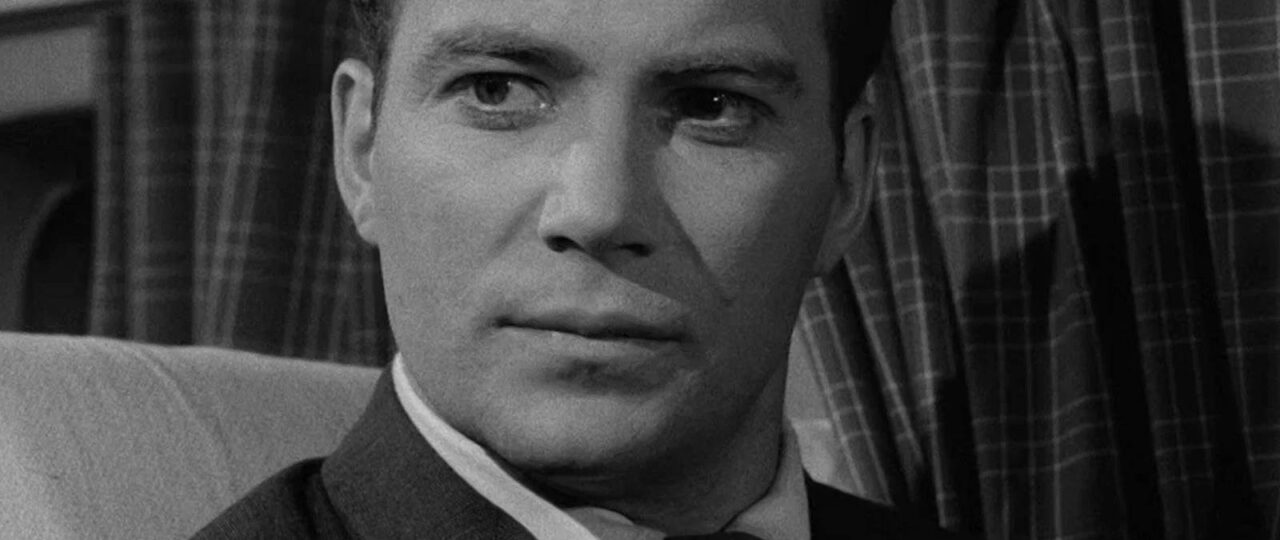
Season five, episode three, “Nightmare at 20,000 Feet,” is without question one of the most famous episodes of The Twilight Zone that has since become a staple in pop culture. William Shatner stars as Robert Wilson, a salesman who recently recovered from a nervous breakdown and is now flying home with his wife (Christine White) on a stormy night. When Wilson peers out his window, he notices a gremlin on the wing of the plane tearing at the wiring, but every time he calls for help, the gremlin disappears, leaving Wilson to look like a man who is simply unraveling again.
The suspense of the episode is initially established by the limited visuals of the gremlin. Initially, viewers only see brief glimpses of the creature, which is illuminated by flashes of lightning before darkness swallows it. This steady repetition makes the close-up reveal of the gremlin land with genuine shock and is easily one of the most disturbing moments in the entire series. Shatner’s performance swings between panic and forced calmness, leading the audience to question if his character is simply paranoid or the only person who sees the horrifying truth. When Wilson decides to take matters into his own hands, the suspense reaches a breaking point, leading to a terrifying choice and a brilliant aftermath, which essentially solidifies “Nightmare at 20,000 Feet” as one of the most suspenseful episodes of The Twilight Zone.
1
“The Shelter”
Season 3, Episode 3
<<img src="https://static0.colliderimages.com/wordpress/wp-content/uploads/2026/10/larry-gates_michael-burns_peggy-stewart_jo-helton_jack-albertson_the-twilight-zone_the-shelter.jpg?q=49&fit=crop&w=825&dpr=2" />
Image via CBS</figure>
Season three, episode three, “The Shelter,” is an intense episode that reveals how quickly civility can collapse in a moment of sheer panic and fearful desperation. The episode opens at the home of Dr. Bill Stockton (Larry Gates), where his wife, Grace, played by Peggy Stewart, who is one of several actors from The Twilight Zone who also appeared in Seinfeld, and some of their closest friends are throwing him a birthday party, but when they hear a broadcast over the radio about unidentified objects heading for the United States, the celebration comes to an abrupt end as everyone rushes home. While Bill and his family prepare to take shelter in their fallout shelter, their friends return, begging them to let them in, but there’s only enough room for Bill and his family.
“The Shelter” is another episode from the Fifth Dimension that explores basic human nature and exposes the thin line between the civilized and uncivilized. As the neighbors realize how little time they have, polite conversation gives way to pleading, then accusations, then force, allowing the single suburban home to turn into an intense pressure cooker. The tension reaches a climatic peak when the neighbors try to break down the shelter door with a makeshift ram, while the radio crackles alive with an update that changes everything, leaving the characters ashamed of their actions. At the end, Serling chimes in with a sobering lesson about how the true threat in a crisis might be the fear we carry within ourselves and what people are willing to do to one another in a time of panic and uncertainty.
Discover more from NAIRAVOICE.COM.NG
Subscribe to get the latest posts sent to your email.