A good movie makes you feel something. Whether it’s happiness or sadness, fear or euphoria, being able to emote means that the project has done its job. Some films have a mission with a specific emotion in mind, but others thrive on suspense, where the emotions are anticipatory. Whether through fear or a thrill, a suspenseful movie gets the blood rushing and the adrenaline pumping.
Throughout film history, there have been some good films that have kept suspense present, but these tend to be the gold standard. From fearing the unknown to fighting against the inevitable, these ten movies have kept suspense front and center. Whether it’s through a singular moment or filled from start to finish, these films provide the blueprint for how to utilize suspense.
1
‘Jaws’ (1975)
<<img src="https://static0.colliderimages.com/wordpress/wp-content/uploads/2025/11/jaws-1975-1.jpg?q=70&fit=crop&w=825&dpr=1" />
Image via Universal Pictures</figure>
If there’s one film that made you terrified to dip your toes into the ocean, it’s Jaws. The Steven Spielberg creature feature follows local police chief Martin Brody (Roy Scheider), marine biologist Matt Hooper (Richard Dreyfuss), and grizzled shark hunter Quint (Robert Shaw) as they hunt a great white shark near the shores of the small New England summer resort town of Amity Island. As the beast terrorizes the waters, it becomes a battle of man versus nature. Widely recognized as the world’s first modern “summer blockbuster,” Jaws triumphantly explores the terror of not knowing what lies beneath.
Jaws is a masterclass in suspense, weaponizing the fear of the unknown rather than relying on gore or constant monster sightings. Though Bruce the Shark, the infamous mechanical beast used in the film, may not seem scary by today’s standards, Spielberg expertly concealed the creature and used floating yellow barrels, point-of-view shots from beneath the water, and fleeting shadows to force the audience’s imagination to fill in the terror. Add John Williams‘ exceptional minimalist, two-note pulsing theme, which announces danger before the shark is ever seen and elevates the tension to great heights. Jaws remains the greatest shark film ever made.
2
‘Memories of Murder’ (2003)
<<img src="https://static0.colliderimages.com/wordpress/wp-content/uploads/2023/10/memories-of-a-murder.jpg?q=70&fit=crop&w=825&dpr=1" />
Image via CJ Entertainment</figure>
In Bong Joon Ho‘s neo-noir crime thriller Memories of Murder, local rural detectives Park Doo-man (Song Kang-ho) and Cho Young-goo (Kim Roi-ha) are assigned to a brutal rape and murder case. They rely on rough intuition and brute-force interrogation, clashing over their contrasting approaches to police work as a methodical detective from Seoul, Seo Tae-yoon (Kim Sang-kyung), is brought in to help when more women are killed under similar patterns during rainy nights. Finding the killer becomes a dangerous obsession as their means to investigate are lacking, and their methods are subject to questionable morality. Memories of Murder dramatizes the real-life Hwaseong serial murders as it reflects South Korea’s growing pains, capturing the stress and limitations of state institutions.
Memories of Murder builds suspense through a slow-burning atmosphere of frustration, systemic failure, and its characters’ psychological descent. Bong uses oppressive weather, claustrophobic rural landscapes, and stark lighting to mirror the characters’ hopelessness. The film quietly embeds color motifs to subtly manipulate audience anxiety. The film forces you on an unrelenting journey in hopes the killer will be found. By ending the film with a chillingly ambiguous shot that the killer could be anyone watching right then remains a terrifying prospect.
3
‘Misery’ (1990)
<<img src="https://static0.colliderimages.com/wordpress/wp-content/uploads/2026/07/misery-1990-annie-wilkes-1.jpg?q=49&fit=crop&w=825&dpr=2" />
Image via Columbia Pictures</figure>
One of the greatest thriller films of all time, Misery is psychological horror done right. Based on the Stephen King novel, the Rob Reiner-directed masterpiece follows bestselling romance novelist Paul Sheldon (James Caan), who is taken care of by crazed fan Annie Wilkes (Kathy Bates) after he crashes his car during a Colorado blizzard. When she discovers that Paul killed off Misery in his new book, her sweet demeanor turns violently unhinged, forcing him to bring her back to life. A brilliant power struggle ensues as Misery relies on claustrophobic realism, psychological terror, and the unpredictable volatility of a woman who proves some fandoms are filled with monsters.
The brilliance of Misery is that there are no supernatural threats haunting the protagonist. It’s as human as human can get. The premise is chilling: a helpless, injured person trapped in isolation with an unstable individual. Bates brilliantly brings Annie to life, seamlessly flipping from sweet and folksy to violent, terrifying rage. It leaves both the captive author and the audience unable to predict what will happen next. The film functions almost like a stage play, confining nearly the entire story to a remote, snowbound house, building tight, inescapable dread. Misery became the blueprint for future two-hander horror stories.
4
‘No Country for Old Men’ (2007)
<<img src="https://static0.colliderimages.com/wordpress/wp-content/uploads/2026/05/no-country-for-old-men-2007.jpg?q=49&fit=crop&w=825&dpr=2" />
Image via Miramax Films</figure>
Joel and Ethan Coen‘s magnum opus, No Country for Old Men, set in 1980s Texas, tells the tale of three main figures whose paths collide. Llewelyn Moss (Josh Brolin) stumbles upon the bloody aftermath of a drug deal gone wrong and finds several dead bodies, a dog, and a satchel containing $2 million in cash. He takes the cash, setting off a violent chain of events as ruthless hitman Anton Chigurh (Javier Bardem) is hired to track down the dough. Sheriff Ed Tom Bell (Tommy Lee Jones), an aging traditionalist, tries to find and protect Moss while grappling with a wave of senseless, brutal violence that he feels he no longer understands or can stop. No Country for Old Men is a story of fate versus free will that captures the fear of the inevitable changing world.
No Country for Old Men achieves its gripping suspense through a constant, suffocating sense of inevitability. But the catch is for whom. The film drops normal emotional cues or background music, leaving only stark ambient desert sounds, wind, footsteps, and silence, making every moment feel heavy and unpredictable. The Coen brothers subvert the concept of a safety net by letting key violence happen abruptly. The tension comes from the agonizingly slow cat-and-mouse pacing where sheer survival is top of mind. Bardem’s Chigurh is a force of nature that stalks through the film like a horror-film slasher. Anytime he appears on screen, it’s instant dread. No Country for Old Men smartly chooses psychological tension over fervent action.
5
‘Prisoners’ (2013)
<<img src="https://static0.colliderimages.com/wordpress/wp-content/uploads/2024/02/hugh-jackman-in-the-rain-in-denis-villeneuve-s-prisoners.jpg?q=70&fit=crop&w=825&dpr=1" />
Image via Warner Bros.</figure>
In Denis Villeneuve‘s crime thriller Prisoners, six-year-old Anna Dover (Erin Gerasimovich) and Joy Birch (Kyla-Drew Simmons) vanish on Thanksgiving Day in a small Pennsylvania town. Detective Loki (Jake Gyllenhaal) leads the official search and questions Alex Jones (Paul Dano), a developmentally disabled man driving a suspicious RV parked near the girls’ street, but releases him upon having no physical evidence. Convinced Alex is guilty, Anna’s devout father, Keller Dover (Hugh Jackman), kidnaps him and holds him captive in an abandoned house, brutally torturing him for answers with the reluctant help of Joy’s father, Franklin Birch (Terrence Howard). But when new clues and suspects emerge, a battle of morality begins. Prisoners achieves its fascination through a combination of slow-burn dread, a grim suburban atmosphere, and a dual narrative that pits ethical duty against raw desperation.
The film’s title serves a multitude of meanings. It applies to physical cells, mental obsession, emotional grief, and spiritual warfare. With that in mind, Villeneuve directs the film to force the audience to piece together agonizing hints in real time, leading to a harrowing, chilling look at human evil. The film traps the audience in a dark question: What would you do if the law fails your child? Every choice pushes characters deeper into moral degradation. The narrative becomes excruciatingly stressful as each step grows more suspicious, leaving you wondering whether the mission will succeed and who might not make it out alive. Like a titillating thriller, Villeneuve leaves the conclusion ambiguous.
6
‘Psycho’ (1960)
<<img src="https://static0.colliderimages.com/wordpress/wp-content/uploads/2026/03/marion-crane-janet-leigh-slides-down-shower-tile-after-being-stabbed-psycho.jpg?q=49&fit=crop&w=825&dpr=2" />
Image via Paramount Pictures</figure>
One of the greatest horror thrillers of all time, Psycho forever subverted expectations. Directed by Alfred Hitchcock, the story follows Marion Crane (Janet Leigh), who, on the run, hides out at the Bates Motel, run by a shy, polite young man named Norman Bates (Anthony Perkins). After being shockingly killed in the shower, Marion’s sister Lila (Vera Miles), her boyfriend Sam Loomis (John Gavin), and a private investigator named Milton Arbogast (Martin Balsam) launch a search to find her. Widely considered a foundational blueprint for modern psychological thrillers and slasher films, Psycho shattered conventional narrative rules of cinema.
Psycho mastered suspense with its first daring move: killing off its star in the first act. She is brutally killed just 40 minutes in, leaving viewers completely uncertain about what will happen next. Hitchcock brought the terror into everyday life by making the killer a polite, shy, seemingly harmless young man running a roadside motel. Through Bernard Herrmann‘s iconic, shrieking, string-heavy musical compositions, the psychological tension builds, delivering much of the film’s visceral terror without explicit gore. Psycho trapped the audience with extreme dread, reminding them that anything can happen without warning.
7
‘Rear Window’ (1954)
<<img src="https://static0.colliderimages.com/wordpress/wp-content/uploads/2026/07/rear-window-1954.jpg?q=49&fit=crop&w=825&dpr=2" />
Image via Paramount Pictures</figure>
Another Hitchcock classic, Rear Window centers on L.B. “Jeff” Jefferies (James Stewart), a globe-trotting photojournalist stuck in a wheelchair in his Greenwich Village apartment with a broken leg. Passing time by using a camera lens and binoculars to spy on his courtyard neighbors through his rear window, Jeff grows convinced that Lars Thorwald (Raymond Burr) has murdered his bedridden wife and disposed of her body. Jeff enlists his girlfriend, Lisa Fremont (Grace Kelly), and his visiting nurse, Stella (Thelma Ritter), to help gather evidence. Rear Window explores the ethics, guilt, and seductive thrill of watching other people’s private lives, all while highlighting the dangers of confinement.
Rear Window builds immense suspense by restricting the narrative to the point of view of a single, immobile protagonist and locking the audience into the same voyeuristic position. The camera is tethered to Jeff’s vantage, forcing viewers to piece together clues with incomplete information and guess what is happening just out of sight. Hitchcock forces his audience to share Jeff’s guilt at spying on private lives, turning passive observation into an uncomfortable, active participation in the danger. Shot almost entirely on a massive indoor set featuring a livable Greenwich Village courtyard, the film builds claustrophobic tension where mundane daily routines slowly curdle into paranoia.
Clue went back into cinemas for its fortieth birthday with the three
endings handed out at random, which is a good reminder that the mystery film will try anything. Here
is yours, what it says about you, and the case for it being the best of the four.
You are the most fun thing in the room and you are not remotely
in control of it. Clue is a murder mystery built from a board game, played at farce speed by
one of the best comic ensembles ever assembled, and it refuses to commit to a single answer.
- You keep the energy up and the plan loose, and people have a much better evening because
of it. - Three different endings were sent to different cinemas in 1985, so the answer depended
on which screen you walked into. - It flopped completely, found its audience on video, and went back into cinemas for its
fortieth anniversary with the endings randomised again. - Your flaw is that chaos is excellent company and a terrible plan.
You watch, and you notice the thing everybody else walks past.
Hitchcock trapped James Stewart in one room with a broken leg and a view of his neighbours,
and built an entire thriller out of a man looking out of a window and being right.
- You are quietly the most observant person in your circle and you clock changes before
anybody announces them. - The courtyard was one of the largest sets ever built at Paramount, with thirty-one
apartments and working plumbing. - It was nominated for four Academy Awards including Best Director and is still taught as
the cleanest thriller ever constructed. - Your risk is that watching and doing something about it are not the same, and you know
it.
You take things on and you do not put them down. Fincher made a
serial killer film where the detectives are losing the entire time, shot it so dark the
studio complained, and refused to change an ending that everybody told him would sink the
film.
- You are the one who keeps going after everybody else has accepted it cannot be solved.
- New Line wanted a different ending and Brad Pitt reportedly refused to make the film
without the one they shot. - It turned Fincher from the director who had a bad time on Alien 3 into the defining
thriller director of his generation. - Your weakness is that carrying something this long does real damage, and you are usually
the last to notice.
Nobody can quite follow your thinking and you get there anyway.
Nolan told the story backwards, so the audience knows as little as the man at the centre of
it does, and the whole film becomes an argument about how much of what you believe you
simply decided to believe.
- You work things out sideways, and explaining the route takes longer than the answer did.
- It was nominated for Best Original Screenplay and Best Film Editing in 2002 and won
neither, which still annoys people. - It cost around nine million dollars, made over five times that, and built the career
that led to everything after. - Your flaw is trusting your own version of events slightly more than the evidence
supports.
8
‘Se7en’ (1995)
<<img src="https://static0.colliderimages.com/wordpress/wp-content/uploads/2025/09/se7en-brad-pitt.jpg?q=70&fit=crop&w=825&dpr=1" />
Image via New Line Cinema</figure>
One of the greatest shocking crime thrillers, Se7en will toss off your equilibrium. Directed by David Fincher, the story follows two homicide detectives, weary veteran William Somerset (Morgan Freeman) and eager rookie David Mills (Brad Pitt), who are thrust into a grotesque case involving a religious-fanatic serial killer named John Doe (Kevin Spacey) who stages a series of elaborate, gruesome murders designed to punish people who embody the seven deadly sins. A brutal drama that will leave you breathless by the end, Se7en is a suffocating, oppressive story that prioritizes psychological tension above all else.
Fincher masters dread through an unrelenting cat-and-mouse game in which the detectives are always one step behind. While we know that the murders will revolve around the seven deadly sins, who is targeted and how they will be executed is the terrifying mystery. The film relies on the audience’s imagination to fill in the dark, making the aftermath of each crime scene far more haunting than explicit violence. The final scene remains one of the most haunting. The suspense spikes because the audience realizes the detectives have walked straight into the murderer’s final design. Rather than offering a neat Hollywood resolution, the third act subverts every standard crime-thriller trope and leaves a lasting psychological impact.
9
‘The Silence of the Lambs’ (1991)
<<img src="https://static0.colliderimages.com/wordpress/wp-content/uploads/2026/07/the-silence-of-the-lambs-anthony-hopkins-jodie-foster.jpg?q=49&fit=crop&w=825&dpr=2" />
Image via Orion Pictures</figure>
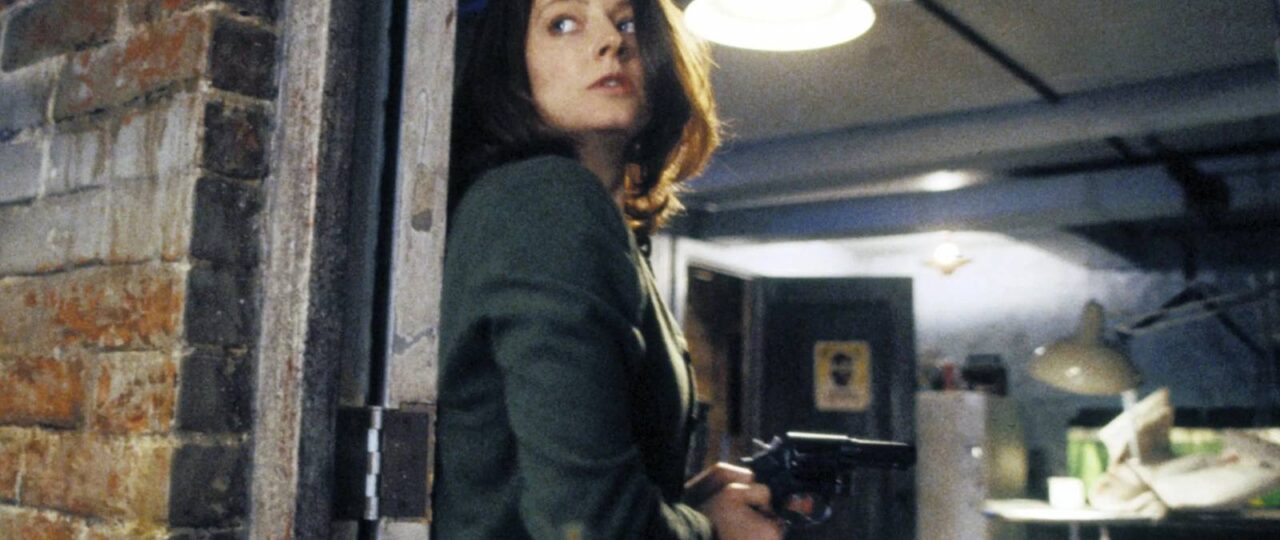
The film that gave horror a seat at the table, The Silence of the Lambs masters suspense like no other horror thriller. The film follows FBI trainee Clarice Starling (Jodie Foster), who interviews incarcerated cannibalistic serial killer Dr. Hannibal Lecter (Anthony Hopkins) to help track down another active murderer. The FBI is desperately hunting a serial killer nicknamed “Buffalo Bill” (Ted Levine), who kidnaps and skins women. The Silence of the Lambs relies on intense mental chess matches between Clarice and Lecter, trading cheap jump scares for psychological warfare, intimate camera work, and suffocating tension.
The Silence of the Lambs is a masterful psychological chess match in which uncomfortable intimacy between the investigator and the monster forces the audience to question who is manipulating whom. Directed by Jonathan Demme, the film captures the magic of stillness. Hopkins commands the entire film in less than 17 minutes of screen time, his unblinking stare, quiet voice, and razor-sharp intellect making simple dialogue feel far more dangerous. Demme frequently uses intimate, forward-facing close-ups as characters stare down the barrel of the camera. It creates an uncomfortably close and vulnerable position, heightening personal anxiety. The dread comes not from finding out who the killer is but from whether Clarice can reach the victim in time.
10
‘The Wages of Fear’ (1953)
<<img src="https://static0.colliderimages.com/wordpress/wp-content/uploads/2025/07/wages1.jpg?q=70&fit=crop&w=825&dpr=1" />
Image via Cinédis</figure>
In the French thriller The Wages of Fear, four desperate men—Mario (Yves Montand), a cynical, self-centered Corsican playboy, Jo (Charles Vanel), an aging, boastful ex-gangster who recently arrived in town, Bimba (Peter van Eyck), a quiet, fatalistic German man haunted by his past, and Luigi (Folco Lulli), a jovial Italian worker who is slowly dying from lung disease— stranded in an impoverished South American oil town take a suicidal driving job to earn enough money to leave. Set in Las Piedras, a dusty, dead-end town in Latin America dominated by an American enterprise called the Southern Oil Company, the men load unstable, volatile liquid nitroglycerin into jerrycans in the back of two trucks, where even the smallest bump, jolt, or rise in temperature can trigger a massive explosion. One of the most suspenseful thrillers ever, The Wages of Fear combines existential dread, meticulous pacing, and high-stakes physical danger.
Directed by Henri-Georges Clouzot, the film’s core premise builds suspense as one wrong move can lead to tragedy. Rather than rushing into action, the first part of the film spends time introducing its flawed travelers and their bleak existence. Viewers understand the exact personal stakes: this is their only chance to escape a living purgatory. Every single obstacle, from maneuvering a heavy truck over a rotting wooden platform to a pool of crude oil, feels painfully real and earned. But through desperation, fear, and survival, the story becomes a genius cynical view of corporate greed that heightens the psychological pressure. Though there have been a few remakes, including 1977’s Sorcerer, nothing tops the original.
-
<
Yves Montand
Mario Livi
-
<
Charles Vanel
M. Jo
-
<
Peter van Eyck
Bimba
-
<
Folco Lulli
Luigi
Discover more from NAIRAVOICE.COM.NG
Subscribe to get the latest posts sent to your email.