It’s a wonder that more horrors aren’t set in hospitals, a place where devastating tragedy can occur in one room and a jaw-dropping miracle in another at the same time. If anyone was going to harness the surreal potential of a hospital setting, it’s no surprise that it was Lars von Trier, a filmmaker who frequently pushes the boundaries of horror. In 1994, he began the absurdist horror project, The Kingdom, which would get its second season in 1997 and its third in 2022. There is nothing quite like this 13-episode series, one that is a masterclass in creepiness and is essential viewing for all horror fanatics. It even led to Stephen King‘s failed series, Kingdom Hospital. The author was inspired after watching von Trier’s series, which he found “both funny and scary.”
Usually when I write a plot synopsis, I focus on the major storylines surrounding specific characters, but The Kingdom makes this virtually impossible. It’ll be more feasible to treat the eponymous setting as a character, one that demands to be felt in every sordid and farcical scene of the show. It’s a place that is burdened by the hospital bureaucracy while also housing supernatural entities.
All these events are accompanied by a Greek chorus-like commentary by two secluded dishwashers who drop unnerving gems like, “What happens when the house is crying?” or “Swedes are human too.” You never know what will happen in this hospital, but it sure as hell will make your skin crawl.
‘The Kingdom’s Setting Lays the Foundation of the Show’s Creepiness
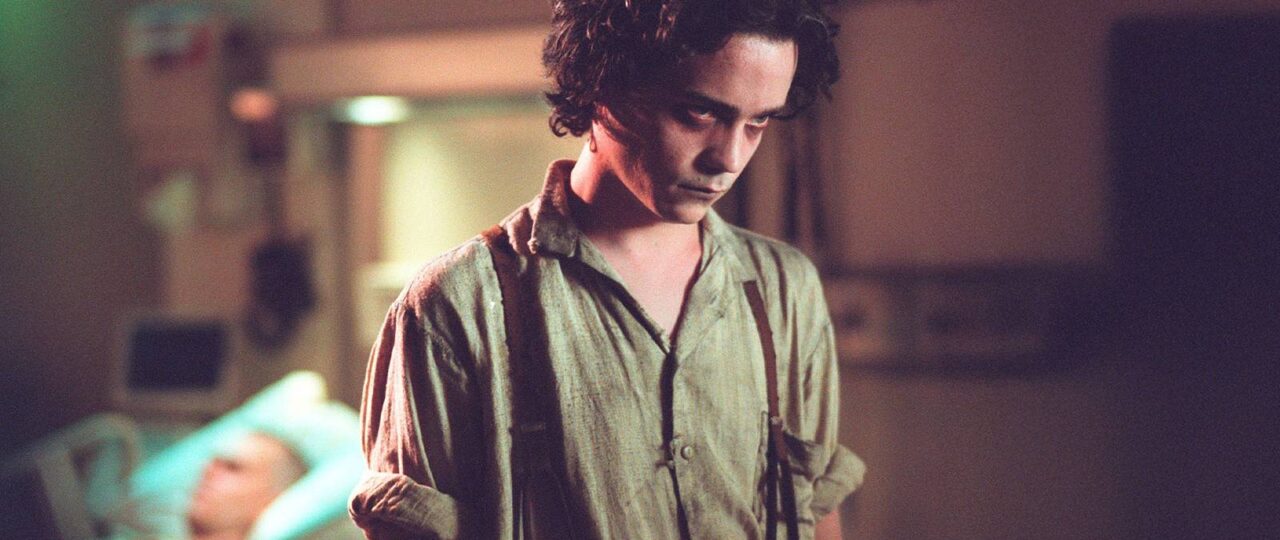
The Kingdom‘s major creep factor stems from the setting, which is hauntingly alive in its own right. The show opens up with a sepia-toned sequence about bleach men working the earth until modernity was built over them, leading to the Kingdom, a hospital that lives in a liminal space between technological reality and the wrath of spirituality. The layout of the hospital is familiar, with a notion of white, sterile hallways and advanced machinery like CT scanners, but it is drenched in a grainy, earthy palette and with frequent shots of grime and blood smeared across walls. When the third season arrives in 2022, it takes a metafictional approach that emphasizes how otherworldly the hospital is; new character Karen (Bodil Jørgensen) watches the show on TV in a steel-blue sequence, then when she herself goes to the Kingdom, the screen returns to the ’90s aspect ratio and color palette.
Four franchises, four completely different ways of getting underneath
your skin. This is the one built out of your particular fear, why it works so well on you, and what
it would leave behind.
Your nightmare does not wait outside the door. It waits for you
to close your eyes, which you are going to have to do eventually, because nobody has ever
won that particular argument.
- Freddy is horror’s cruellest idea: a threat that lives in the one place you cannot
guard, cannot lock, and cannot avoid forever. - You are the one who is fine during the film and wide awake at two in the morning. Your
own head is where this does its damage. - These films understood exhaustion as a horror engine. The kids on Elm Street do not lose
because they are weak. They lose because they are tired. - You can lock every door in the house. You still have to sleep.
Your nightmare is not really the doll. It is the face of the
person you tell, and the way they decide, very kindly, that you have imagined all of it.
- Chucky works precisely because he is absurd. That is the trap: the more accurately you
describe him, the less anybody is going to believe you. - You are the one shouting at the screen because the characters are not listening. You
know that feeling from real life too. - The franchise is at its best when the adults in the room are the real obstacle, and you
have met those adults. - By the time somebody finally believes you, you will have handled most of it on your own.
Your nightmare has your number, knows your name, and has almost
certainly been inside your house before. The worst part is that you already know them.
- Scream is the only one of these where the killer takes the mask off and turns out to be
somebody who was at the party. - You are the person who calls the twist out loud before it lands. You watch people the
same way you watch films. - The franchise made the rules of horror part of the plot, which means the survivors are
the ones paying attention. You would be paying attention. - Everybody is a suspect, including the person who just offered to walk you home.
Your nightmare is not really about you. It is about the people
asleep down the hall, and the feeling that whatever is here is not interested in leaving.
- The Conjuring films are domestic horror. The house, the family, the perfectly ordinary
room that quietly stops feeling ordinary. - Your instinct is to get everybody into one room. Your fear is protective rather than
personal, which is rarer than it sounds. - This is the one franchise where belief is the weapon. The people who come through it are
the ones who are not alone and refuse to be. - Whatever is here did not come for you. It came for the household, and you are the one
standing in the hallway.
Within the Kingdom are the bold strokes of tonally disparate storylines and genres, where the extreme difference between them and how they coalesce together is entirely unsettling. As mentioned previously, hospitals are a place of duality, of life and death, of rigorous science and unexplained miracles. On one level, the show operates as a medical drama, drawing heavily on staff hierarchies, lawsuits against malpractice, or student doctors who steal roses from the morgue and gift them to the woman they’re stalking. On the other hand, we get a supernatural investigation into the echoes of a girl crying in the elevator and a poor woman who gives birth to… something. The tonal whiplash is perfectly suited to the setting, devout to extremism and unapologetic about watching the goosebumps rise across our skin.
If the visuals or atmosphere don’t convince you that the hospital is alive, then Season 3 certainly will. At one point, one of the rooms holds a literal giant beating heart, though I won’t spoil how it got there. The Kingdom won’t just provide a creepy viewing experience; it envelops you in its surreal world, then hooks you up to laughing gas for good measure.
‘The Kingdom’ Is a Creepy Mix of Absurdity and Morbidity
 Image via Danmarks Radio (DR)
- Image via ARTE
- Image via ARTE
- Image via ARTE
- Image via Danmarks Radio (DR)
 Image via Danmarks Radio (DR)
 Image via ARTE
 Image via ARTE
 Image via ARTE
 Image via Danmarks Radio (DR)
- Image via Danmarks Radio (DR)
- Image via ARTE
- Image via ARTE
- Image via ARTE
- Image via Danmarks Radio (DR)
 Image via Danmarks Radio (DR)
 Image via ARTE
 Image via ARTE
 Image via ARTE
 Image via Danmarks Radio (DR)
It’s not only the setting of The Kingdom that accommodates extremism, but the characters too. Of the ensemble cast, two in particular flesh out the surrealist, divisive atmosphere of the show: the arrogant, Danish-hating Dr. Helmer (Ernst-Hugo Järegård) and the spiritually-minded, stubborn Drusse (Kirsten Rolffes). Dr. Helmer is outrageously visceral in his hateful tirades against anyone he deems lower than him — including the Danish resident doctors and patients who sue him — and his attitude is so hyperbolic that it is genuinely disconcerting to watch, even as we chuckle.
Meanwhile, Drusse fakes neurological diseases to get admitted into the hospital so she can conduct her communications on the astral plane, where her kind demeanor is an unsettling contrast next to her gory discoveries. Järegård and Rolffes’ inspired performances were consistently the highlight of the first two seasons, and even though they tragically passed away before the third, their influence is clearly seen in the new characters.
Between the duality of the setting and the characters who inhabit it, The Kingdom creates a whiplash of a show that forms the basis of its mastery over creepiness. It never relents in its absurdity, overachieving with every season until we’re trapped in the unrecognizable hallways of a hospital that defies the laws of both man and nature. There’s truly nothing out there quite like The Kingdom, a decades-spanning project that combines hyper-reality and ultra-surrealism into the ultimate dose of goosebumps.
Discover more from NAIRAVOICE.COM.NG
Subscribe to get the latest posts sent to your email.