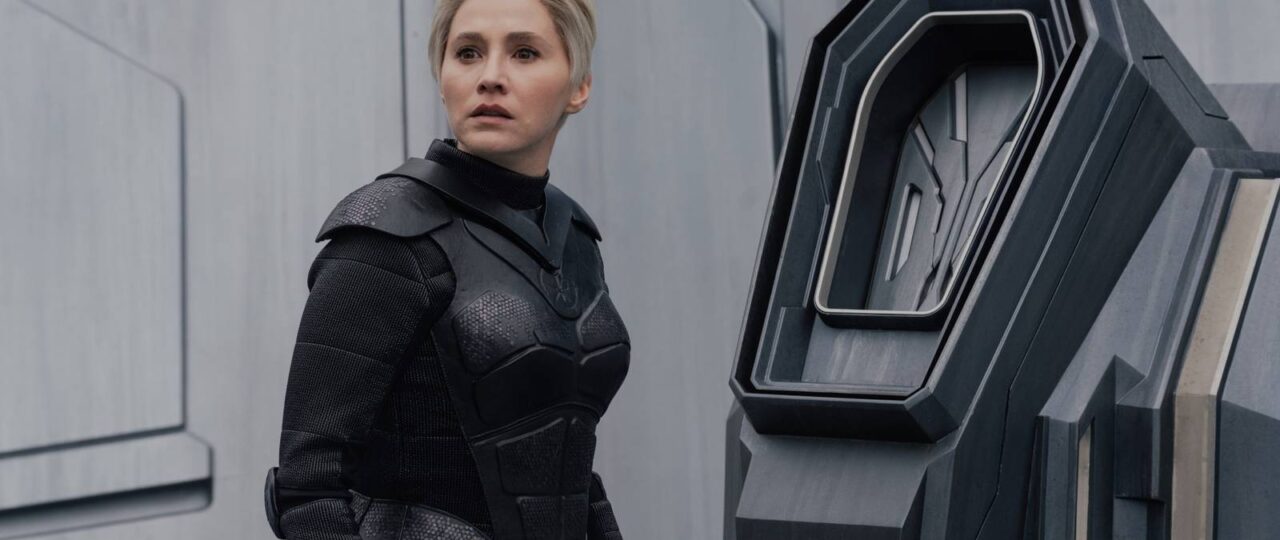
When a new live-action video game adaptation arrives, conversations inevitably revolve around how it treats the source material. How faithfully characters, locations, and storylines are recreated become measures of success long before a series has established its own identity. That scrutiny is understandable when fans have spent years exploring these universes with a controller. However, recreating the experience of playing a game and delivering a solid TV show are different things.
Fans are of course entitled to care about the gaming properties they love, especially when a live-action adaptation starts making changes. Unfortunately, that can also leave an entertaining series overshadowed by arguments about how it treats its source material. Performances and original storytelling become secondary to debates over game accuracy, making it harder to appreciate an adaptation on its own merit. Few shows suffered more from that disconnect than Paramount+’s Halo, whose reputation became inseparable from the controversy surrounding its treatment of the games.
Airing across two seasons in 2022 and 2024, Halo brings humanity’s war against the alien Covenant into live-action, with supersoldier Master Chief (Pablo Schreiber) at its center. It was a hugely ambitious creative undertaking, but its creative approach to the games certainly divided longtime fans. While some criticisms were justified, beneath those arguments was a genuinely great space opera that deserved to be judged on its own terms rather than compared to the Halo games.
Paramount+’s Halo Show Stood On Its Own Two Feet
<<img src="https://static0.srcdn.com/wordpress/wp-content/uploads/2025/10/master-chief-in-the-heat-of-battle-in-the-halo-tv-show.jpg?q=49&fit=crop&w=825&dpr=2" />
</figure>
For viewers who haven’t played the game and so don’t have decades of expectations attached, Halo has an immediately gripping sci-fi premise. Humanity’s survival depends on engineered soldiers whose enhancements have also systematically stripped away their autonomy. The alien Covenant supplies the existential threat, but the institutions supposedly defending humanity provide the show’s thematic tension. Thanks to questioning the relationship between personal sacrifice and ideological indoctrination, Paramount+’s Halo series became something much more substantial than soldiers in impressive futuristic armor having big-budget firefights with aliens.
Against this backdrop, Pablo Schreiber makes Master Chief’s growing distrust of his handlers the emotional core of Paramount+’s take on the Halo story, creating vulnerability beneath the character’s physical authority. His relationship with Dr. Catherine Halsey (Natascha McElhone) turns the supersoldier fantasy into an uncomfortable examination of exploitation. Recovering his humanity means confronting what was done to him, and whether loyalty is even possible after confronting the truth is an ever-lingering question.
The blockbuster-budget spectacle matters, too, of course, since Halo is a prestige sci-fi series. As any good space opera should, the Halo TV show has more than enough energy swords, towering aliens, and brutal futuristic battles to keep viewers thoroughly entertained. Season 2’s “Reach” is an especially notable highlight, as it delivers a full-blown planetary assault that devolves into a desperate struggle through narrow war-torn streets that contain plenty of jaw-dropping sci-fi spectacle.
Uneven subplots occasionally slowed that momentum, but nowhere near enough for it to seriously detract from the viewing experience. What’s more, across its two seasons, the Halo TV show kept expanding toward exploring a wider universe whose mysteries dwarf the war between Humanity and the Covenant. The cancellation of the series before its third season was a huge loss, since this promising space opera was left stranded just as its strongest ingredients were coming together.
Halo Was A Good Show But A Divisive Adaptation
<<img src="https://static0.srcdn.com/wordpress/wp-content/uploads/2025/10/pablo-schreiber-as-master-chief-without-a-helmet-on-in-halo-tv-show.jpg?q=49&fit=crop&w=825&dpr=2" />
</figure>
Halo‘s cancellation was definitely tough for fans of the show, and many immediately wanted to blame fans of the games. While Paramount+’s decision was likely financial rather than based on fan complaints, it’s easy to see why disgruntled gamers could be seen as a cause. Throughout the show’s run, pop-culture conversations around the Halo series were always dominated by debates around lore changes like Master Chief removing his helmet or Cortana’s origin.
These arguments were what defined the Halo TV show to outsiders looking in, which would undoubtedly have put many casual viewers off giving the show a chance. The thing is, though, many of the complaints from gamers weren’t simple nitpicking, as the changes were definitely substantial. The Halo series deliberately established itself as taking place in the Silver Timeline, a separate continuity drawing on the games without reproducing their events exactly. Its purpose was to let the narrative of the Paramount+ show have room to develop independently while leaving the original canon intact.
Sadly, it did seem to backfire for vocal fans of the games who wanted a totally faithful live-action recreation of Halo. Emotion-suppressing implants and altered memories may have made Master Chief’s personal awakening into a gripping story, but it had no basis in anything gamer’s love about the franchise. Removing his helmet became symbolic of this divide between the expectations of Halo game fans and the requirements of a gripping small-screen narrative that general audiences would want to follow. These choices may have given the series a cohesive emotional throughline suited to its format, but many also felt they made the show lose the essence of what makes Halo beloved.
What’s more, there’s definitely an argument that some changes weakened familiar characters or introduced unnecessary complications rather than improving anything. Still, this doesn’t change that the show deserved more than being defined by its departures from established video game lore. The reputation of Paramount+’s live-action Halo series centers on fidelity failures, leaving its military sci-fi spectacle, exploration of moral uncertainty, and ambitious space-opera storytelling underappreciated. Halo‘s compromises as an adaptation definitely deserved scrutiny, but not to the point that they overshadowed its achievements as a sci-fi TV show.
-
<

Pablo Schreiber
Master Chief, Spartan-117 / John-117
-
<
Natascha McElhone
Dr. Catherine Halsey


Discover more from NAIRAVOICE.COM.NG
Subscribe to get the latest posts sent to your email.