
…Forum says 5.3m-tonne production deficit can be bridged, urges states to establish data banks
By Henry Umoru
ABUJA — The Nigeria Governors’ Forum (NGF) has expressed optimism that Nigeria can become a major rice exporter in Africa, insisting that the country’s agricultural potential and available human, financial and natural resources are sufficient to achieve the ambition.
The forum said Nigeria could close its 5.3 million metric tonnes rice production deficit and become a net exporter if governments addressed policy inconsistencies, improved agricultural data and provided sustained support to farmers and other players across the value chain.
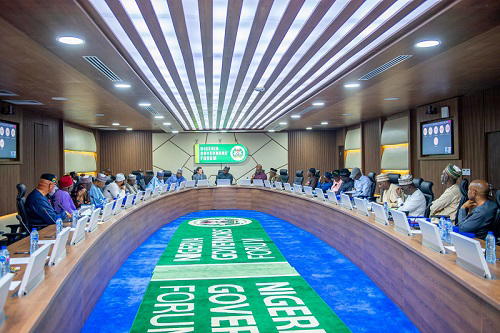
The Director-General of the NGF, Dr. Abdulateef Shittu, stated this on Wednesday in Abuja during the launch of the Northwest Rice Diagnostic Report organised by the forum.
Shittu said Nigeria currently consumed about 8.6 million metric tonnes of rice annually, a figure projected to rise to 9.1 million metric tonnes next year, while domestic production stood at only 3.3 million metric tonnes.
He blamed the production shortfall on inconsistent government policies, poor coordination and other challenges affecting the agricultural sector.
According to him, Nigeria has no justification for remaining dependent on imported rice, given its agricultural resources and capacity to supply regional African markets and parts of Europe.
He cited China’s transition from food deficit to self-sufficiency through targeted investments, saying Nigeria needed similar political commitment to achieve food security.
Shittu said: “You can see the huge gap. So, how do we address this? There are a lot of policy flip-flops, policy mismatch, and quite a number of other challenges that we will all have to address. But my motto simply is that there is no problem without a solution.
“We have all the resources, both human and material. We have the land and everything that we need to support farmers and other actors across the value chain. Whatever they need can be guaranteed.”
He described credible data as central to agricultural planning and disclosed that the NGF had established a dedicated data department to improve the collection and management of information across states.
He urged all 36 states to establish functional Bureaus of Statistics, noting that Kaduna and some other states had already taken the initiative.
According to him, national statistics, including Gross Domestic Product figures, should reflect aggregated data from the states and the Federal Capital Territory.
The NGF boss said the forum was also challenging figures presented by development partners where it believed they were inaccurate.
“If we are saying it is not correct, we have to show them which one is correct,” he said.
He added that heads of State Bureaus of Statistics met quarterly under a committee of practice, while commissioners of agriculture also held periodic meetings to exchange ideas and experiences.
Shittu disclosed that the forum had signed a partnership with the International Institute of Tropical Agriculture (IITA), Ibadan, and established the NGF Academy and Leadership Centre to strengthen governance capacity across key sectors.
He described the Northwest Rice Diagnostic Report as “not a destination, but a journey”, saying it would be the first in a series of engagements aimed at addressing challenges in the agricultural sector.
He acknowledged the difficult position of governments, which had to balance consumers’ concerns over rising rice prices with the need to protect farmers and millers.
Meanwhile, the Managing Director and Chief Executive Officer of the Bank of Agriculture (BOA), Ayodeji Oludare Sotinrin, disclosed that the bank financed 25 aggregators during the preceding wet season, facilitating input credit for more than 500,000 farmers.
He said the bank planned to expand the facility to at least 700,000 farmers in the current farming cycle.
Sotinrin explained that the bank had shifted from direct cash disbursements to structured input financing because of challenges with loan recovery.
He said the arrangement ensured that farmers received essential agricultural inputs rather than cash that could be diverted to other purposes.
The BOA chief also disclosed plans to introduce guaranteed minimum prices for rice and other staple crops to protect farmers against market volatility.
He said the bank was developing financing arrangements around 15 dams in Kano State and other irrigation networks to support all-year-round rice production.
On mechanisation, Sotinrin said the bank was adding 2,000 tractors and 14,000 implements to its existing fleet, following an earlier rollout of 2,000 tractors and 10,000 implements.
He said the equipment would be deployed through specialised mechanisation service providers rather than distributed directly to individual farmers.
According to him, the 4,000 tractors, operating at an estimated capacity of 600 hectares annually per tractor, could support the cultivation of about 2.4 million hectares yearly.
On state partnerships, he disclosed that the bank was establishing sub-funds with matching contributions from state governments, including a N10 billion facility with Kaduna State, whose funds had already been paid into the bank’s account.
Speaking on behalf of the Alliance for a Green Revolution in Africa (AGRA), Mr. Phillip Obosi said a stable and predictable policy environment was necessary to sustain an internationally competitive rice sector.
He warned that regulatory inconsistencies could discourage private investment, noting that Nigeria’s projected rice imports of 2.9 million metric tonnes in 2026, valued at approximately $1.4 billion, represented a significant drain on foreign exchange reserves.
Obosi, who cited United States Department of Agriculture (USDA) projections, urged governments to translate the report’s recommendations into budgetary allocations and practical programmes targeting input dealers, smallholder farmers and mechanisation providers.
Earlier, the Director-General of the Rice Processors Association of Nigeria (RIPAN), Dr. Andy Ekwelem, identified poor farmer identification, unreliable baseline data, adulterated agricultural inputs, weak extension services and insecurity in rural communities as major challenges confronting commercial rice production and processing.
He urged federal and state governments to establish verified farmer registers, provide certified seeds and fertilisers, conduct soil testing and secure major agricultural corridors, particularly in Kaduna, Katsina, Zamfara and Sokoto states.
Ekwelem also called for measures to reduce rising energy costs and operational expenses for local millers, warning that domestic processors were struggling to compete with foreign imports supported by decades of government subsidies.
In separate remarks, the Commissioners for Agriculture in Kaduna and Kebbi states, Murtala Dabo and Shehu Muazu, called for reliable data systems, price stability and structured market protection for farmers.
Dabo advocated guaranteed prices and strategic grain reserves to stabilise farmers’ incomes, while Muazu called for harmonised data collection procedures between federal and state agencies to eliminate conflicting agricultural production statistics.
Discover more from NAIRAVOICE.COM.NG
Subscribe to get the latest posts sent to your email.