
Where did the directive come from?
The clarification by the NOA follows an earlier announcement by the Minister of Education, Dr Maruf Tunji Alausa.
On August 6, during the inauguration of the Governing Board of the National Board for Technical Education, Alausa called on polytechnics to gradually discontinue non-technical programmes that fall outside their statutory mandate.
He also urged the institutions to strengthen programmes in engineering, technology and applied sciences.
The minister further called for technical education curricula to be modernised through Outcome-Based Education and aligned with the requirements of Industry 4.0.
The proposed curriculum direction includes areas such as artificial intelligence, automation, digital technologies, green technologies and advanced manufacturing.
The announcement formed part of the government’s broader effort to reposition Technical and Vocational Education and Training as an important pathway towards employment, entrepreneurship and industrial growth.
The latest explanation from the NOA is therefore important because it provides additional context to the original announcement. Rather than an overnight cancellation of courses, the government is proposing a gradual transformation of the polytechnic system.
What should current and future students do?
Students already studying in polytechnics should not panic or abandon their programmes based on the announcement alone. Unless their institution or the relevant regulatory authorities issue a specific directive affecting their programme, they should continue their studies as normal.
However, students should remain informed about developments because the implementation of the policy could influence future admissions, course structures and curricula.
Prospective students should also look beyond the name of a course when choosing a programme. They should consider the practical skills they will gain, the technologies they will encounter and the types of employment or entrepreneurial opportunities available after graduation.
This does not mean every student must choose an engineering or technology programme. Different areas of knowledge remain important to the economy. The larger issue is whether polytechnic programmes provide students with relevant skills and whether institutions are operating in line with their intended educational purpose.
Parents should equally avoid making decisions based on rumours. The fact that the government intends to phase out certain categories of programmes does not mean that every non-technical course has already been cancelled.
The details will become clearer as the Federal Government, NBTE and polytechnics begin implementing the policy.
What happens next?
The next stage will largely depend on how the reform is translated from policy into actual changes within polytechnics.
Institutions may have to review their programmes, redesign curricula, introduce new technical courses and strengthen practical training. Regulatory authorities will also have to provide clearer guidance on which programmes fall outside the statutory mandate of polytechnics and how the transition will be managed.
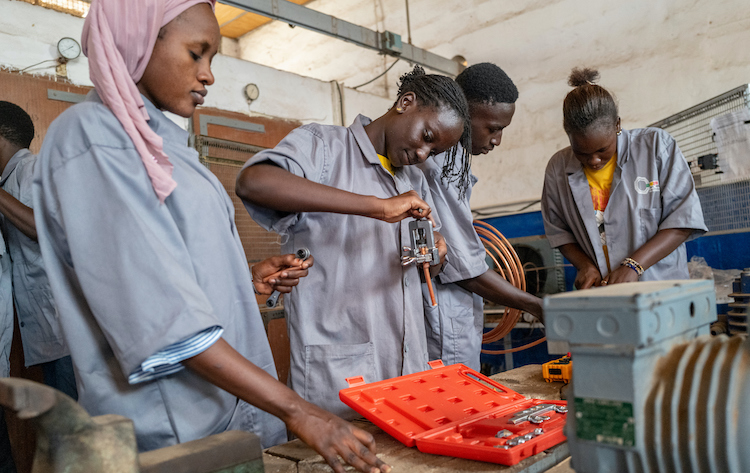
The success of the reform will ultimately depend not only on changing course titles but also on improving the quality of technical education. Students need functional laboratories, qualified instructors, modern equipment, industry exposure and opportunities to apply what they learn.
Without these supporting structures, simply removing some courses and introducing others may not solve the skills gap the government is trying to address.
For now, students should understand the policy as a gradual repositioning of Nigerian polytechnics rather than an immediate mass cancellation of courses.
The direction is clear: the government wants polytechnics to become more strongly associated with practical skills, applied sciences, engineering, technology and emerging industries. As implementation continues, students and parents will need to follow official announcements closely so they can understand how individual programmes and admission opportunities may change.
Discover more from NAIRAVOICE.COM.NG
Subscribe to get the latest posts sent to your email.