By Gabriel Ewepu
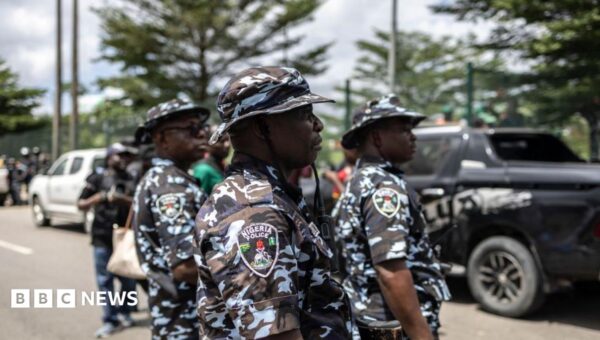
As Nigerians commemorated the sixth anniversary of the #EndSARS protests on Wednesday, October 20, civil society organisations (CSOs) and lawyers said the issues that triggered the protests remain unaddressed.
They noted that while the core demands of the protesters remain largely unmet, commitments made by the government have also not been realised.
There was a consensus that sacrifices made by those affected in various ways during the protests have not translated into improved policing in the country.
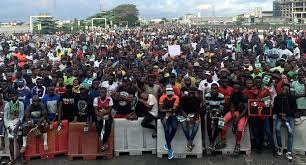
Sunday Vanguard recalls that the #EndSARS protests were a series of nationwide demonstrations that erupted in Nigeria in October 2020 against police brutality, extortion, torture, unlawful arrests and extrajudicial killings allegedly committed by the Special Anti-Robbery Squad (SARS), a unit of the Nigeria Police Force established to combat armed robbery and other violent crimes.
SARS
Although concerns about alleged SARS abuses had persisted for years, the protests gained momentum following the circulation of a video in early October 2020 showing a police officer allegedly shooting a young man in Ughelli, Delta State.
Young Nigerians mobilised through social media, particularly Twitter, using the hashtag #EndSARS to demand the disbandment of the unit, justice for victims of police brutality and comprehensive police reforms. The demonstrations spread to Lagos, Abuja, Port Harcourt, Ibadan and other cities, attracting thousands of young people who also called for better governance, accountability and respect for human rights.
On October 11, 2020, the police announced the dissolution of SARS, but protesters continued their demonstrations, insisting on concrete reforms, accountability for alleged abuses and compensation for victims.
Tragic
The movement reached a tragic turning point on October 20, when soldiers opened fire on protesters gathered at the Lekki Toll Gate in Lagos, an incident that attracted international condemnation and became a defining moment in Nigeria’s recent history. Amnesty International reported that at least 12 protesters were killed at Lekki and Alausa in Lagos that day.
Widely referred to as the Lekki massacre, the incident intensified public outrage and renewed demands for justice. Although judicial panels of inquiry were established in several states to investigate allegations of police brutality, concerns over accountability and the implementation of their recommendations have persisted.
To date, the protests remain a significant expression of youth activism and the struggle for police accountability and good governance in Nigeria.
Six years after, some stakeholders, including civil society groups, told Sunday Vanguard that key recommendations by the judicial panels of inquiry were yet to be fulfilled, while the immediate and underlying issues that led to the protests persisted.
Nigerians deserve evidence of transformation — CISLAC
Speaking with Sunday Vanguard, Executive Director of the Civil Society Legislative Advocacy Centre (CISLAC), Auwal Rafsanjani, said Nigerians deserved evidence of transformation, not another anniversary of unfulfilled commitments.
He said: “Certainly, we cannot describe a relationship built on fear, suspicion, intimidation and widespread allegations of extortion as a healthy police-civilian relationship. Six years after #EndSARS, many Nigerians, particularly young people, still see police encounters as potential threats rather than assurances of protection.
“The reported use of tear gas against citizens commemorating #EndSARS at Lekki today raises further concerns about respect for peaceful assembly. “CISLAC maintains that the greatest tragedy of October 20, 2020, is not only the lives lost and injuries suffered, but also the continued failure to establish full accountability and restore public confidence.
“A police institution that citizens fear more than criminals has a serious legitimacy and accountability problem.
“Government must implement outstanding judicial panel recommendations, ensure justice for victims and end the culture of impunity.”
Torture
“There have been reform announcements and institutional adjustments, but Nigerians are entitled to ask: what has fundamentally changed on the streets?
“SARS was disbanded, judicial panels were established, police regulations were revised and training initiatives introduced.
“Yet allegations of unlawful detention, torture, extortion, excessive force and extrajudicial killings continue. “CISLAC insists that changing the name of a police unit without changing its conduct is not reform.
“Reform must produce measurable results: fewer abuses, independent investigations, prosecution of offending officers, compensation for victims and improved police welfare.
“Six years is more than enough time for promises to become results. “Nigerians deserve evidence of transformation, not another anniversary of unfulfilled commitments.”
Coercion
However, he noted that Nigeria had dedicated and courageous police officers, but institutional weaknesses and persistent allegations of misconduct continued to undermine public confidence.
“Poor welfare, inadequate equipment, political interference, weak supervision and insufficient accountability have complicated effective policing.
“However, none of these challenges excuses brutality or corruption. “CISLAC is particularly concerned about allegations of indiscriminate arrests, unlawful payments at checkpoints, police involvement in civil disputes and intimidation of innocent citizens.
“Policing must move from coercion to service, from intimidation to public cooperation and from impunity to accountability.
“The police must stop treating citizens as subjects to be controlled and start treating them as rights-bearing people to be protected.
“We demand independent civilian complaints oversight, stronger internal discipline, improved personnel welfare and enforceable sanctions against abuse.”
State police
Speaking on the need for state police, considering the current policing challenges in Nigeria, Rafsanjani, who is also Head of Transparency International Nigeria, said: “State police is relevant, but decentralising police powers without decentralising accountability could create 36 additional centres of political intimidation.
“Nigeria’s security challenges require more effective local intelligence, community participation and faster responses to crime.
“However, state police must never become private security organisations for governors or weapons against political opponents, journalists, protesters and vulnerable communities.
“CISLAC supports a properly regulated state policing framework with independent recruitment and oversight commissions, constitutional human rights safeguards, transparent funding and clear restrictions against political interference.
“State policing must also be subject to independent investigations and judicial accountability.
“Nigeria needs policing closer to the people, not armed institutions closer to political power.
“Without these safeguards, state police could reproduce the very abuses that triggered #EndSARS.
“Six years after #EndSARS, Nigeria must choose between accountable democratic policing and the continued misuse of security institutions.
“The sacrifices associated with #EndSARS must not be forgotten, and the 2027 elections must not become another opportunity for security agencies to violate the rights they are sworn to protect.”
2020 demands largely unmet — Global Rights
On his part, Executive Director of Global Rights, Abiodun Baiyewu, lamented that the demands of the protesters remained largely unmet.
He said: “As we commemorate the sixth anniversary of #EndSARS, we invite the Nigerian people, government, especially the Presidency, and security forces to pause and reflect on this tragic incident in which at least 135 protesters were extrajudicially killed across the country during the #EndSARS protest.
“It is worrisome that six years after this tragic event, accountability that is commensurate with the gravity of the atrocities committed is still elusive.
“The demands that brought Nigerians to the streets in 2020 remain largely unmet, and the pattern of impunity has persisted.
“In the more recent incident of the August 2024 #EndBadGovernance protests, Global Rights documented the killing of at least 31 protesters by police across several states and the arbitrary arrest of 1,135 protesters, including children as young as 13 years old.
“To date, there has been no accountability for these killings either.
“Even more worrisome is the fact that this trend is unrelenting.
“Since that incident, Global Rights has recorded at least 545 extrajudicial killings by security forces across the country.
“The repression and continued use of excessive force against protesters, the killing of citizens exercising their constitutional and fundamental human rights, and the continued brazen impunity for security personnel responsible for such violations further expose the hollowness of claims that the grievances that gave rise to #EndSARS have been adequately addressed.
ECOWAS judgment
“The #EndSARS protests were a nationwide demand for an end to police brutality, unlawful arrests, extortion, torture, and the impunity enjoyed by security personnel. “Wearied by colonial brutality against citizens and having endured decades of the savagery of military juntas, Nigerians were hopeful that under a democratically elected government, their rights would be respected and that they would be treated with dignity by the security force that is funded by their taxes to protect them.
“After two decades, realising that change was not forthcoming, they took to the streets to demand a transparent police force that respects the rights of citizens and is not a continuum of the colonial regime or military dictatorship.
“As we soberly reflect on the Lekki Toll Gate incident, we are reminded that these acts of impunity are a stark demonstration of Nigeria’s failure to value and protect the lives of its citizens.
“Nigeria’s perennial insecurity is fast eroding the bonds that bind its people together.
“Its intractable hydra-headed extremism is driven and sustained by this trust deficit.
“In order to extricate the nation from this vicious cycle, the government of Nigeria must urgently do the following: immediately implement the ECOWAS Court judgment on the Lekki massacre.
“We further demand that the Lagos State Government publicly account for its response to the Judicial Panel of Inquiry’s recommendations, specifying what has been implemented, what remains outstanding, and the steps required to give effect to the recommendations it accepted.
“Six years ago, we promised to stand with the victims and their families, however long it takes for the arc of the moral universe to bend towards justice for them, and indeed every citizen of Nigeria.
“Global Rights has not reneged on this promise.
“We remain standing in solidarity with all those who continue to demand an end to police brutality and the right of citizens to protest.
“We honour the courage of those who stood up and keep standing for their rights and reaffirm that no state institution is above the law.”
Citizens-police relationship deeply affected by mistrust — ActionAid
Reviewing the matter, Country Director of ActionAid Nigeria (AAN), Dr Andrew Mamedu, said the relationship between the police and the people remained highly unfriendly.
His words: “Six years after #EndSARS, the relationship between the Nigerian Police and citizens remains deeply challenged by mistrust, fear and unresolved questions of accountability.
“The Lekki Toll Gate incident remains a painful reminder of what happens when institutions established to protect citizens are accused of turning their weapons against them. “The reported use of tear gas against citizens commemorating the anniversary today raises further concerns about how the police respond to peaceful civic expression. “Public relations campaigns alone cannot restore trust.
“They must earn it through respect for human rights, professionalism, and accountability.
“The Nigerian Police must understand that citizens are not enemies of the state, and demanding accountability is not a crime.”
Reforms
Mamedu, however, noted that some reforms had been implemented in the police force since the #EndSARS protests.
“The police have undergone some institutional and policy reforms, including disbanding SARS, introducing new operational regulations, and efforts to strengthen police professionalism”, he said.
“However, the real question is whether these reforms have translated into meaningful changes in everyday experiences.
“Reports of extortion, arbitrary arrests, excessive use of force and other forms of police misconduct continue to raise concerns.
“We must move beyond reforms that exist only on paper.
“We must measure police reform by citizens’ safety and dignity, not by the number of policies announced.
“Six years after #EndSARS, Nigerians deserve clear evidence of accountability, justice for victims and a policing culture that prioritises human rights.
Officers
“The Nigeria Police operate under difficult conditions, including inadequate resources, operational pressures and serious security challenges.
“Many officers continue to serve professionally and make enormous sacrifices to protect communities.
“However, these challenges cannot justify misconduct or violations of citizens’ fundamental rights.
“The recurring complaints of harassment, extortion, brutality and abuse of power require urgent institutional attention.
“We need to shift from a culture of force and intimidation to one of service, community partnership, and accountability.
“A police officer should represent safety, not fear.
“The true measure of effective policing is not how much power officers exercise over citizens, but how effectively they protect their lives, rights and dignity.”
State-controlled
On the issue of state police, the AAN boss asserted: “The conversation around state police is both relevant and necessary, particularly given Nigeria’s complex security challenges and the limitations of centralised policing.
“Decentralised policing could strengthen local intelligence, improve response times and bring security institutions closer to communities. “However, there are legitimate concerns about the possibility of governors and political actors using state-controlled police formations to intimidate opponents or suppress dissent.
“The ongoing constitution amendment process presents an opportunity to address these concerns through proper institutional safeguards.
“We must not decentralise police power without decentralising accountability.
“Any state police framework must guarantee operational independence, transparent recruitment, independent oversight and strong protection against political interference. “Otherwise, we risk reproducing at the state level the same abuses Nigerians have been demanding an end to at the federal level.”
Weed out bad eggs from police — Faro
Lending his voice, human rights lawyer Idris Faro said: “There are bad eggs in every organisation.
“The police must continue to weed out the bad eggs and discipline them appropriately.
“The Nigeria Police has improved in the way they relate with the people since the violent #EndSARS protest, which led to the loss of lives on both sides.
“Evidently, there have been reforms since the nationwide protest, which turned bloody in some states.
“The police have retrained their officers to be respectful in their relations with the people and be professional while suppressing public disorder.
“The use of firearms is for self-defence and the arrest of violent armed criminals. They shouldn’t fire tear gas at peaceful protesters.
“This was reported to have happened at the toll gate at the sixth anniversary. It is wrong.
“As the elections approach, law enforcement officers must work to ensure that we have free and fair elections by providing security for all before, during and after the elections.
“They must bring the full weight of the law to bear against persons and politicians who resort to violence to further their goals. Law enforcers, as the term connotes, work for the law only.”
Six years after, we demand evaluation of policing — Odheke
Similarly, another human rights lawyer, Toluwa Odheke, called for a thorough evaluation of the Nigerian policing system six years after the #EndSARS protests.
Odheke said: “Nigeria’s policing system must be evaluated against a simple constitutional proposition: The police exist to protect the public, enforce the law and safeguard the rights of every person, not merely to maintain the authority of the state.
“The events at the Lekki Toll Gate remain a reminder of the grave consequences that may follow when the use of force, public accountability and the protection of fundamental rights become matters of institutional controversy.
“The continuing importance of that incident lies not only in the question of what happened on 20 October 2020, but also in the lessons that must be learned to prevent comparable failures in the future. “Nigeria has introduced relevant reforms, including the Police Act 2020 and the 2025–2026 police regulations.
“Nevertheless, legislation and administrative directives must be accompanied by effective implementation, independent oversight, transparent investigations and appropriate consequences for proven misconduct.”
Power
On state police, he argued:
“State police may offer advantages in local responsiveness and community engagement, but it must be designed to prevent political capture, discrimination and competing centres of unaccountable coercive power.
“Decentralisation without accountability would merely relocate existing problems.
“As the country prepares for the 2027 general elections, the responsibility of security agencies is particularly clear. “They must protect voters, candidates, electoral officials, journalists and observers impartially before, during and after polling.
“They must not intimidate citizens, obstruct lawful political activity or become instruments for manipulating electoral outcomes.
“Government should therefore make police accountability a measurable institutional priority, not simply a political commitment.
“The relevant test is whether citizens can report abuse safely, whether complaints receive impartial investigation, whether victims obtain effective remedies and whether officers who commit offences are held accountable under the law.
“The ultimate measure of police reform is not the number of policies announced, units renamed or regulations issued.
“It is the extent to which the Nigerian people can trust that the law protects them equally, that the police will respect their rights and that no person is above the law.
“That is the standard by which the legacy of #EndSARS should be assessed, state police should be designed and the conduct of security agencies during the 2027 general elections should be judged.”
Nigerians don’t trust Nigerian police — Onoja
Human rights activist Patrick Onoja asserted that six years after the #EndSARS protests, the relationship between the Nigeria Police Force and Nigerians remained strained.
He said: “Six years after the events of 20th October 2020, I would describe the relationship as one still burdened by mistrust, apprehension and an unresolved demand for appropriate sanctions for proven violations and effective remedies for victims.
“The #EndSARS protests did not emerge in a vacuum.
“They reflected years of public frustration over allegations of brutality, extortion, arbitrary arrests and abuse of police powers.
“The Lekki Toll Gate incident became a defining moment in that crisis.
“Under Chapter IV of the Constitution of the Federal Republic of Nigeria 1999, as amended, citizens enjoy fundamental rights to life, dignity and personal liberty.
“The police are not above these guarantees. Their responsibility to enforce the law must be exercised within the law.
“A police institution cannot effectively protect a population that is afraid of it. Trust cannot be restored through official statements or commemorative events alone. It must be earned through consistent professional conduct, transparent investigations and accountability”.
Visible
Onoja said the Nigeria Police Force remained one of the country’s most visible and important security institutions, with officers operating in difficult circumstances and often confronting serious crimes with inadequate resources.
He said: “Nigeria Police Force remains one of the country’s most visible and important security institutions.
“Officers operate in difficult circumstances, often confronting serious crimes with inadequate resources.
“I acknowledge and commend officers who perform their duties professionally and courageously, sometimes at considerable personal risk.
“However, acknowledging their sacrifices must not prevent us from confronting institutional shortcomings in funding, training, accommodation, equipment, welfare and internal discipline.
“There are also persistent public concerns about alleged extortion and abuse of authority, which must be investigated fairly and thoroughly.
“The police-civilian relationship must be built around policing by consent, the understanding that legitimate law enforcement depends not only on legal authority but also on public confidence and cooperation.
“Years after #EndSARS, Nigeria must move beyond commemoration to addressing the institutional problems that made it a turning point.
“The loyalty of every police officer must be to the constitution and the law, not to the personal interests of any politician.
“We need a police force that is adequately equipped, professionally trained and properly supervised, and an accountability system that protects citizens from abuse.
“The enduring lesson of #EndSARS is that security without accountability threatens freedom, while accountability without effective security undermines public safety. Nigeria must pursue both.”
Discover more from NAIRAVOICE.COM.NG
Subscribe to get the latest posts sent to your email.