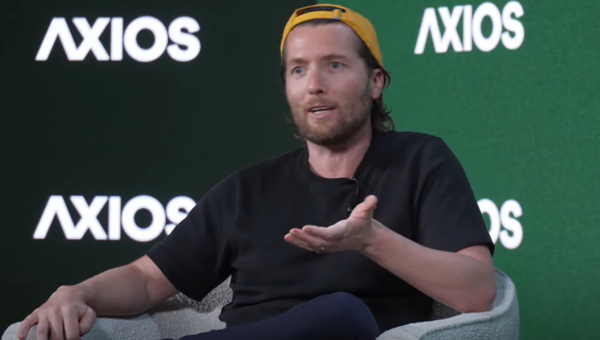
“You don’t have a lot of traction on the company yet, so yeah, that was where it got really tough,” Vishria recalls.
But around 18 months ago, everything changed. Cerebras’ chips, designed for training and successfully being manufactured by TSMC, the world’s largest contract chip manufacturer, turned out to be even better for inference — running AI models to generate responses, rather than teaching them in the first place. Just as that realization hit, the AI world grew insatiably thirsty for that kind of compute. It had a big customer and revenue.
Instead of another private round, Cerebras tried to go public in 2024, only to wind up stuck in U.S. government scrutiny over national security concerns triggered by a large investment by its only major customer, Abu Dhabi-based cloud provider G42. Public investors also weren’t keen on its dependence on G42 coupled with huge losses.
The delay was a blessing in disguise. Today, OpenAI and AWS are large customers, too. Cerebras doubled revenue and declared a profit last year.
Vishria gives all props to the Cerebras team for “persistence, ingenuity, but also adaptiveness,” he says.
But this is also a feather in the investor’s cap for finding a winner so far outside the firm’s usual comfort zone. Benchmark owned 17,602,983 shares worth $3.3 billion at the IPO’s opening price of $185 price, and over $5.3 billion if the first day of trading’s price of over $300 holds. It can’t sell shares until after a six-month lockup expires — a standard restriction that prevents insiders from selling immediately after a company goes public.
The firm bought about 80% of those shares in early rounds for around $18 million, various disclosures indicate and Vishria confirmed to TechCrunch. It bought the remainder at pricier later rounds, which cost it around $250 million, Cerebras disclosed in its S-1.
So all told, the venerable VC firm spent maybe $270 million for this stake that is worth multiple billions or more, depending on how the stock price holds.
VC firm employees get bonuses when investments deliver big returns — so as for Vishria’s assistant, the one he gave grief for okaying that first meeting? He laughed and said, “I think she’ll do well, very well.'”
Discover more from NAIRAVOICE.COM.NG
Subscribe to get the latest posts sent to your email.