LOS ANGELES — In the end, the unfamiliarity outshined the shock.
The defeated 2026 Los Angeles Dodgers, many of them back-to-back champs, hadn’t been forced to face this uncomfortable silence in a while. A four-game drubbing courtesy of the Milwaukee Brewers in a stunningly comprehensive NLCS sweep cast onto the most expensive team ever assembled a very foreign feeling: failure.
Milwaukee, so often bounced early in the October melee, knows that discomfort and its soundtrack. That unsettling hush that comes with the humbling unmooring of a premature postseason exit. Hugs, daps, thank yous, low-volume answers, goodbyes, regrets. But here it was, here the Dodgers were, in the tricked-out home clubhouse grappling with the end of something.
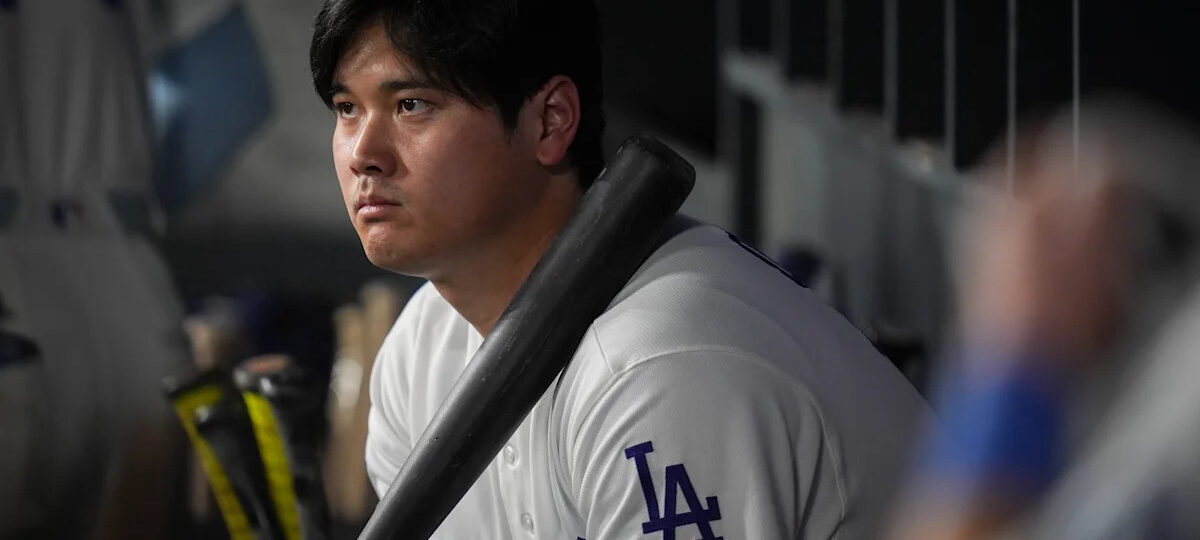
On one side of the room, Shohei Ohtani stood in front of his locker before a massive semicircle of reporters and TV cameras. For the first time in his MLB career, he’d lost a postseason series. His signing with L.A. ahead of the 2024 season sparked this era of supercharged dominance. And for eight October series his Dodgers were untouchable. Usually, during this spot in the calendar, Ohtani is getting drenched in imitation champagne as Latin rap and joyous roars echo in the background.
The scene Thursday night was a drier, quieter experience.
Join or create a Yahoo Fantasy Basketball league for the 2026-27 NBA season
This seemingly indomitable baseball behemoth donned street clothes and a New Balance backward cap, small beads of sweat still pooling on his face, trying to explain what went wrong and where he goes from here.
“I haven’t been able to really come to grips in terms of what I’ve learned overall this season,” Ohtani said via interpreter Will Ireton. “I’m going to go back to the drawing board in terms of treatment, training program and see what I can come up with next season.”
The postmortem on Los Angeles’ crash-out can be as extensive as you choose to make it. But simply put, they were the inferior team. Slower, older, colder and less fearsome than the hard-charging Brewers. Baseball’s most aged offense failed to slug and didn’t perform with runners in scoring position. One of the most talented rotations ever assembled wasn’t dominant enough to make up the difference.
All season, the Dodgers touted their experience as a calling card. Perhaps, if the series had been closer, that might have mattered. As it stands, it’s less necessary to assign blame when so much went wrong.
“I think for me, it never feels good to lose, but when you get beat, you can handle it a little bit better,” manager Dave Roberts said after his team’s 6-4 loss in Game 4.
The morning after, fans across the baseball universe are celebrating the Dodgers’ downfall. They aren’t the only ones. As Milwaukee’s champagne celebration roared in the visiting clubhouse, Brewers coaches and executives were already receiving texts of appreciation and congratulations on slaying the mighty dragon.
But don’t expect the upcoming small-market Fall Classic to remedy baseball’s impending labor struggle. With the current collective bargaining agreement set to expire on Dec. 1, the league and the owners have been pushing hard for the adoption of a salary cap. Certainly, that argument becomes at least somewhat trickier to make with the half-billion-dollar boogeyman Dodgers on vacation, but the league won’t suddenly change course after four games. The showdown over a cap was always going to be drawn-out and messy, no matter which team is the last one standing.
For the Dodgers organization, the uncertainty about baseball’s future further complicates what was always going to be a critical offseason. One October exit won’t kill off this juggernaut. Neither will a new economic landscape. The Dodgers remain advantageously positioned to compete for championships over the next decade and beyond. That’s a testament to both their player-development prowess and their imposing spending power.
But the questions are already piling on Andrew Friedman’s desk. Surely, the president of baseball operations is already considering the future and how this winter will shape the 2027 Dodgers.
No task is more important than figuring out what went wrong with Ohtani’s season. For three months, the two-way star was, for the first time as a Dodger, doing full two-way stardom. Another MVP felt like an inevitability. Then his biceps started barking. A start on the mound was pushed back, then scratched, then so was another. Ohtani didn’t throw a single in-game pitch after July 3.
His attempts to get back on the mound then appeared to compromise his offensive talents. He got ice-cold in late August into September. His physicality began to fray. His body wasn’t right. Eventually, the Dodgers had no choice but to place him on the injured list. Only over the last two days of the Dodgers’ postseason did Ohtani look anything like himself.
Communication with the four-time MVP has rarely been perfect. Some of that is the language barrier. Some of that is Ohtani’s lone ranger approach. But now both sides need to evaluate why a diminished version of Ohtani was forced to play through pain. After the Game 4 loss, Ohtani told reporters that he intends to pitch next season. In what capacity remains to be seen. It might behoove the Dodgers to slow-play his recovery timeline to ensure he’s available when they need him most — in the postseason.
There are a mountain of transactional questions as well. Tarik Skubal, added in a deadline blockbuster, is now a free agent. Will the Dodgers flex their muscles to re-sign him? Or do they want to give younger arms such as Roki Sasaki, Emmet Sheehan and Justin Wrobleski some rotation runway? What about upper-level pitching prospects such as Christian Zazueta, Zach Root, Adam Serwinowski and Jackson Ferris? Could they let Skubal walk in favor of a different free-agent starter? Freddy Peralta has looked pretty good recently.
Positionally, though, is where Los Angeles’ bigger roster-construction conversations will take place. They got mollywhopped by Milwaukee in part because the Dodgers’ offense looked unathletic and elderly. Friedman has expressed a desire to inject more youth into the group, but that’s easier said than done. A number of spots feel set in stone: Ohtani at DH, Will Smith at catcher, Freddie Freeman at first, Mookie Betts at short, Kyle Tucker in right field, Andy Pages in center.
Max Muncy (3B) and Teoscar Hernández (LF) are older players expected to reach free agency after 2027. A trade of either could be a way to reshuffle the deck, with Hernández the likelier to go. Tommy Edman had a second straight mediocre, injury-marred campaign, but he has four seasons left on his contract. Might the Dodgers seek a suitor for the switch-hitting utilityman?
Even after harvesting the farm for the Skubal trade, Los Angeles has one of the most stocked systems in the sport. Most of their prospect juice is concentrated in the outfield. Five Dodgers outfield prospects at Double-A or above — Josue De Paula, Eduardo Quintero, Mike Sirota, Charles Davalan and James Thibbs III — could find themselves on offseason top-100 lists. De Paula, who impressed in a late-season cup of coffee, Quintero and Sirota are currently ranked fourth, 15th and 17th, respectively, by MLB Pipeline.
Unfortunately for the Dodgers, you can play only three outfielders at a time. In their existing outfield, they already have the highest-paid player in the sport (Tucker) and the starting center fielder in the 2026 All-Star Game (Pages). With just one spot remaining, it’ll be fascinating to see how Friedman makes use of his farm system.
For the players, none of these contingencies or scenarios will offer any short-term solace. They aimed for a three-peat and missed. That sting will take time to subside, even if the 2027 Dodgers project to be a similarly formidable force.
“We fell short, you know?” Utilityman Kiké Hernández lamented postgame. “We had a good run, but here we are.”
Discover more from NAIRAVOICE.COM.NG
Subscribe to get the latest posts sent to your email.