Julio is a Senior Author for Collider. He studied History and International Relations at university, but found his calling in cultural journalism. When he isn’t writing, Julio also teaches English at a nearby school. He has lived in São Paulo most of his life, where he covers CCXP and other big events. Having loved movies, music, and TV from an early age, he prides himself in knowing every minute detail about the things he loves. When he is older, he dreams of owning a movie theater in a small countryside town.
By now, it’s no secret that Apple TV has a knack for releasing great science fiction; you can pretty much choose one at random, and it will still be a great choice. Saying one of them is the best feels even a little unfair to the others, so we have to raise the bar and look beyond the screen and individual taste, focusing instead on what kind of accomplishment it represents. All that considered, it’s almost impossible not to choose Foundation, the adaptation of Isaac Asimov‘s seminal sci-fi saga. Before its release, these books were considered straight-up unadaptable, so, in many ways, the greatest achievement of Apple TV’s Foundation isn’t just being an incredible work of science fiction, but that it exists at all, really.
Isaac Asimov’s ‘Foundation’ Novels Were Once Considered Impossible To Adapt
Between original series and adaptations, science fiction has had a boom in productions ever since the dawn of the streaming age. The one work every fan of the genre had pretty much accepted would never get such treatment was Foundation. Even after its announcement back in 2018, everyone only believed the series was actually real when it premiered via Apple TV in 2021. That’s because no other work in sci-fi has a scope as huge as Foundation — it was just too much to believe it could ever be made into a TV series.
- The Wachowskis’ 1999 film won four Academy Awards, including Visual Effects and Film
Editing. - Bullet time was shot with a rig of roughly 120 still cameras firing in sequence around the
actors. - Keanu Reeves trained in martial arts for about four months before a frame was shot,
recovering from neck surgery the whole time. - It opened the same year as Fight Club and eXistenZ, in a run of films about not trusting the
world in front of you.
- Mad Max: Fury Road won six Academy Awards in 2016, more than any other film that year.
- George Miller storyboarded the entire film as roughly 3,500 panels before there was a
script. - The chase was shot almost entirely practical in the Namib Desert, with real vehicles and
real stunt performers. - Anya Taylor-Joy and Chris Hemsworth carried the prequel, Furiosa: A Mad Max Saga, in 2024.
- Blade Runner 2049 won Roger Deakins his first Oscar for cinematography, on his fourteenth
nomination. - The film also took Best Visual Effects, 35 years after Ridley Scott’s 1982 original.
- Villeneuve shot it on large-format film and kept the fog and rain practical on set wherever
he could. - Three short films by Luke Scott and Shinichiro Watanabe bridge the 30-year gap between the
two movies.
- Denis Villeneuve’s Dune won six Academy Awards in 2022, including Cinematography and
Original Score. - Hans Zimmer turned down Christopher Nolan’s Tenet so he could score Dune instead.
- Dune: Part Two arrived in 2024 and brought in Austin Butler, Florence Pugh and Christopher
Walken. - David Lynch’s 1984 version and Alejandro Jodorowsky’s unmade one are both their
own legends by now.
- The 1977 original won six Academy Awards plus a special achievement award for sound effects.
- John Williams’ score was recorded by the London Symphony Orchestra and became the
best-selling symphonic film soundtrack ever. - Andor took the galaxy somewhere colder and earned Emmy nominations for drama series in both
seasons. - The saga now runs across eleven feature films and a growing shelf of series on Disney+.
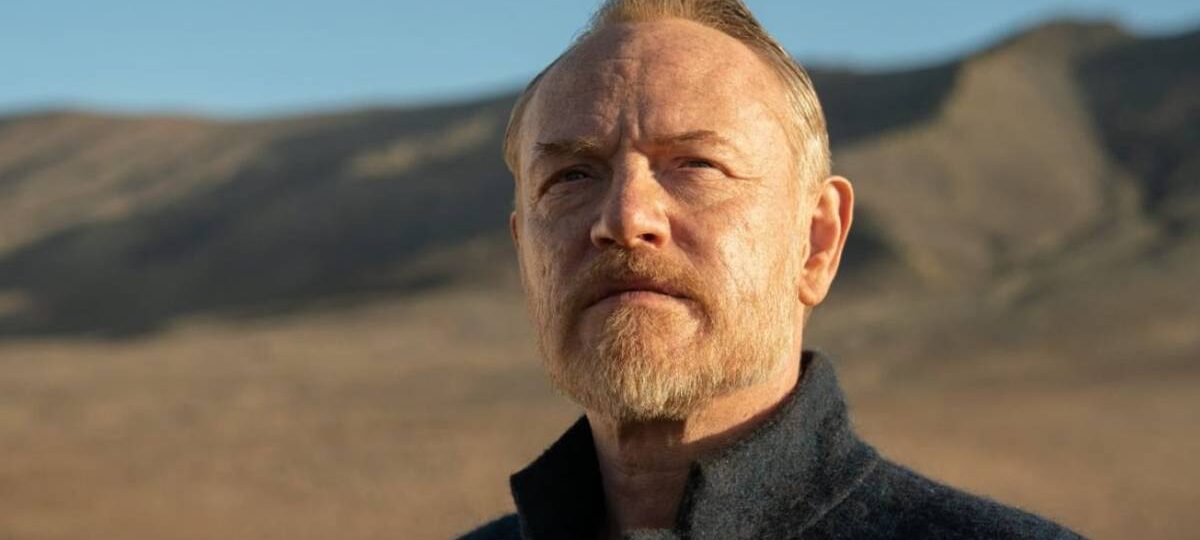
Set in a future where humankind has conquered the cosmos, the original book comprises many smaller tales depicting humanity’s efforts to overcome a thousand years of dark ages. The single common thread is Hari Seldon (Jared Harris), founder of psychohistory, a field of study that uses probability and psychology to predict future events on a galactic scale. Seldon devised a plan for future human leaders to follow, thus reducing the dark ages from tens of thousands of years to a single millennium.
It’s a fascinating story and an easy read, filled with equally interesting characters. However, most never interact due to their respective stories being set decades and even centuries apart. This is a major roadblock for any kind of visual adaptation, because focusing on just one of them would mean neglecting centuries of human history in that universe. It just couldn’t be done, and those centuries of human history are the whole point of Foundation. Something had to drastically change for these novels to fit the TV framework.
Apple TV’s ‘Foundation’ Changes the Framework, but Keeps the Scope of Asimov’s Work
<<img src="https://static0.colliderimages.com/wordpress/wp-content/uploads/2025/09/foundation-season-3-finale-jared-harris.jpg?q=70&fit=crop&w=825&dpr=1" />
Image via Apple TV+</figure>
When translating a work of literature into visual media, it’s always necessary to make some changes, including, sometimes, some severe ones. Modern television usually demands strong protagonists with whom the audience can sympathize, so, when David S. Goyer and Josh Friedman started working on adapting Foundation, this was one of the very first things to tackle — that and a way to unify and streamline the original narrative, so it could fit the episodic and seasonal framework.
Instead of multiple separate storylines spread out across the timeline, the series brings them together with time jumps and some classic sci-fi narrative devices. Thus, Apple’s Foundation takes the main characters in the early Asimov books and turns them into actual protagonists, each with their own complexities and development arcs. Instead of two or three small chapters, then, characters like Gaal Dornick (Lou Llobell), Salvor Hardin (Leah Harvey), and even Seldon himself have central and much larger roles.
Despite its scope, though, the books are quite simplistic in worldbuilding early on, as the Foundation itself is still struggling to consolidate. Sci-fi television demands something greater, though, so the Apple series has grander and more cinematic settings than the books. Every planet has a complex culture and background, and even things like Seldon’s vault, where his recording reveals the next steps of his plan every few decades, become central plot devices tied to the protagonists, keeping the story straight and fluid.
The Series Also Complements Asimov’s Vision With Original Characters and Concepts
 Image via Apple TV
- Image via Apple TV+
- Image via Apple TV+
- Image via Apple TV+
- Image via Apple TV+
 Image via Apple TV
 Image via Apple TV+
 Image via Apple TV+
 Image via Apple TV+
 Image via Apple TV+
- Image via Apple TV
- Image via Apple TV+
- Image via Apple TV+
- Image via Apple TV+
- Image via Apple TV+
 Image via Apple TV
 Image via Apple TV+
 Image via Apple TV+
 Image via Apple TV+
 Image via Apple TV+
There was no way to make Foundation work as a series if it was an exact match with its book counterpart, and a significant part of why it’s so good is how it allows itself to go beyond Asimov’s original writings. The best example is the Genetic Dynasty, an entirely new idea created for the series. In the books, the Galactic Empire’s decay is what causes the dark ages, but it’s the series that actually goes into why that is, since the original focuses mostly on the other side, the Foundation.
For that, the series introduces one of the most brilliant concepts in recent sci-fi: the Genetic Dynasty. It perfectly sums up the notion that the Empire is so stagnant, to the point where every emperor is a clone of the same man, Cleon I. Brothers Dawn (Cassian Bilton), Day (Lee Pace), and Dusk (Terrence Mann) are essentially different versions of the same person, each struggling to establish their own identity while living under the shadow of their predecessor. Another great example is Demerzel (Laura Birn), whose role is considerably expanded from the books, made in the Apple adaptation into a central figure in the Empire’s political machinations, with a twist coming straight from the author’s wider Robot universe.
These additions give Apple’s Foundation an identity of its own without losing sight of the ideas that made the original novels so influential. Ultimately, that’s what makes it such a great adaptation, focusing more on understanding and expanding on the potential of the original story rather than simply adapting it. Bringing Foundation to television was always going to require some creative liberties, but the series shows just how much can be achieved when an adaptation understands what makes its source material special.
Foundation is available to stream on Apple TV.
Discover more from NAIRAVOICE.COM.NG
Subscribe to get the latest posts sent to your email.