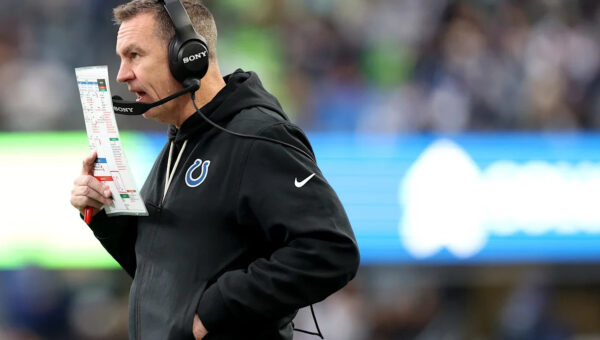
MINNEAPOLIS, MN — Midway through a conversation about the Minnesota Timberwolves’ busy summer and their attempt to stage a Western Conference coup behind Anthony Edwards and LaMelo Ball, Chris Finch is forced to pivot.
The 56-year-old head coach, seated comfortably in his office donning a plain black hoodie and gray shorts, adjusts his posture. His standard humdrum demeanor, suitable for the Minnesota skies in early October, has now been replaced by unbridled joy.
The former point guard, NBA champion and assistant coach spent just one season with Finch in New Orleans nearly a decade ago. But the unmistakable comparisons to his newest floor general, Ball — from their cerebral approach to the game to their fiery on-court personality and the eccentric in between — bring him to a familiar place.

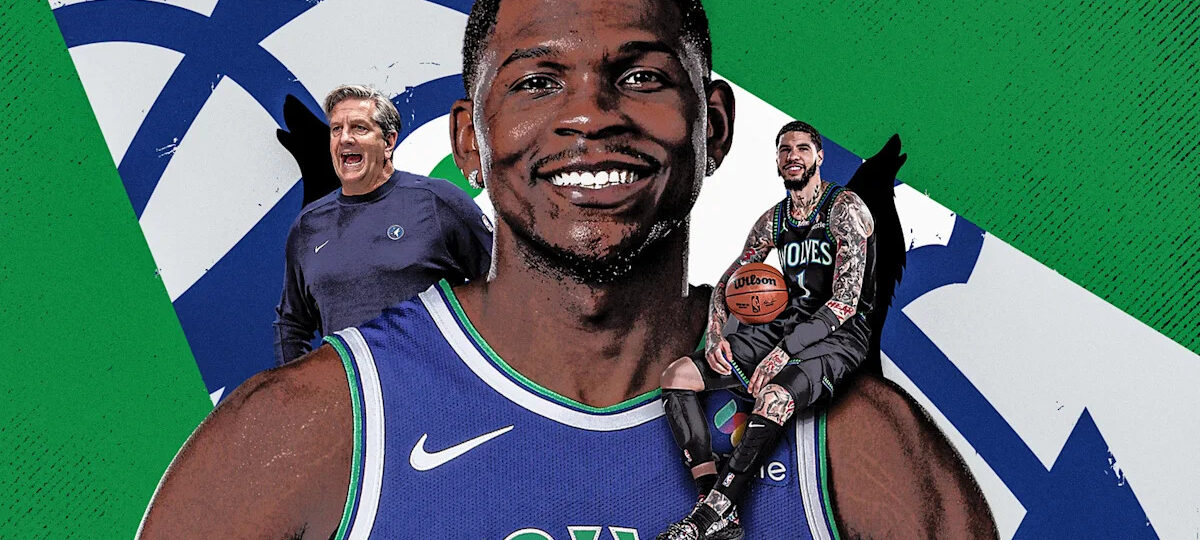
(Bruno Rouby/Yahoo Sports Illustration)
“They’re such high IQ [players],” he says, his memory harkening back. “You don’t want to get in their way; you want to give them freedom. The more freedom you give players, the more they gravitate to the things they already do well, and then when they don’t, it’s easy to see and coach them back to where you need them to be. Rondo was a great example, very much like a quarterback making all the reads, [but] it’s a collaborative thing. I’m excited because I see a lot of that with LaMelo.”
The more Finch envisions the specifics of just how the Edwards-Ball tandem can work, a Midwestern blend of old-school principles and modern half-court ideologies, the more it’s clear that his desire to revamp Minny’s backcourt — creating one of the league’s most dynamic duos in recent times — was born out of necessity. Less than six months ago, the Wolves’ latest postseason heartbreak, a second-round slip to the Spurs, had created an inflection point. From a micro lens, their menacing frontcourt had been neutralized by Victor Wembanyama’s mere presence, rendering Julius Randle inefficient and Rudy Gobert ineffective. A Finals-worthy opponent had bested them in a battle of wits and fortitude.
But on a macro level, the elephant in the room — that this team, as currently constructed, simply wasn’t good enough to seriously contend — had become unavoidable. Their best chances of playing in June had been shot down in consecutive seasons, clear signs of a group not ready to go the distance. The roster, which had loaded up on physicality and brute force, had waned in the backcourt; Minnesota’s ball-handlers were either too old (Mike Conley), too inexperienced (Rob Dillingham) or too inconsistent (Bones Hyland) to warrant night-to-night threats. The other option, Donte DiVincenzo, was a few weeks removed from a torn right Achilles. Edwards’ workload had reached insurmountable levels over time, resulting in the 25-year-old missing time during both the regular season and playoffs.
Finch doesn’t necessarily view the past six seasons as an organizational window — he believes each season has its own “distinct personality.” But the synergy that has existed between himself, general manager Matt Lloyd and president of basketball operations Tim Connelly meant there was alignment for a change, and not one simply to ameliorate Edwards and ward off rumors of a desire for a move elsewhere.
Ball checked off multiple boxes: a leader of a top-five offense in the NBA with a high assist rate and low turnover rate, a natural creator who could afford Edwards more time off the ball, a bigger frame to keep the team’s positional size objectives afloat, the potential of unlocking Gobert and Jaden McDaniels more, and the ability to play faster, ultimately allowing Edwards to settle into his off-guard role.
“I’m a natural 2-guard at heart,” Edwards said on media day. “I never thought I could develop any point guard skills. I know Finchy harps on me for passing the ball, but now we got LaMelo so I’m happy.”
“We felt that they could both play with a joy that would be reflective of one another,” Finch adds. “Anthony loves to root for his teammates; he’s a fun-spirited but competitive guy, and we felt (LaMelo) might help lighten the mood around Anthony a little bit. We also felt like Anthony’s competitive seriousness could also help LaMelo.
“They both still have things that they need to do to take the next step as incredible as they are, but you know they’re always gonna do it with a smile on their face, and we felt that was gonna be contagious.”
Because the process of assimilating a star guard into another team’s culture takes time — especially given the age-old adage of point guards being extensions of the coach on the floor — Finch has leaned heavily on Edwards throughout the process. The two have become extremely close since Finch first took the job in 2021. The highs. The lows. The wins. The losses. They have been there for each other every step of the way. But following the Wolves’ most recent postseason exit, the nature of their conversations varied over the summer.
First, Finch wanted Edwards to get healthy, praising his valiant efforts to return to the floor after nagging hamstring and knee issues, but urged him to continue to take care of his body. Second, as the complexion of the roster and outlook changed, the two spoke often about the sheer potential that was building and the excitement of a new challenge. But most importantly, Finch hammered home the point that, despite a world of ongoing change around Edwards, the superstar didn’t need to modify or alter who he was.
There was a natural impulse for Edwards to try and become something he’s not in an attempt to drag a franchise to unforeseen heights, perhaps forcing himself to speak up more and become a booming locker room voice. But in Finch’s view there was enough of a veteran presence on the team, enough collective experience, that simply excelling in the smaller areas and leading by example would be enough. And in turn, that would aid Ball’s orientation. The two stars had always been fond of one another coming up in the high school and AAU circuit before being drafted first and third overall in 2020, but this was different.
“Anthony wants this to be a huge success, so allowing LaMelo to come in and be LaMelo is the first and most important thing,” Finch says. “It’s not asking him to change his game at all, in any way, shape or form. He’s willing to make sacrifices knowing that the ball will be out of his hands more, but ultimately, he and others will all benefit from it. And stoking the competitiveness in each other, they’ve been good at that. Whether it’s been post-practice or post-workout shooting, going at each other in open runs in the summertime and also spending time off the floor.”
Such a journey, however, isn’t left up to the new star duo alone. Before every season, Finch jots down a list of personal coaching goals he wants to achieve. And these aren’t benchmarks like, say, finishing as a top-10 team in 3-point shooting or leading the league in turnovers. Finch has specific “behavioral goals” he wants to hit, like becoming closer with his young players, handling losses and adversity better, working on relations with league officiating or being more receptive to schematic tweaks and outside input. During the year, Finch will have regular check-ins with Minnesota’s mental performance team to track his progress.
“You learn stuff about yourself all the time, particularly in a job that’s extremely humbling,” he says. “I write them down, keep them close to me.”
A dedication to improving himself makes mapping out the Wolves’ new attack plan easier. Minnesota finished last season ranked 11th in pace and 14th in offensive efficiency, half-court points per possession and transition frequency. With Ball under center, Finch wants his group to play faster, much faster. As the game has evolved, both the analytics and eye test show that some of the best shots come earlier in the shot clock before opposing defenses can be set up. Losing talents like Randle and Naz Reid stings, but the ability to offset that with speed is quite appealing to Minnesota’s coaching staff. Edwards and Ball are elite at getting to the rim, reserve guard Ayo Dosunmu can probe defenses and create paint touches and their new-look frontcourt — Jonathan Kuminga, McDaniels and Gobert — all can create from the trail, a huge area of focus for Finch. Parts of the playbook have also been simplified given Ball’s whirlwind experience playing for three head coaches in Charlotte.
“All those things align,” Finch says.
“I listen, you know what I’m saying,” Ball said earlier this week about learning a new system. “Just try to get the most info, learn day by day, get 1% better. Take what you learn from that day, bring it to the next day, and so on.”
The Wolves’ opening preseason game, a comfortable 116-97 win over the Bucks, offered additional insight into Finch’s plans to utilize his prolific pairing. After crossing half-court, Edwards screened for Ball on several occasions, either flaring out to the wing or rolling to the rim after making contact. Guard-to-guard actions are effective given their quickness and timing, but their size gives them an increased advantage.
Finch says both will share the floor quite often, but there are still some clear elements of staggering in play — similar to how Mike D’Antoni ran Houston’s offense under Chris Paul and James Harden. Against Milwaukee, both Edwards and Ball started and remained on the floor until about the five-minute mark, when Ball was subbed out. He then checked back in about 90 seconds later for Edwards and stayed with the second unit until the 10-minute mark in the second quarter, when he subbed out for Edwards again. Both would play the final four minutes together. The duo combined for 25 points, eight rebounds and five assists in just under 20 minutes of action.
“He was great tonight,” Edwards said to reporters on Ball’s unofficial debut. “Y’all know. He plays like his hair is on fire. He gets everybody involved. He talked more than I expected throughout the game. That’s another big one for me, especially because I love people who talk. Let us know what you see.”
In October, there’s no greater time for a team-in-waiting. The vibes are high. The chemistry is through the roof. So then, are the expectations. Increased parity in recent years has led several teams to believe that anything is possible once the playoffs start, but the price of contention remains high. Edwards and Ball, for all their talent and experience, are still young players who will continue to learn more about themselves and, in turn, each other. There will be bumps and bruises along the way — but there’s no internal limit on what they can achieve together.
“There’s tremendous potential for those guys to be dynamic, explosive, entertaining, all of that stuff,” Finch says. “We’re looking at idealized versions of everybody when we make these kinds of guesses, but that’s also part of our job to try and predict these things. I think the ceiling is extremely high, but we have lots of work to do to solidify it.”
Discover more from NAIRAVOICE.COM.NG
Subscribe to get the latest posts sent to your email.