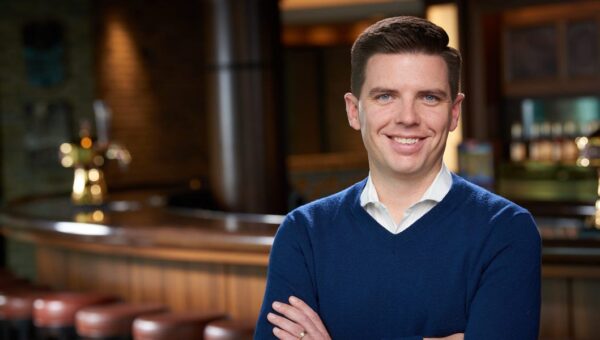

Adtech veteran Brian O’Kelley, once described as the “master of the hard pivot,” is pushing the reset button again.
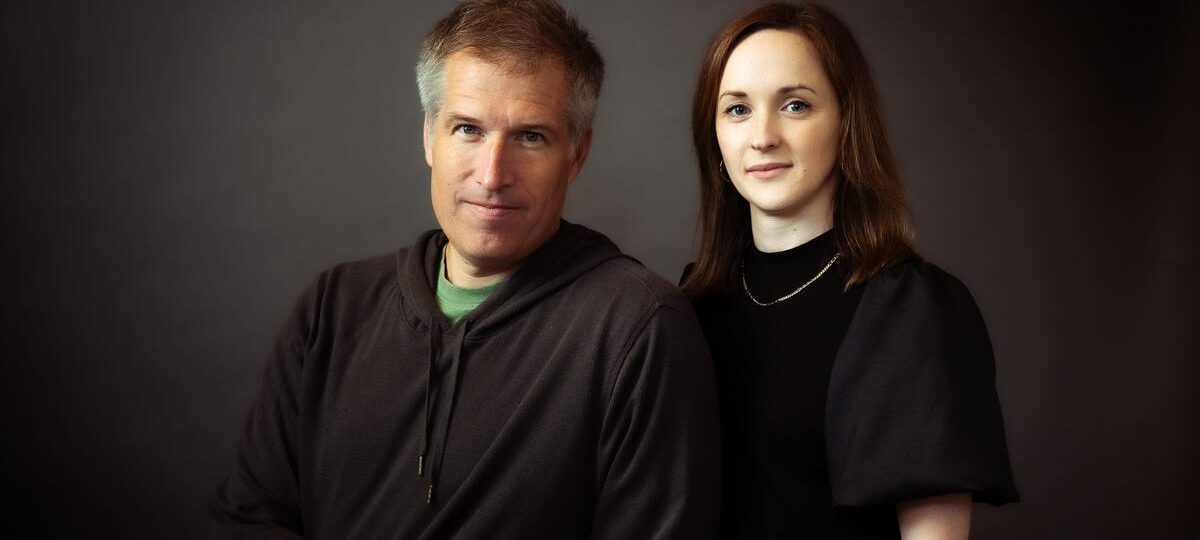
O’Kelley and his cofounder, Anne Coghlan, exclusively told CMO Insider that they are renaming their company from Scope3 to Apostra as they aim to make the startup a leader in agentic AI advertising.
They describe Apostra as a platform that connects advertisers’ AI agents with AI agents representing media sellers, so that marketers don’t have to build separate integrations with potentially thousands of publishers, platforms, and other media providers.
O’Kelley told CMO Insider that advertising has been constrained by a fragmented media infrastructure, manual processes, and a programmatic advertising landscape organized around real-time bidding but not optimized for the most highly valued ad placements. “You can’t buy anything that’s not a rectangle with a cookie,” O’Kelley said.
Apostra is designed to let AI agents handle the work of negotiating and managing ad campaigns across various publishers, including online placements, linear TV, and in-store audio, and to connect brands with creators and clippers.
The advertiser agent makes the media owner’s agent aware of the marketer’s goals, while the media owner’s agent can bring forward details about the publisher’s audience and potential ad opportunities.
Apostra uses AdCP, a protocol created last year by a consortium of adtech companies, including Scope3, that provides a common language for agents to interact.
Apostra said this makes it easier for marketers to place ads in channels such as “walled garden” social platforms, podcasts, or out-of-home advertising, which are traditionally harder to reach through programmatic ad buying.
Unlike traditional programmatic advertising, this doesn’t involve software bidding on individual ad impressions in real time.
Instead, the agents can automate parts of the slower process of discovering, negotiating, approving, and executing media deals.
The company says it’s working with 40 media partners and has built AdCP adapters for major ad platforms, including Google, Meta, Amazon, Reddit, and ChatGPT Ads.
Apostra said it is already running seven-figure campaigns through the system.
O’Kelley said an unnamed major brand began with a $1 million US campaign in April, then expanded the experiment into several other markets and channels.
While it may sound like an ad network, Apostra said it functions more like a neutral gateway.
It doesn’t charge transaction fees or a percentage of media spend like other adtech platforms, but will instead sell add-on “intelligence capabilities” such as campaign proposal evaluation, negotiation support, catalog integration, and currency handling.
Apostra says that by using its technology, marketers could discover media they wouldn’t otherwise access through traditional sales channels, and publishers could gain access to more advertiser demand and reduce the costs of selling ad space.
The process isn’t necessarily fully autonomous.
Publishers can still require human approval for campaigns, while brands can retain control over things like how the creative looks and the broader strategy.
O’Kelley gave the example of a media partner whose AI agent posts proposed ads to a Slack channel for a human employee to review.
The launch of Apostra marks another twist in O’Kelley’s long adtech career.
O’Kelley was credited with helping to invent the ad exchange at the adtech startup Right Media, which sold to Yahoo shortly after he left the company.
O’Kelley was fired from his chief technology role there after telling the Right Media board not to take the deal.
O’Kelley, sometimes referred to in the trade press as the “godfather of adtech,” went on to launch the adtech company AppNexus, which sold to AT&T for a reported $1.6 billion in 2018.
Scope3 has a complicated founding story.
In 2019, O’Kelley cofounded a company called CMDTY, which later changed its name to Waybridge and operated a supply-chain platform that tracked the movement of raw materials.
He began Scope3 as a side project, offering a service that let advertisers, agencies, and publishers measure the carbon impact of their digital advertising.
Waybridge returned some of its $30 million Series B funding to its investors, who in turn reinvested $20 million from a seed round in Scope3.
Scope3 had raised $60 million in total, O’Kelley said.
He told CMO Insider that he had been planning to expand the company beyond carbon tracking since as far back as 2022.
The turning point was 2025, as companies began scaling back their sustainability programs, he said.
He added that, until then, the company had been “doubling” revenue each year.
The company decided to put all of its focus into the Apostra project “when it became clear the sustainability business wasn’t going to double,” O’Kelley said.
Scope3 launched its agentic media platform in March 2025.
The agent-to-agent tool was designed to execute media transactions and root out inefficiencies in the programmatic ad buying space.
Scope3 helped launch AdCP in October.
Joseph Hirsch, CEO of the adtech company Swivel, dubbed O’Kelley the “master of the hard pivot” last year while describing O’Kelley’s reimagining of the programmatic ad landscape as a system dominated by agents.
Others in the industry have been more critical of O’Kelley’s serial reinvention.
In covering Scope3’s divestment this year of Adloox, an ad verification startup it had acquired a couple of years previously, trade publication AdtechRadar said Scope3 continued “to shift its strategy as it searches for a durable growth story.” O’Kelley said the launch of Apostra is the company’s “burn the boats” moment.
The company had two rounds of layoffs over the past year and has reduced its head count from over 100 staffers to about 40 people. “It’s just really hard to make money in programmatic when your future vision is to kill programmatic,” O’Kelley said.
The jury’s still out on how quickly marketers will adopt agentic advertising, or whether it will achieve the scale its proponents envision.
Procurement processes at large brands often lag new trends.
Many ad buying decisions are built on the strength of old-fashioned, human relationships and dealmaking — hence the longevity of events like the annual US TV upfronts.
Apostra cofounder Anne Coghlan said adopting agentic ad buying will require organizational changes for some marketers.
She said some large companies are already experimenting with using thousands of internal AI agents across various departments, but haven’t yet figured out how to connect them to media buying.
Many of Apostra’s early campaigns have run through brands’ agencies, allowing marketers to test agentic ad buying without having to overhaul their internal processes. “We’re not expecting you to throw everything out the window,” O’Kelley said.
O’Kelley said that human relationships and craft will always matter in advertising, but agentic AI can make many aspects of the ad-buying process more efficient. “The reason we called this company Apostra is because we were joking about apostrophes, which take out unnecessary letters and words,” O’Kelley said. “You go from ‘cannot’ to ‘can’t’ and you lose nothing.” O’Kelley said the company expects to seek additional funding between now and the middle of next year.
Discover more from NAIRAVOICE.COM.NG
Subscribe to get the latest posts sent to your email.