There’s no denying that when Tom Holland‘s Spider-Man entered the Marvel Cinematic Universe in Captain America: Civil War, then spun off into his own solo franchise with Spider-Man: Homecoming, people had their complaints. It was considered a good movie, but got flak for the inclusion of things like Iron Man (Robert Downey Jr.) as a mentor figure.
There was a common notion that Spider-Man: Homecoming is a great movie, but not a great “Spider-Man movie,” and I’m here to claim why that’s simply just wrong. Is Holland’s first solo outing perfect? No! But it is genuinely a great film and deserves far more credit than certain portions of the Spider-Man fandom give it. If someone wants Iron Boy Jr. content, they can watch Avengers: Infinity War (more on that later).
5
Characterization is Excellent
<<img src="https://static0.colliderimages.com/wordpress/wp-content/uploads/2024/05/tom-holland-spider-man-lift-rubble.jpg?q=70&fit=crop&w=825&dpr=1" />
Image via Sony Pictures Releasing</figure>
The young, goofy, and lovable characterization of Peter Parker in this 2017 flick is very well-written by the numerous writers on the project, and well-performed by Holland. This Pete is far different from the previous two iterations of the iconic hero, but not in a bad way. With Marvel Studios, Sony Pictures Entertainment, and director Jon Watts going in a far more high school-focused direction than ever before—taking massive inspiration from John Hughes films—this version of the young hero is smack-dab in the middle of his biggest developmental years.
He begins the film as a youthful, optimistic, naive hero that just wants to do good, having yet to face true villainy . . . until the Vulture (Michael Keaton) comes around. He grows a lot over the course of Spider-Man: Homecoming‘s runtime, and by the end of the project he’s grown from this naive boy into a hero of his own. He has the heart of Spider-Man, the humor, and the sheer determination and willpower he holds in the comic books that people love so much.
4
A Great Supporting Cast
<<img src="https://static0.colliderimages.com/wordpress/wp-content/uploads/2026/01/spider-man-homecoming-tom-holland-jacob-batalon.jpg?q=70&fit=crop&w=825&dpr=1" />
Image via Columbia Pictures/Marvel Studios</figure>
No matter what Spider-Man content one is consuming, his supporting cast has always been a crucial part of his life and stories. While the likes of Harry Osborn and Mary Jane Watson are common mainstays, Marvel Studios and co. decided to switch things up for Spider-Man: Homecoming. This actually works, though, as it makes Holland feel like his own unique iteration of the hero, including the likes of Ned Leeds (Jacob Batalon) as his best friend, and Liz Allan (Laura Harrier) as his love interest.
Peter’s supporting cast in Spider-Man: Homecoming makes the world feel lived-in and adds so much to the high school sequences. They all bring great comedic relief, provide great internal conflict for Peter, and truly feel authentic. The film ditches a lot of the typical high school tropes found in movies like these and crafts a very diverse group of characters to bring a true high school experience that feels natural and real.
3
The Vulture
<<img src="https://static0.colliderimages.com/wordpress/wp-content/uploads/2024/10/spider-man-homecoming-vulture-car.jpg?q=70&fit=crop&w=825&dpr=1" />
Image via Sony Pictures Releasing</figure>
There’s zero question that Michael Keaton’s Vulture is one of the greatest Spider-Man movie villains of all time. What makes him so great is that Vulture—Adrian Toomes—is an understandable villain. His feelings and motives are justified, despite him doing bad things as a result of it. The movie provides a decent criticism of billionaires like Tony Stark, and how they can negatively affect the working class with their actions, and does so via Toomes and his crew being screwed over by Stark and Damage Control at the top of the film. Toomes and his crew have every reason to feel the way they do, as what happened to them is genuinely messed up.
This leads Vulture to be a villain that audiences find themselves truly invested in. It’s not hard to say that a mass majority of audiences watching Spider-Man: Homecoming are not millionaires or billionaires, so they can find themselves truly relating to the villain. He’s almost the other side of the same coin Spider-Man is on. Not to mention, the stakes are only raised by the fact that Toomes is actually Liz’s father. Having a good villain can make or break a superhero movie, and Vulture helps make this flick something truly enjoyable and amazing.
Four powers, and four completely different kinds of person behind them.
Here is what you would wake up with, what it would cost you, and why the MCU keeps handing it to
somebody exactly like you.
You get the power that is really about taking the hit so that
nobody else has to. Strength in the MCU always lands on people who were already carrying too
much, which is exactly why it suits you.
- Your instinct is to put yourself between the problem and the people, and you do it
before anybody has thought to ask. - Bruce Banner is the most interesting version of this because his story was never about
lifting things, it was about control. - The catch with strength is that people stop checking whether you are alright, since you
have made a habit of looking like you always are. - You would be the one everybody calls at two in the morning, and you would answer every
single time.
You get the power that never switches off. Spider-sense is a gift
and a nervous system on permanent alert, and the people who get it in these films are always
the ones who were already worrying about everybody.
- You read a situation faster than you can explain it, and you are usually right in a way
you cannot show your working for. - Peter Parker is the template because he takes on more than he can hold and then
apologises for not holding it well enough. - Spider-Man: Brand New Day arrived in July 2026 and put him back to being local, broke
and permanently on call. - The cost here is real, since a power that warns you about everything also means you are
never quite off duty.
You get the quietest power in the building, and quietly the most
useful. Invisibility comes with force fields for a reason, because the people who prefer not
to be seen are usually the ones holding a shield around everybody else.
- You notice everything, largely because you spend more time observing a room than
performing in it. - Sue Storm is the strongest member of her team and the least interested in anybody saying
so, which is very much your energy. - The Fantastic Four: First Steps finally gave the family a proper MCU home in 2025 and
made her the centre of it. - Your risk is that being unseen becomes a habit rather than a choice, and the people who
love you would like a look in.
You get the biggest and least comfortable power on the list, the
one that runs directly on feeling. Chaos magic is not really a superpower in the MCU so much
as an emotional state with consequences attached.
- You feel things at a volume other people do not, and you have spent years managing that
rather than being managed by it. - Wanda is the best written character Marvel has, precisely because her power and her
grief turned out to be the same thing. - WandaVision remains the high point of Marvel television, and it works because the
spectacle is only ever a symptom. - The warning attached to this one is simple. A power that answers to how you feel is only
ever as steady as you are.
2
A True Spider-Man Story at Heart
<<img src="https://static0.colliderimages.com/wordpress/wp-content/uploads/2024/07/tom-holland-homemade-spider-man.jpg?q=70&fit=crop&w=825&dpr=1" />
Image via Sony Pictures Releasing</figure>
There’s a stark contrast between stories that include Spider-Man and a true bona fide Spider-Man story. Despite it never being said, the feeling of “with great power comes great responsibility” lies throughout the entire movie. A good, classic Spider-Man story manages to blend big stakes with an emotionally grounded plot. The feeling of the burden of responsibility should be ever-present, and it truly is in Spider-Man: Homecoming.
Most importantly, though, Spider-Man: Homecoming really hones in on the importance of staying true to oneself, which is ever-true to the web-slinger. Spidey is always incredibly true to himself, and seeing Holland’s variant learn that and the importance of finding one’s power from within and not from technology is genuinely compelling and the beating heart of the movie. He’s also quite street-level in this project—something people have been asking for him to return to since Avengers: Infinity War, partially leading to the mass love for Spider-Man: Brand New Day—and very much a “friendly neighborhood” hero. The massive complaint with MCU Spider-Man is that for most of his career, he was facing world-ending threats and not street-level whatsoever. Many forget that this is not the case with Spider-Man: Homecoming, which adds to its charm.
1
He is NOT “Iron Boy Jr.”
<<img src="https://static0.colliderimages.com/wordpress/wp-content/uploads/2026/08/spider-man-homecoming-tony-stark-peter-parker-1.jpeg?q=70&fit=crop&w=825&dpr=1" />
Image via Sony Pictures Releasing</figure>
The claim that the hero audiences see in Spider-Man: Homecoming is “Iron Boy Jr.” is simply incorrect in almost every single way. The inclusion of Iron Man as a mentor figure does not make this true and, in fact, has the opposite effect. The entire point of Stark’s inclusion is to push forward the main point of the movie: Spider-Man is his own hero, not the sidekick to an Avenger. It’s hard to believe that one can watch the “If you’re nothing without this suit, you shouldn’t have it” scene and still believe the Iron Boy Jr. claims. Simply put, Peter’s character arc in Spider-Man: Homecoming is proving that he is not Iron Boy Jr. and does not need to be an Avenger like he thought he did at the beginning of the movie.
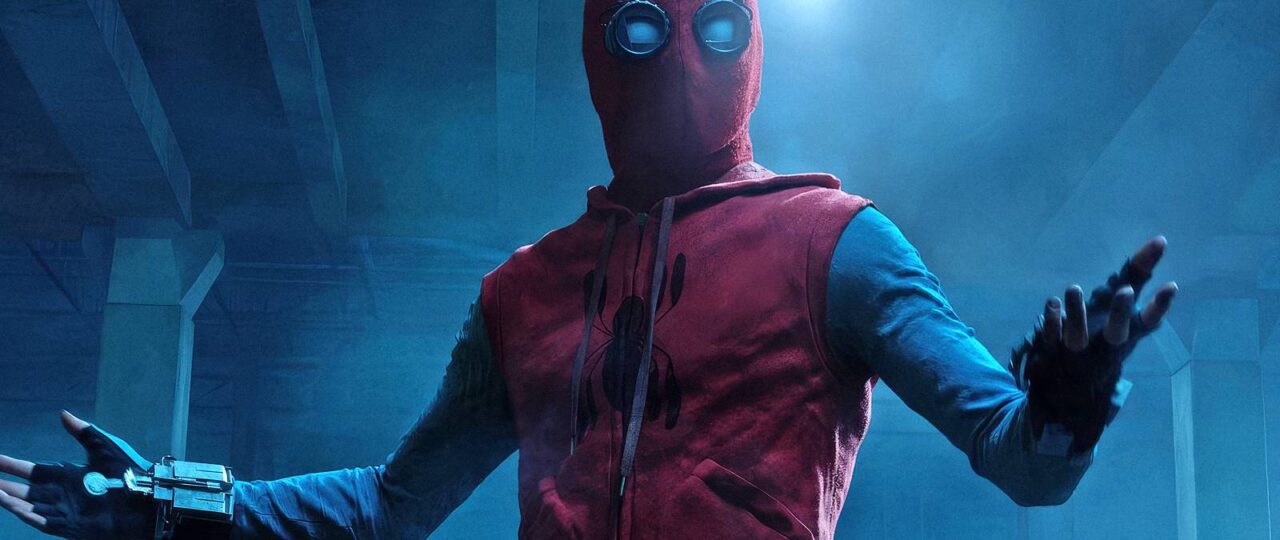
Peter putting on his classic homemade costume and pursuing Vulture without the tech he’s grown so accustomed to is him showing that he is Spider-Man without help from Stark and that the suit doesn’t make the man, the man makes the suit. This also makes him getting the suit back from Stark at the end of the movie far more understandable because the entire point is that it doesn’t matter he got the suit back and it’s merely a cherry on top. It doesn’t undo his arc, but shows how much said arc changed him. He isn’t more of a hero because he got it back, he got it back because he’s a hero without it. It’s the frosting on the cake that is the completion of his arc. The most important aspect of this film that disproves Iron Boy Jr., however, is the fact that Pete turns down an Avengers membership after wanting it for so long. An Iron Boy Jr. wouldn’t do that, but Spider-Man would. Sure, this is undone in Avengers: Infinity War, but that doesn’t change the fact that in this movie, Peter is Spider-Man. Nothing more, nothing less.
Discover more from NAIRAVOICE.COM.NG
Subscribe to get the latest posts sent to your email.