We can generally say that television quality has improved since the 1980s, but that doesn’t mean all modern shows are better than those of the past. Sure, we may see more slick, refined edges on screens today. CGI has come a long way, and companies are far more willing to invest big bucks in television than they used to be. All these facts and more mean that we have been given some truly excellent shows in recent years, and there’s a promise for many more to come. However, looking back at past projects makes it clear that we have lost something.
Miniseries have really come back in popularity since streaming completely took over. These projects are approached almost like a feature film, but there is so much more room here for a story to be thoroughly explored. How this works in the modern age is fairly new, but the general concept of a miniseries has been around for decades. Back in the 1980s, these weren’t released in bulk on streaming platforms (since those didn’t exist). Rather, these types of shows were often released across subsequent nights, providing viewers with what was often a week-long viewing experience.
That format allowed miniseries of the 1980s to feel something like lovely, spectacular events. These shows were often used to adapt popular novels to the screen, since miniseries offered much more time to explore the plot than a feature film would, without the added padding of seasonal TV shows. Interestingly, the entertainment industry has tried again with many of the ’80s greatest miniseries. Modern remakes have their edge, but looking back at the originals highlights all the ways newer isn’t necessarily better.
Brideshead Revisited
The 1981 miniseries Brideshead Revisited was directed by Michael Lindsay-Hogg and Charles Sturridge, and was adapted from the 1945 novel of the same name by Evelyn Waugh. The story spans 20 years, from the 1920s to the 1940s, and follows an agnostic painter, Charles Ryder, who meets the devoutly Catholic Sebastian Flyte at Oxford. Charles becomes involved with Sebastian’s aristocratic family at their estate of Brideshead Castle. Brideshead Revisited uses this dynamic at a slow, steady pace to explore the contrast between secularism and Catholicism, among other things.
There’s really nothing else quite like Brideshead Revisited. Over its 11 episodes, this series retains about 95% of the dialogue from Waugh’s original novel. This sort of faithful adaptation is virtually unheard of, largely because it’s not generally considered possible. Brideshead Revisited proves otherwise. There are no desperate efforts to intensify the story or hand audiences too many redundant explanations. In 2008, a new adaptation of Brideshead Revisited hit screens, and it was an absolute nightmare—further proof that the ’80s did this story right.
North And South
North and South (1985) is another miniseries based on a novel, this time by John Jakes, published in 1982. Set in the years leading up to and through the Civil War, North and South is a historical drama that follows a complex friendship between a man from a South Carolina plantation and one from Pennsylvania. It’s all about political corruption, forbidden love, family and political feuds, and stars massive names like Patrik Swayze, James Read, Kirstie Alley, Elizabeth Taylor, Gene Kelly, and more.
This was an absolutely massive project for the time, and it had a budget to match. Visual historical accuracy was a top priority, and North and South used massive practical sets. Unlike modern prestige dramas, this series fully embraces the concepts and feel of theatre. It’s emotional, larger-than-life, and backed by a rich orchestral soundtrack that aligns perfectly with the series’ living-and-breathing pacing. That miniseries format servedNorth and South perfectly, and with over 12 hours of content, the story moves fluidly and organically.
Smiley’s People
They really don’t do television spy thrillers like 1982’s Smiley’s People anymore. This six-episode miniseries is based on the 1979 novel by John le Carré, who was heavily involved in the adaptation process. The story of Smiley’s People begins in the Cold War era with the murder of a former Soviet defector in England. Retired master spy George Smiley (Alec Guinness) is pulled back to the job for a careful investigation that takes him all across Europe. Smiley’s People is low-tech and deeply psychological, which is something we really don’t see in modern spy shows.
You won’t find high-intensity firefights, car chases, and explosions in Smiley’s People. Instead, espionage is treated as a slow, carefully intellectual job. Guinness’ performance is beautifully understated, and audiences are given information only as his character receives it and without any hand-holding. All six episodes of Smiley’s People are tight and entirely free of padding, so the room to breathe feels entirely organic. Once again, what makes this project so special and distinct from modern entertainment is that the creators felt no need to rush anything.
Lonesome Dove
<<img src="https://static0.srcdn.com/wordpress/wp-content/uploads/2026/02/robert-duvall-as-gus-in-lonesome-dove.jpg?q=49&fit=crop&w=825&dpr=2" />
</figure>
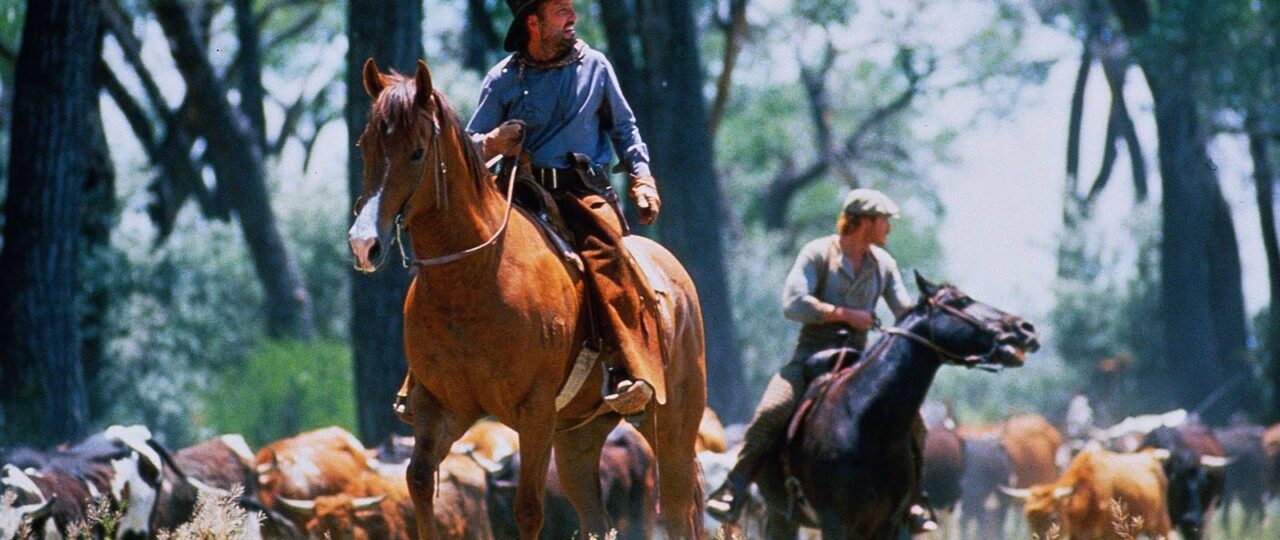
Lonesome Dove is a four-episode, approximately six-hour-long miniseries that originally aired on CBS in February of 1989. It’s based on the 1985 Pulitzer Prize-winning novel of the same name by Larry McMurtry, and follows two retired Texas Rangers as they drive a stolen cattle herd thousands of miles through the wilderness of Montana. The pair are played by Tommy Lee Jones and Robert Duvall, and their characters, though old friends, are about as different as they can be. This leads to a combination of intriguing conflict and moral exploration.
Identify the cover art while scratching off as little foil as
possible.
                    <a href="/register/" target="_blank" rel="noopener noreferrer">Sign in</a> to claim your place
                    on the leaderboard!


                    <a href="/register/" target="_blank" rel="noopener noreferrer">Sign in</a> to claim your place
                    on the leaderboard!
The ’80s brought dozens of excellent Westerns, but even by the standards of the time, Lonesome Dove was different. The Hollywood glamour of the era is stripped away, leaving the Western wilderness to be portrayed as unpredictable, lonesome, and devastatingly dangerous. Lonesome Dove also centers on its characters rather than on plot conflicts and obstacles; their moral and psychological states, including regret and fatigue, drive the story forward. This allows the series to connect with viewers of any era in a way modern television often doesn’t take the time to do.
Anne Of Green Gables
<<img src="https://static0.srcdn.com/wordpress/wp-content/uploads/2022/05/Anne-Of-Green-Gables.jpg?q=70&fit=crop&w=825&dpr=1" />
</figure>
L.M. Montgomery’s 1908 novel Anne of Green Gables has been adapted countless times, which is precisely why it is so overtly obvious that the 1985 miniseries was something special. Split into two parts, the series follows an imaginative young orphan who is mistakenly brought to live with an aged brother and sister on their Prince Edward Island farm. Anne of Green Gables stars Megan Follows, Colleen Dewhurst, and Richard Farnsworth, among others. The series is idyllic and lovely, and remains a popular comfort binge even today.
Anne of Green Gables has a 100% critic score on Rotten Tomatoes and a 96% audience score.
Modern adaptations of Anne of Green Gables have fallen painfully short in contrast with this 1985 miniseries. In 2017, Netflix came out with Anne with an E, which did away with more of the idyllic optimism of Montgomery’s original story. The trauma-centered grittiness of this later series is a prime example of what the modern television landscape often tries to do, and Anne of Green Gables stands as the perfect contrast. These characters are given ample time and room to grow and develop without the pressures of excessive dramatization, and it’s clear that this is precisely the right approach for a truly great miniseries.
Discover more from NAIRAVOICE.COM.NG
Subscribe to get the latest posts sent to your email.