7. They Believe the Teacher Is Too Harsh
There is a difference between having high standards and creating an unnecessarily hostile learning environment.
A strict teacher may insist that students complete assignments, show their working and meet deadlines. These expectations can be beneficial. However, when discipline becomes excessive or students feel they are constantly being shouted at, the relationship can deteriorate. Students may begin associating the teacher with punishment rather than learning. As a result, even reasonable instructions can be received negatively.
Teachers can maintain authority without humiliating students. Correcting a student firmly does not require attacking their intelligence or character. In fact, respectful discipline can help students understand boundaries while preserving the relationship necessary for effective teaching.
8. They Do Not Understand Why Mathematics Matters
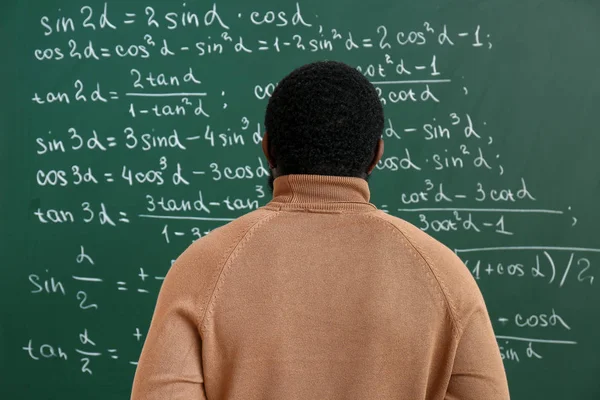
Sometimes, students dislike their maths teacher because they do not see the relevance of what they are learning. A teacher who spends most of the lesson writing formulas on the board without explaining their practical significance may struggle to maintain students’ interest. Students may start asking themselves why they need to learn a particular concept.
Mathematics has applications across science, technology, engineering, finance, business, medicine and everyday decision-making. However, students do not always see those connections automatically.
Teachers can make mathematics more meaningful by connecting abstract concepts to real situations. Showing how percentages relate to discounts, interest rates, budgeting or business, for example, can help students understand that mathematics exists beyond examination questions.
9. Their Poor Performance Has Changed How They See the Teacher
Not every conflict originates with the teacher. A student who consistently performs poorly in mathematics may develop negative feelings towards the person teaching the subject. This can happen because the teacher represents the subject that the student finds frustrating.
Repeated failure can also affect confidence. Instead of thinking, “I need more help with this topic,” the student may begin thinking, “I hate maths,” or even, “I hate my maths teacher.”
This distinction matters because changing teachers may not automatically solve the problem. If the underlying difficulty is weak foundational knowledge, poor study habits or anxiety about mathematics, the student may continue struggling elsewhere.
Teachers and parents therefore need to look beyond the student’s dislike and identify the academic problem underneath it.
10. They Feel the Teacher Does Not Believe in Them
Perhaps the most damaging experience for a struggling student is believing that their teacher has already given up on them. Students notice the language adults use around their abilities. Being repeatedly told that they are weak, unserious or incapable can eventually become part of how they see themselves.
A teacher does not need to pretend that a student’s performance is good when it is not. However, there is an important difference between honest feedback and discouraging labels. Saying, “You have not mastered this topic yet, but we can work on it,” leaves room for improvement. Saying, “You will never understand mathematics,” closes that door.
Students are more likely to persevere when they believe their abilities can improve through effort, practice and appropriate support.
When Dislike Becomes an Academic Problem
Disliking a teacher does not automatically mean a student will fail mathematics. However, when negative feelings become strong enough to affect classroom participation, the academic consequences can become serious.
A student who avoids asking questions is less likely to identify gaps in understanding. A student who skips mathematics lessons loses valuable learning time. Someone who feels anxious around the teacher may also struggle to concentrate during lessons and assessments.
The situation can become even more complicated when the student begins discussing the teacher negatively with classmates. A shared dislike can create a classroom culture where students expect the subject to be unpleasant before the lesson even begins.
This is why teacher-student relationships matter. The goal is not for every student to personally like their teacher. Teachers are not expected to become their students’ friends. The more important issue is whether students feel respected, supported and able to learn.
What Maths Teachers Can Do Differently
Improving the relationship does not require teachers to lower academic standards. In fact, students can respect demanding teachers when they believe those teachers are fair and genuinely interested in their success.
A maths teacher can start by creating an environment where mistakes are treated as part of learning rather than reasons for humiliation. Encouraging students to explain their thinking, even when their answers are wrong, can reveal where their understanding breaks down.
Teachers can also vary their explanations. Some students may understand a concept through a worked example, while others may need a visual explanation or a practical application. Repeating the same explanation louder or faster does not necessarily make it clearer.
In addition, teachers should pay attention to quieter students. The student who never asks questions may not understand everything. Sometimes silence is a sign of confidence, but it can also be a sign of fear.
Most importantly, teachers should communicate high expectations without making students feel incapable. A difficult subject becomes easier to approach when students believe that their teacher wants them to succeed.
Conclusion
When students say they dislike their mathematics teacher, the statement may be hiding a deeper problem. It could reflect fear of making mistakes, frustration with difficult concepts, perceived favouritism, poor academic performance or the feeling that the teacher does not believe in them.
Mathematics already carries a reputation as a difficult subject for many learners. A negative classroom relationship can make that difficulty even greater, while a supportive teacher can help students approach challenging concepts with greater confidence.
Teachers therefore have an important role to play beyond explaining equations and marking assignments. The way they correct mistakes, respond to questions, enforce rules and communicate expectations can shape how students experience mathematics.
Ultimately, students do not need a maths teacher who is always easy-going. They need one who is fair, patient, consistent and willing to help them improve. When students know that their teacher believes they can learn, even a subject they once disliked can begin to feel less intimidating.
Discover more from NAIRAVOICE.COM.NG
Subscribe to get the latest posts sent to your email.