By Opeyemi Eniola
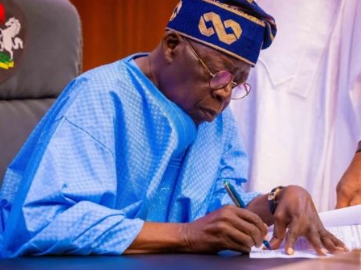
President Bola Ahmed Tinubu has already forced Nigeria to confront a set of structural realities that successive administrations preferred to manage, postpone or obscure. On the afternoon of 29 May 2023, standing before the nation after taking the oath of office, he declared that the fuel subsidy was gone. The statement was delivered without elaborate preamble. It landed with the force of a policy rupture. In the weeks and months that followed he moved to unify the foreign-exchange market, clear a multi-billion-dollar backlog of unpaid obligations, end the Central Bank’s inflationary reliance on Ways and Means advances, and begin the long process of rebuilding external reserves and non-oil revenue. These were not cautious, incremental adjustments. They were deliberate breaks with a system that had rewarded opacity, subsidised inefficiency, and deferred hard choices for decades.
More than three years later, the question that now confronts both the president and the country is no longer whether those decisions were necessary. The necessity is increasingly acknowledged even by critics who continue to dispute the sequencing, the communication or the human cost. The more consequential question is what remains to be done if the reforms are to become a durable foundation rather than a painful interlude, and whether the name Tinubu will ultimately be associated with courage that delivered lasting improvement or with boldness that stopped short of transformation. That is the subject of this editorial: the unfinished work, the legacy still to be secured, and the standard by which a political name is finally beheld.
The inheritance
To understand the scale of what has been attempted, it is necessary to recall the condition of the economy Tinubu inherited. By May 2023 Nigeria faced a combination of fiscal stress, external vulnerability and institutional distortion that had been building for years. The petrol subsidy had become an open-ended claim on public resources, consuming sums that could otherwise have supported infrastructure, education and health while simultaneously encouraging smuggling and rent-seeking. Multiple exchange-rate windows created opportunities for arbitrage that enriched a narrow circle and starved legitimate producers of foreign exchange. The debt-service-to-revenue ratio had climbed toward 97 percent and, on some measures, threatened to exceed 100 percent, leaving almost nothing for capital expenditure or social investment once interest obligations were met. External reserves were under pressure. The Central Bank’s Ways and Means advances to government had expanded to levels that fuelled inflation and undermined monetary credibility. Oil theft was estimated in the hundreds of thousands of barrels per day. Investor confidence was fragile. States struggled to meet salary obligations. The macroeconomic dashboard was, in the language of one later retrospective, blinking red.
None of these problems was new. They had been diagnosed repeatedly by domestic analysts, the International Monetary Fund, the World Bank and successive Nigerian finance ministers. What had been missing was the political willingness to confront them simultaneously and at the beginning of a presidential term, when political capital is theoretically highest and the incentive to defer pain is strongest. Tinubu chose confrontation. In doing so he accepted a degree of short-term unpopularity that many of his predecessors had calculated they could not afford.
The reforms and their macroeconomic results
The removal of petrol subsidy and the move toward a more market-determined exchange rate were the signature decisions. They were followed by tax and revenue reforms, efforts to improve the efficiency of collection, and a stated commitment to fiscal discipline. The results, measured by official and independent data available by late 2026, are substantial.
Non-oil revenue has risen sharply. The administration reported that the 2025 non-oil revenue target was achieved by August of that year, with collections exceeding ₦20 trillion, and that September 2025 alone produced ₦3.65 trillion—more than four times the monthly figure recorded in May 2023. The debt-service-to-revenue ratio has been brought below 50 percent. The government has paid down a significant portion of the Ways and Means stock that had threatened fiscal and monetary stability. External reserves have climbed from approximately $35 billion at the start of the administration to levels above $54 billion by September 2026, the highest in nearly two decades. Gross reserves have provided a stronger buffer against external shocks and have supported greater confidence in the foreign-exchange market.
Real GDP growth has accelerated. After years of weaker performance, growth reached 3.89 percent in the first quarter of 2026 and 4.43 percent in the second quarter, with the first half of the year recording approximately 4.2 percent according to World Bank figures. Both oil and non-oil sectors contributed. The oil sector posted strong year-on-year growth in the second quarter of 2026, while non-oil activity continued to expand. Trade surpluses have been recorded for consecutive quarters. Non-oil exports exceeded $6 billion in 2025, a historic high, and the share of non-oil trade has risen relative to oil. The Nigerian stock market has reflected improved sentiment: market capitalisation expanded from roughly ₦30 trillion in 2023 to more than ₦160 trillion by 2026, with the All-Share Index rising from the low 50,000s to levels above 250,000 at points in the period.
Inflation, which peaked above 30 percent and reached 34.8 percent in December 2024 on some measures, has declined toward the mid-teens by the second half of 2026. The decline has not been linear—geopolitical tensions and domestic supply constraints have produced interruptions—but the direction from the peak has been downward. The current account has moved into surplus. Foreign direct investment announcements have increased. Nigeria was removed from the Financial Action Task Force’s increased-monitoring list, reducing a layer of international compliance friction. The country joined BRICS as a partner and became an association country of the International Energy Agency, signalling a desire for broader economic diplomacy.
These are not trivial outcomes. They represent a restoration of macroeconomic policy space that had been steadily eroded. International institutions have acknowledged the improvement in stability, external buffers and the functioning of the foreign-exchange market. The World Bank’s Nigeria Development Update in 2026 noted that the poverty rate had stabilised for the first time since 2019 and projected gradual declines if growth continued to outpace population increase. Debt-to-GDP ratios at the federal and state levels have shown improvement in a majority of states, and combined state capital expenditure rose significantly in real terms between 2023 and 2025.
Social policy, infrastructure and sectoral shifts
Beyond the headline macroeconomic numbers, the administration has advanced several social and infrastructural initiatives.
The Nigerian Education Loan Fund, established early in the term, has processed applications from more than 1.6 million students and disbursed hundreds of billions of naira in tuition and upkeep support. It represents the first large-scale, interest-free student financing system in Nigeria’s history, with repayment structured around future employment. The national minimum wage was raised from ₦30,000 to ₦70,000, and minimum-wage earners were exempted from income tax. Targeted cash transfers have reached more than ten million households according to government figures.
The Three Million Technical Talent programme and related digital skills initiatives aim to prepare young people for opportunities in software, data, cybersecurity and the creative economy. The Consumer Credit Corporation has begun to offer working Nigerians pathways to spread the cost of essential purchases.
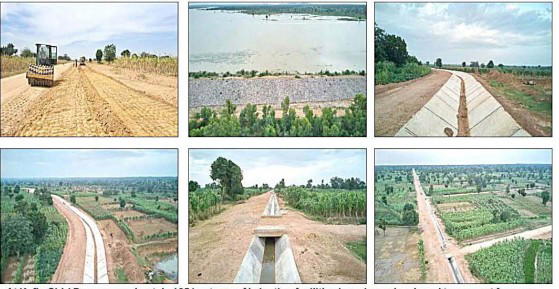
In infrastructure, the government reports that more than 2,700 kilometres of highways and major roads are under construction, reconstruction or rehabilitation. Flagship projects include the Lagos-Calabar Coastal Highway, the Sokoto-Badagry Superhighway, the Abuja-Kaduna-Zaria-Kano corridor and the East-West Road. These projects are designed to improve connectivity between agricultural belts, ports, industrial centres and regional markets. In the power sector, efforts have focused on clearing legacy debts, attracting investment and improving transmission and billing, while the broader energy strategy has emphasised gas utilisation. The Compressed Natural Gas initiative has established conversion centres and fuelling stations, with tens of thousands of vehicles converted and the potential to lower transport costs over time. In oil and gas, reduced theft, higher production and the progressive shift toward domestic refining—supported by the operations of the Dangote refinery and other capacity—have begun to alter the balance between product imports and exports. Seaborne petroleum-product exports have risen substantially while imports have fallen.
Housing programmes under the Renewed Hope initiative and the Federal Housing Authority have delivered thousands of units and associated construction jobs. Health sector efforts have included the commissioning of cancer treatment centres and attempts to revitalise primary healthcare. Pension reforms and more regular payment of salaries and pensions at the federal level have been cited as improvements in public financial management.
Taken together, these measures constitute an ambitious attempt to pair stabilisation with investment in human capital and physical connectivity. They are the positive side of the ledger.
The human cost and the incomplete translation
The same period that produced these gains also imposed severe adjustment costs on households and firms. The removal of the subsidy and the exchange-rate realignment produced an immediate rise in transport and energy costs that fed into food prices and the general price level. Inflation, even as it has declined from its peak, has remained high enough to erode real incomes for large segments of the population. Food insecurity has persisted. Independent analyses, including those from the Centre for the Promotion of Private Enterprise, have noted that while macroeconomic stability has been restored and a deeper crisis averted, the benefits have not yet translated into significant improvements in living conditions for most citizens. World Bank and domestic data continue to show high levels of poverty. The absolute number of people living below the national poverty line remains elevated. For many families the statistical recovery is invisible; what is visible is the struggle to afford staples, transport and school-related costs.
Businesses, particularly small and medium enterprises, have faced higher input costs, elevated interest rates and uneven access to credit even as larger corporates and the capital markets have recorded gains. Power supply remains unreliable for many users. Logistics bottlenecks continue to raise the cost of moving goods. Policy implementation at the sub-national level has been uneven, reflecting both capacity constraints and varying levels of commitment. The gap between the macroeconomic scorecard and the lived experience of the median citizen is the central political and economic vulnerability of the current moment.
This gap is not unique to Nigeria or to this administration. Structural reforms that correct deep distortions almost always impose front-loaded costs while benefits accrue more slowly and unevenly. The political test is whether the administration can accelerate the transmission of gains to households and productive enterprises before public patience is exhausted or before political incentives shift toward reversal.
Security: the binding constraint
No discussion of what remains for Tinubu can avoid the question of security. Banditry, kidnapping and residual terrorist activity continue to exact a heavy human and economic toll. Farming communities in parts of the North-West and North-Central regions operate under persistent threat. The disruption of agricultural production feeds directly into food prices and rural livelihoods. Abductions for ransom have created a climate of fear that extends beyond the immediate victims to entire communities and to the investment decisions of households and firms. Urban centres are not immune to crime and the perception of insecurity.
The administration has responded with increased budgetary allocations for defence and security, large-scale recruitment into the police and armed forces, improved equipment and logistics, the declaration of a national security emergency in late 2025, and structural proposals including the advancement of state police legislation, the deployment of forest guards, the withdrawal of police officers from non-essential VIP duties, and the creation of additional army divisions. Military pay has been increased. Intelligence-led and joint operations have been emphasised. Cooperation with regional and international partners has been pursued.
These measures are necessary. They are not yet sufficient. The data on terrorism-related deaths and abductions in 2025 and into 2026 indicate that the security situation remains below the standard Nigerians have a right to expect. Progress has been reported in certain theatres, yet the overall sense of safety required for normal economic and social life has not been restored across large parts of the country. Security is not merely one policy area among others; it is a binding constraint on agricultural recovery, on internal trade, on investor confidence outside the financial markets, and on the legitimacy of the broader reform project. Without a sustained reduction in violence and the restoration of state presence in contested rural spaces, the macroeconomic gains will remain fragile and the political narrative of prosperity will ring hollow for millions of citizens.
What remains: the agenda of delivery
The unfinished work can be organised under several headings.
First, the transmission of macroeconomic stability into lower living costs and higher real incomes. This requires continued disinflation, targeted measures to improve food supply through security and agricultural productivity, reduction in transport costs through the CNG transition and better roads, and policies that support job creation in labour-intensive sectors. Growth that does not produce employment and income gains for a broad base of the population will not be politically sustainable.
Second, the completion and maintenance of critical infrastructure. Highways must move from construction sites to functional corridors. Power sector reforms must yield more reliable electricity. Ports, railways and digital infrastructure must support lower transaction costs for businesses. The fiscal space created by subsidy removal and revenue reforms must be protected from waste and directed toward high-multiplier investments.
Third, the deepening of human capital interventions. Student financing must continue to expand access while developing robust repayment systems. Skills programmes must connect to actual labour market demand. Health investments must improve primary care and specialised treatment capacity. Social protection must be better targeted and more efficiently delivered.
Fourth, the overhaul of security architecture and outcomes. Recruitment, equipment and legal frameworks must be matched by operational effectiveness, accountability and community trust. State policing, if implemented, must include safeguards against abuse. Forest guards and local security initiatives must be properly regulated and coordinated. The metric of success is not the number of personnel recruited or the size of the budget; it is the decline in attacks, abductions and the restoration of safe economic activity in previously contested areas.
Fifth, the quality of governance and institutions. Increased revenue creates both opportunity and temptation. Transparency in the management of public resources, reduction of leakage, strengthening of procurement systems, and clearer accountability at federal and sub-national levels will determine whether the gains of reform are converted into public value. Tax reforms that raise the tax-to-GDP ratio must be accompanied by visible improvements in service delivery if compliance and legitimacy are to be sustained. The rule of law, the independence of key institutions, and the predictability of policy will influence both domestic and foreign investment decisions.
Sixth, the management of the political economy of reform. Vested interests that benefited from the previous distortions have not disappeared. Pressures to reverse or dilute key policies will intensify as the 2027 elections approach. Maintaining the core of the reform programme while demonstrating flexibility on sequencing and mitigation measures will require political skill and clarity of purpose.
The political horizon
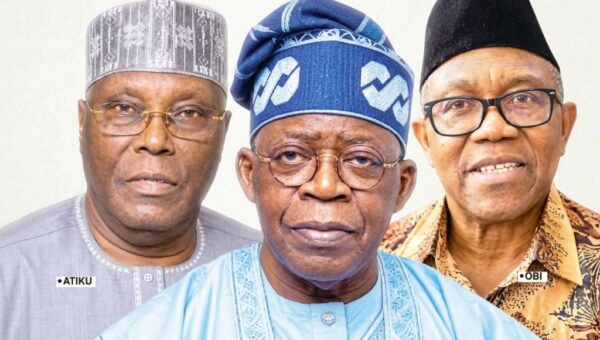
Tinubu is seeking a second term in the presidential election scheduled for January 2027. The contest will take place against a backdrop of incomplete transmission of gains, persistent security challenges and a fragmented opposition landscape. Continuity of the reform agenda is not automatic. It must be earned through results that a sufficient share of the electorate can recognise as improvement. A second term would offer the opportunity to complete major infrastructure projects, entrench institutional changes, deepen the social interventions and demonstrate that the adjustment costs of the first term were the price of a more durable foundation. It would also test whether the administration can shift from the politics of crisis management to the politics of broad-based delivery.
The alternative—a loss of momentum, a dilution of reforms, or a change in administration less committed to structural discipline—would risk squandering the policy space that has been created. Nigeria has experienced cycles of partial reform followed by reversal or drift. Breaking that cycle is part of the legacy that remains available.
Legacy and the name
Political names are not fixed by the intentions of those who bear them. They are fixed by the consequences of decisions and by the collective memory of citizens. Tinubu’s name already carries weight in Nigerian political history. As governor of Lagos State between 1999 and 2007 he was associated with the expansion of internally generated revenue, urban transformation projects and a style of political organisation that reshaped the commercial capital and influenced national politics. As a central figure in the creation and consolidation of the All Progressives Congress he demonstrated strategic capacity in the arena of competitive party politics. As president he has added the identity of a reformer prepared to confront long-standing fiscal and monetary distortions at the cost of short-term popularity.
That identity is real. It is also incomplete. History tends to reserve its more lasting judgments for leaders who not only initiate difficult change but also steward its consequences to the point where ordinary people experience improvement. The name that endures is the one attached to safer communities, more productive farms, functional infrastructure, expanded opportunity for the young, and a broader sense that the state is capable of delivering public value. Courage in diagnosis and decision is necessary. Delivery in implementation and results is decisive.
Nigeria has seen bold policy announcements before. It has seen temporary stabilisations and subsequent drifts. What it requires in this moment is sustained execution that converts cleaner public accounts into better lives for a critical mass of citizens. The remaining period of this term, and any mandate that the electorate may grant in 2027, will determine whether the reforms of 2023–2026 are remembered as a successful foundation or as an unfinished experiment. The macroeconomic indicators provide grounds for cautious confidence. The lived experience of millions of Nigerians provides grounds for urgency. The security situation provides grounds for prioritisation. The political calendar provides a deadline of sorts.
What is left for Tinubu is therefore not another dramatic announcement but the patient, visible work of transmission, completion, protection and accountability. It is the work of ensuring that the fiscal space created by reform is not dissipated, that the infrastructure corridors reach completion, that the student who receives a loan can find productive work, that the farmer can cultivate without fear, that the household can afford food and transport, and that the young person can see a pathway into the formal economy. It is the work of making the age of prosperity more than a rhetorical successor to the age of reform.
That is the legacy still available to be sustained. That is the standard by which the name will be beheld—by the citizens who live with the consequences today, and by the historians and ordinary Nigerians who will assess the record tomorrow. The opportunity has not closed. The responsibility remains clear. The test is delivery. The time to meet it is now.
Discover more from NAIRAVOICE.COM.NG
Subscribe to get the latest posts sent to your email.