
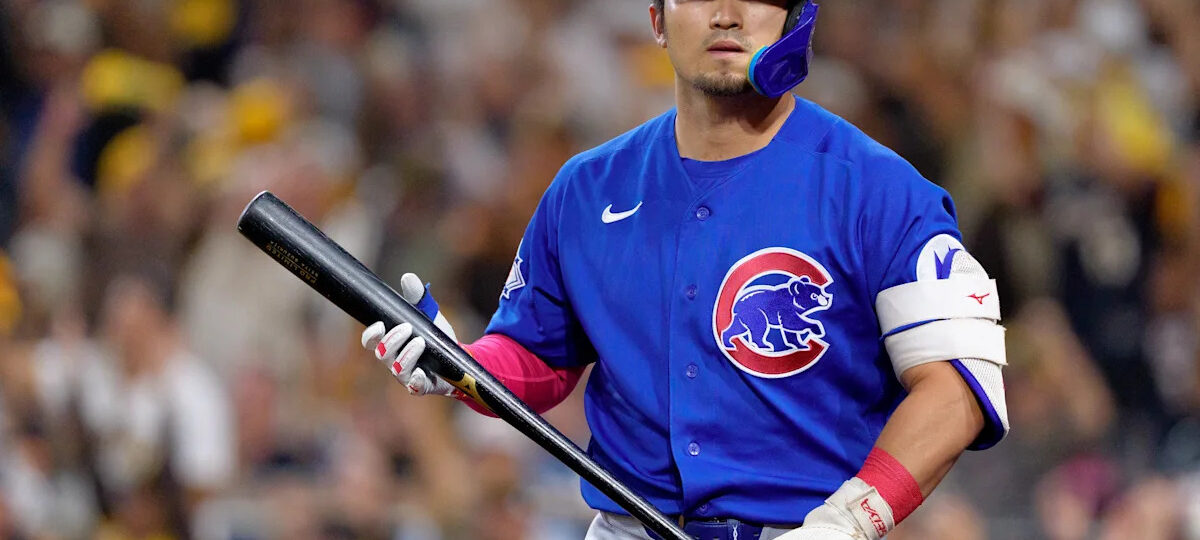
This year was supposed to be different for the Chicago Cubs, and it had every reason to be. But after they were outclassed on the big stage in the first round of the playoffs against the San Diego Padres, it’s time for the Cubs to reevaluate.
After being bounced in the 2025 NLDS by the division-rival Milwaukee Brewers, this Cubs team was searching for redemption in 2026. And just like last season, a meeting with the Padres was the thing separating them from an NLDS rematch with Milwaukee. But there will be no rematch this fall because the Cubs were swept in dominant fashion by the Padres. In the process, they showed that they’re not close to being the team they want to be.
“Look, you’ve got to take your losses. We lost,” Cubs manager Craig Counsell told reporters after his team’s elimination. “There’s a response to it that we get to choose, that you get to choose, and we’ve got to improve. Everybody can point at themselves and say we’ve got to get a little bit better. Then we get to choose how we respond to it.”
Subscribe to Yahoo! Sports MLB on YouTube for videos, podcasts and more
If you’re looking for things that went wrong for Chicago, there’s plenty of blame to go around. But all season, the Cubs’ most glaring issue was their pitching. From a rotation standpoint, the Cubs were simply not good enough down the stretch, and that carried over to the postseason. Chicago was lauded at the trade deadline because it was able to rebuild an injury-riddled rotation and set the team up for the second half with the acquisitions of Kevin Gausman, Clay Holmes and even David Peterson, who was added in late June.
But the impact the Cubs were hoping for from those new arms never materialized. Gausman pitched to a 4.43 ERA in September, and Holmes struggled mightily, with a 8.24 ERA over the final month of the season. Holmes, for whom the Cubs traded No. 2 prospect Jefferson Rojas at the deadline, never appeared for the Cubs in their two-game postseason stint. Right-hander Edward Cabrera, for whom the Cubs traded No. 1 prospect Owen Caissie last offseason, wasn’t even on the team’s wild-card roster.
While the rotation was in flux all season for the Cubs, things weren’t any better in the bullpen, as Counsell could never really lean on a particular reliever for more than a few weeks at a time. Like Gausman and Holmes, deadline acquisition Ryan Zeferjahn underwhelmed out of the pen, sporting a 4.50 ERA in 20 appearances down the stretch.
Another massive issue for the Cubs as a staff was their propensity to give up home runs. Chicago allowed the second-most homers in MLB during the regular season, making the four homers they surrendered in their two wild-card games against the Padres no real surprise.
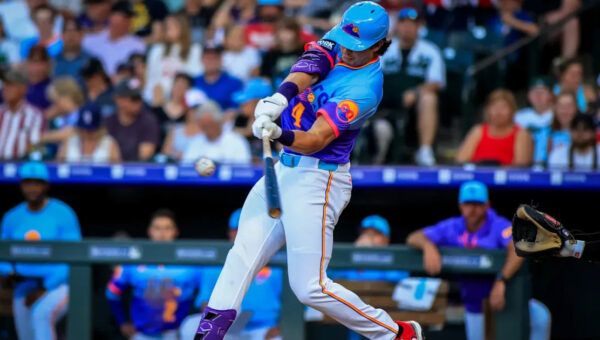
While the Cubs’ pitching will take the brunt of the blame for this team’s abrupt playoff exit, a fair amount can be put on the team’s suddenly nonexistent offense. Led by prospective NL MVP Pete Crow-Armstrong, the Cubs led baseball in runs scored and were third in the sport in homers. But when it mattered the most, that high-powered offense no-showed in two postseason games against San Diego. Crow-Armstrong and Bregman went a combined 0-for-15 with eight strikeouts, and Chicago’s lineup as a whole managed just one run across the two games.
Even in the regular season, the Cubs were arguably the streakiest team in baseball in 2026. With two 10-game winning streaks and a 10-game losing streak, inconsistency was the name of the game for Chicago. That showed up in the worst way possible in the wild-card round.
So where do the Cubs go from here?
Chicago has attempted to augment the roster in recent years and build around what remains a solid position-player group. But after back-to-back disappointing exits from the postseason, it’s clear that things aren’t working. And with several position players set to become free agents this winter, notably longtime outfielders Ian Happ and Seiya Suzuki, change might be on the horizon.
But the biggest thing the Cubs need to solve for this offseason is finding real impact atop their rotation. This team needs an ace that can put a contender on his shoulders. Between injuries and underperformance, the reality in 2026 was that the Cubs’ starters even at their best were a collection of average to a tick above average. And as they found out the hard way, that’s simply not enough in the playoffs.
Making matters even more complicated, many of Chicago’s arms are on their way out. Gausman, Holmes, Matthew Boyd and Shota Imanaga are all free agents. The health of Justin Steele and Edward Cabrera remains a question. Cade Horton won’t be back by Opening Day. Who is pitching for this team next spring? President of baseball operations Jed Hoyer and Co. need to figure that out and soon.
While simply making the playoffs is good enough for some teams, the Cubs should look at first-round exits like the one they endured this week as a wake-up call. Maybe their embarrassing sweep will be enough to force some change.
Discover more from NAIRAVOICE.COM.NG
Subscribe to get the latest posts sent to your email.