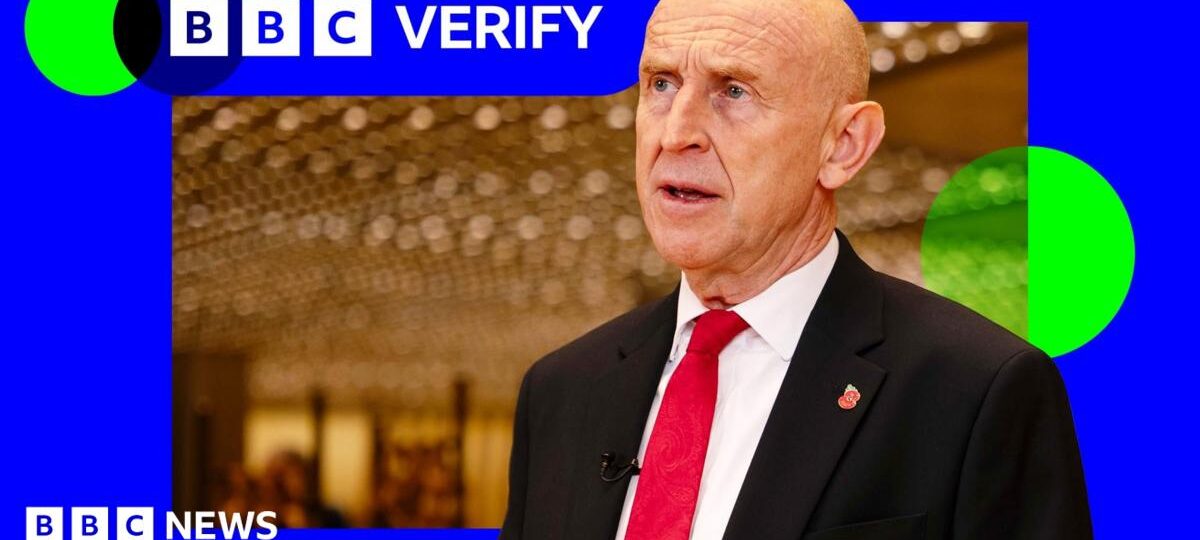
Chancellor John Healey and Prime Minister Andy Burnham have both spoken of their desire for the benefits bill to come down, but the government has not yet laid out a timetable for any reductions.
Their political opponents have criticised them for a lack of detail on welfare reform in Wednesday’s Budget, accusing the government of delaying difficult decisions over cuts.
Official forecasts released alongside the Budget indicate welfare spending is going to increase by £79bn in cash terms over the next few years.
BBC Verify has taken a look at the numbers behind this thorny political issue and some of the difficult options the government have to bring down welfare costs.
How much is being spent on welfare?
The official forecaster, the Office for Budget Responsibility (OBR), estimates in its latest forecasts that the cost of the welfare system will rise, external from £353bn this year to £431bn in 2032.
The OBR’s figures include spending on pensioners, which accounts for just under half of the total. The majority of this cost is on the state pension.
However, if we look at the size of welfare spending relative to the size of the overall economy the OBR’s projections are less dramatic, increasing from 11.1% today to 11.3% of GDP in 2032.
Total welfare spending would also remain below the peak of around 12% of GDP in 2013 following the global financial crisis, leading some economists and researchers to question the idea that welfare spending is out of control., external
But there are some welfare costs that are rising rapidly.
Spending on health and disability related benefits, in particular Personal Independence Payments (PIP), is up sharply since the Covid-19 pandemic.
Inflation-adjusted welfare spending remains lower than 2013 because several other working-age benefits, such as Universal Credit and housing benefit, were cut by Conservative-led governments as part of their austerity programme from 2010 onwards, external.
So spending in some parts of the system has come down while it has risen in others – and there could be a connection.
The problem of Neets
Many also see a specific problem regarding the growing number of young people in the welfare system claiming benefits, including PIP.
Former Labour health secretary Alan Milburn is leading an official review into Neets and is expected to recommend major reforms designed to get many off benefits and into work.
What could cutting the benefits bill mean?
Politicians are often unclear about what they mean by reducing spending on welfare.
In March 2025, former prime minister Sir Keir Starmer’s government presented a plan which it said would save £5bn a year from health-related welfare spending by 2030 by tightening PIP access and reducing the value of health-related Universal Credit payments.
So this type of relative reduction in anticipated welfare spending, rather than a cut in absolute cash terms, could be what the government seeks to deliver.
Looming reports may offer options
The final Milburn report is expected in the coming weeks, as well as a separate final report from disability minister Stephen Timms into the options for PIP reform.
There has been speculation that these could recommend creating a new welfare system for people under the age of 25, external, so they are not eligible for PIP and receive lower payments than older people.
There are also suggestions Timms could propose a new PIP eligibility test to reduce access, external, although he was not specifically instructed to find savings.
Reforms along these lines could potentially make some savings to the welfare bill relative to the existing trajectory of rising spending, as well as reducing forecast welfare spending as share of GDP.
This means that any welfare savings could, in the near term at least, be offset by additional spending in other departments.
However, in the long term this approach could still deliver welfare savings if the employment support was effective.
Faisal Islam: This Budget was micro and that was deliberate
Burnham says he wants to cut welfare bill ‘as soon as we possibly can’
Your pay, energy bills and savings: How the Budget affects you
Discover more from NAIRAVOICE.COM.NG
Subscribe to get the latest posts sent to your email.