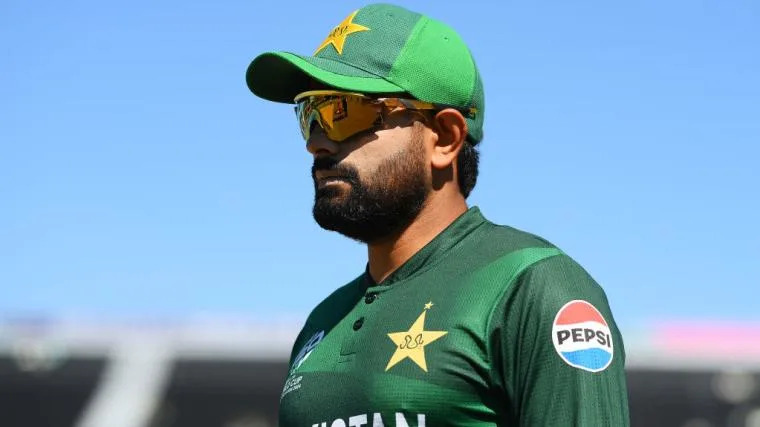

‘Wanted flatter pitches’: Babar Azam partly blamed for Pakistan’s fast bowling decline originally appeared on Cricket News.
Add Cricket News as a Preferred Source by clicking here.
KEY TAKEAWAYS:
- Babar Azam put on the sword for Pakistan’s declining pace bowling due to a preference for flatter pitches.
- Shan Masood’s team lost their Test series 0-2 in Bangladesh, with visibly slower bowling speeds than the hosts.
- Shaheen Shah Afridi’s effectiveness has dropped sharply since his 2022 knee injury, mirroring the wider team’s pace decline.
Babar Azam partly blamed for Pakistan’s fast bowling crisis over demands for flat batting pitches in Test matches
Pakistan’s proud history of producing express fast-bowling terror seems to be fading fast, and pundits are now pointing fingers at pitch preparation, with Babar Azam’s captaincy tenure coming under particular scrutiny for prioritising flatter surfaces over pace-friendly ones.
Pakistan were in trouble against England during the first Test at Leeds after they were bundled for a paltry 171. However, their trouble against premium pace bowling is not new.
The numbers from Pakistan’s recent tour of Bangladesh tell an uncomfortable story. Shan Masood’s side went down 0-2 in the Test series, and throughout both matches, Bangladesh’s fast bowlers consistently clocked higher speeds than their Pakistani counterparts.
The Bangladesh pacers consistently hit the high-130s to mid-140s range, while Pakistan’s attack largely operated in the mid-120s to early 130s. For a nation that built its cricketing identity around world-class speed merchants, that gap is hard to ignore.
Shaheen Shah Afridi’s own decline captures the broader problem perfectly. Once considered Pakistan’s spearhead heading into this decade, he’s struggled to hit 140kph consistently since returning from a knee injury back in 2022.
His effectiveness has dropped sharply too. Before that fateful dive in Galle, which sidelined him for a year, Afridi had taken 99 wickets at an average of 24.86.
Since then, his next 27 wickets have cost over 40 runs apiece. He’s also been dropped from the XI on multiple occasions recently, including the Sylhet Test and the second Rawalpindi Test against Bangladesh in 2024.
MORE: Broad dishes out ultimate insult to Pakistan, predicts whitewash for England

(Getty)
Why does Urooj Mumtaz blame pitch preparation?
Speaking on the topic, former cricketer Urooj Mumtaz didn’t shy away from identifying the root cause. Responding to a question from Michael Atherton about where Pakistan’s traditional pace threat had disappeared to, Mumtaz pointed squarely at domestic pitch conditions.
“So there’s obviously a problem with the pitches that we prepare, back home. One of the examples of that was England touring Pakistan both times around,” she began.
“Now, I think there’s also a lot of haze in understanding where Pakistan’s strength lies now, or has been in the last 5 years. It’s, for me, it is very hard to believe to say that Pakistan’s quick bowling is not the strength. It has always been the strength.”
MORE: ENG vs PAK 1st Test session timings: Start times, lunch and tea breaks
She elaborated on how batting-friendly conditions, particularly during Babar Azam’s time as captain, contributed to the decline.
“We’ve gone so far away from it because our batters, um, especially when Babar was captain, wanted flatter tracks, wanted the batsmen sort of dominated the way things ran more,” she claimed.
“Even in first-class cricket, grass was taken off. So, you were almost putting the fast bowlers up against the wall, giving them zero assistance in first-class cricket, and providing a lot of batters to score runs without any test, really. And that’s where I feel they’ve just fallen off the boil.”
Mumtaz also touched on how Afridi had suffered as a result and added: “Shaheen Shah Afridi broke onto the scene; everyone, he was the next best thing, he was the biggest thing on the cricketing circuit. After the injury, he fell off.
“Naseem Shah is nowhere to be found. Haris Rauf is not bowling as quickly, or doesn’t have the capacity to bowl as quickly for long periods of time. There are a few bowlers: Ali Raza, 17 years old, but they’re few and far between in terms of pace. And I think it has to do with what we’ve done at the international level and domestic level, providing sort of zero assistance to the quick bowlers, moving away from that, gone a lot into all-rounders.
“And that just, I just feel that the quick bowlers have been sort of put in a box and not been given the due respect. So, they don’t want to bowl fast anymore. And that’s why you see our bowling attack right now; the quickest is Ubaid Shah, who can hit about 140 clicks.”
MORE: Babar Azam ruled out of England vs Pakistan 1st Test at Headingley

A fair diagnosis, but only part of the picture
Mumtaz raises an important point, and pitch preparation clearly plays a real role in shaping bowler development over time. Fast bowlers need conditions that reward pace and hostility to keep pushing their limits, and if domestic surfaces consistently favour batters instead, it’s only natural that speed and aggression start to erode across an entire generation.
That said, pinning this decline solely on pitch conditions during one captain’s tenure oversimplifies a problem that’s likely structural and long-term. Fitness management, workload planning, and the broader coaching pipeline for pace bowlers all deserve scrutiny too.
Afridi’s injury history alone suggests physical conditioning issues that go beyond what surfaces he bowled on. Pakistan’s challenge now isn’t just about tearing up flat pitches; it’s about rebuilding an entire ecosystem, from domestic cricket upward, that once again prizes raw pace as an asset rather than treating it as expendable in pursuit of batting-friendly cricket.
For all the latest cricket news, opinion, and commentary and to share your voice, head to our Facebook, Instagram, and X (Twitter) pages.
Discover more from NAIRAVOICE.COM.NG
Subscribe to get the latest posts sent to your email.