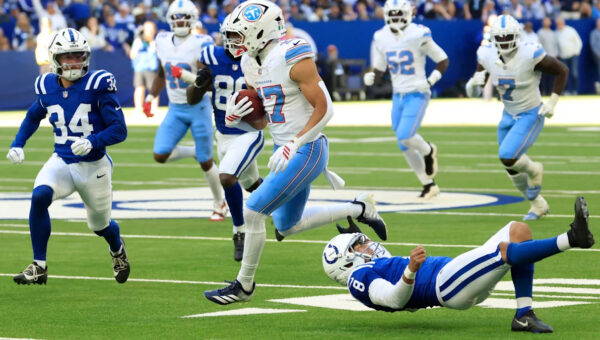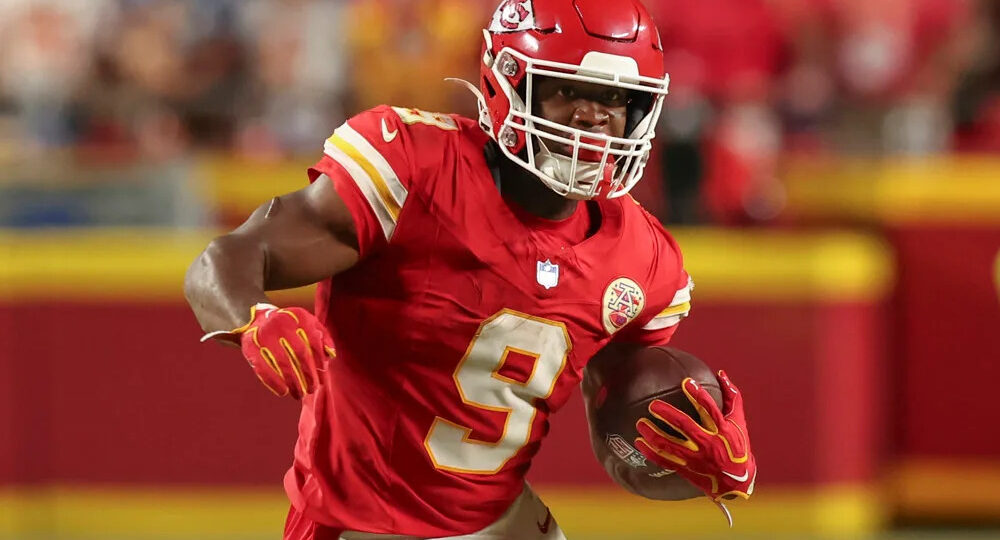
Hear me out. Could the Seahawks just lock up the visiting locker room after Sunday night’s game and not let Kenneth Walker III leave the building?
It’s always bittersweet when a former star comes back to town for the first time, and Walker, Super Bowl MVP just eight months ago, should get a standing ovation when he steps into Lumen Field Sunday night for the Chiefs-Seahawks game. But it’s been made all the more bittersweet by the failure of Seattle’s plan to replace him, at least through six weeks.
Zach Charbonnet was activated from the PUP list Thursday, and intends to play this weekend, which will help. But he’s probably still a ways away from being at full strength, so counting on him to single-handedly boost the Seattle run game is probably a bit much. First-round pick Jadarian Price, meanwhile, remains on injured reserve with his chest injury, and won’t be eligible to return for a couple more weeks. And so, at least for a little while, the 30th-ranked run offense in DVOA will have to continue to try to make ends meet with the likes of Emanuel Wilson and George Holani playing major roles.
This has been a problem and will continue to be a problem; it’s just extra highlighted when the guy you could have kept is standing on the other side of the field. The Seahawks could, conceivably, have franchise-tagged Walker instead of re-signing Rashid Shaheed. John Schneider and company do not like paying significant money to a running back, and it’s true that you can find acceptable running back play for much less than the $14.4 million a year he’s getting to be the missing piece in the Kansas City offense. It’s just that you do actually need to find acceptable running back play. Maybe Charbonnet will be that when he returns, but until now, Seattle’s running backs have been almost comically below replacement level.
It’s almost unsporting to compare Walker’s stats to what the Seahawks have done since he left. Stats iQ lets you do that anyway.

There’s obviously a little bit of an apples-to-oranges comparison going on here, as Walker gets to run behind the Kansas City line, while the other three have to run behind Seattle’s comparatively motley crew. Kansas City’s offensive line is fifth with 4.76 adjusted line yards, while the Seahawks’ 3.96 ranks 18th, firmly in the middle of the pack. Add in a more functioning passing game at the moment, and Walker gets the benefit of around three quarters of a yard more per carry before anyone touches him then any Seahawks rusher.
That’s not likely to change dramatically when both Charbonnet and Price are healthy. The return of Anthony Bradford will give the line a boost and may open up more lanes, making things a little bit better for everyone, but the offensive line really isn’t the major problem here. Ranking 18th in adjusted line yards shouldn’t produce the 30th-ranked team in DVOA.
Other metrics, like ESPN’s run block win rate, have Seattle lower, but even they’re they are “only” ranked 25th. Ball security has been a major problem, as the Seahawks have put the ball on the ground six times on rushing plays already this year. Remove fumbles from all teams, and Seattle’s run DVOA would rank 23rd at -11.2%. That’s still bad, mind you, just better than the very bad results they’ve gotten from putting the ball on the ground once a game. Taking out the turnovers kind of matches Seattle’s performance to ESPN’s view of their line, and some of those fumbles are at least aided by offensive line failures, such as George Holani’s fumble on the goal line against San Francisco. But you can’t blame all of Seattle’s struggles on the offensive line, or on turnovers. Maybe the lack of push up front explains why Seattle is dead last in power success and only 26th avoiding getting stuffed. But even when they get past the line, Seattle ranks just 20th in second-level yards and 25th in open-field yards.
The thing to remember about Seattle’s run attack last year was that it wasn’t consistently good, and that’s not what Seattle needs to get things going once again. Seattle was 14th in rushing DVOA last year at -3.9%, and they were still at -3.6% in the playoffs. Even in the Super Bowl, with Walker winning MVP, they really didn’t move the ball all that effectively on a play-by-play basis. Against the Patriots, they had a success rate of just 25.8% and a DVOA of -19.0%. Walker only ranked 35th in success rate last year among qualified backs; they weren’t getting the Kansas City version of Walker last season. It’s easy to see what Walker has done with the Chiefs, setting records for the most rushing yards gained in his first five games and all that. But that’s not what Walker was providing last year in Seattle, and I don’t think it would be what he would be providing this year in Seattle; it’s an entirely different offensive environment.
No, what Seattle’s run game was last year was explosive. Walker was third last season with 14.9% of his carries going for 10 or more yards. That’s how he won the Super Bowl MVP award – it was the five 10-plus-yard runs, not all the times he was stuffed at the line. It’s easy to forget that Walker had 16 carries of two yards or less in the Super Bowl – and, indeed, six that failed to gain a single positive yard. The highlights burned in your brain are of Walker bouncing to the outside and gashing New England for huge gains – a Timmy Smith or Marcus Allen sort of performance, rather than just grinding things out. That was Walker’s job all year long, and Seattle leaned on those sorts of runs more than most teams.
Every team gets worse if you remove their explosive runs from the data – turns out, runs for 10 or more yards are pretty good. But the 2025 Seahawks had the seventh-largest drop last year, falling a full 24.8%, and dropping from 14th to 21st in rushing DVOA. The Seahawks also had the fifth-lowest success rate when you take out their explosive runs, at just 35% – 28th in the league. But that didn’t matter so much, because Seattle’s offense was all about explosive plays over down-to-down consistency, whether that was bombs to Jaxon Smith-Njigba or Walker dashing around the outside. Their offense was like Cal Raleigh’s near-MVP season for the Mariners that season – far too many strikeouts, but you live with that when you’re blasting 60 home runs. The 2025 Seahawks were the Three True Outcomes offense.
Well, Raleigh came crashing back to earth last season and so has the Seahawks’ offense. They are not nearly consistent enough on a down-by-down basis to live with just an 8.8% explosive run rate. 8.8% isn’t even all that bad, ranking 17th so far this season, but when your offensive success is predicated on hitting those home runs, you can’t survive that sort of dramatic drop. When Seattle hasn’t managed an explosive run this season, their success rate is 32%; a little lower than 2025, but not dramatically so. They could live with the plays where Wilson or Holani are slamming into the line and getting nowhere if they would find a hole and make some magic happen more than once every dozen attempts. They did just fine last year doing exactly that. This is a team built to punch you in the mouth with defense over and over and get just enough huge gains on offense to put you away.
Last season, the average Seahawks touchdown drive lasted just 6.3 plays, the lowest in the league by a substantial margin. This year again, their average touchdown drive is only 6.5 plays long. Seattle doesn’t really score unless they get a big play – and with those big plays drying up on the ground, so has Seattle’s touchdown rate. Last year, Walker was carrying the running game doing just that. Without it, you get lots of thinkpieces talking about just what Seattle is doing wrong. Hey, it’s a living.
The Chiefs, it should be noted, were in the opposite situation last year. They had a better success rate with their running game, very rarely getting stuffed at the line. But they had the second-lowest explosive run rate in the league. They had the smallest drop in DVOA when taking out runs of 10-plus yards, because they just didn’t have that many 10-plus yards to take out to begin with. Kareem Hunt and Isiah Pacheco more or less got what they were blocked. Hunt, in particular, was fifth in success rate but fourth worst in explosive rate among qualified running backs. Walker’s success rate has jumped going to Kansas City because he’s also very capable of picking up the yards blocked for him; his success rate of 48.1% is essentially identical to Hunt’s 47.9% last year. That’s kind of where running backs don’t matter – the Chiefs could throw a lot of guys behind their line who could pick up three yards a pop behind their blocking. But Walker then gets those yards, and keeps going, avoiding more tackles than anyone else in the league and turning an OK play into a great one. He led the league in avoided tackle percentage last year, and he’s doing it again in 2026 (Stats iQ link).

So, what’s the answer for Seattle? It’s not going to be Charbonnet, one of the least explosive rushers in the league last year. Charbonnet will be better than George Holani, but a bag of footballs given a slight push might be better than Holani at this point. But for those vital explosive plays? They kind of need to count on Price.
Price was the less explosive of the two Notre Dame backs in the draft, but Jeremiyah Love was never going to fall to pick 32. And Price does have mondo speed and can turn on the jets when he gets into open space. We’ve seen a little of that so far. His 17.9% explosive rate? Identical to Walker’s, and the third highest in the league…so long as you drop the qualifying threshold to just 25 carries. Price is worse than Walker in basically every other stat so far, but then, so is basically every other running back this season. We have seen, on a handful of carries, Seattle’s vision. They have gambled a big chunk of what made their offense work last year on a younger, cheaper, unproven player. That gamble hasn’t failed yet, but you’ll have to forgive Seattle fans a little bit of seller’s remorse when Walker shows back up Sunday night.
Discover more from NAIRAVOICE.COM.NG
Subscribe to get the latest posts sent to your email.