

AI is minting millionaires at a rapid rate.
Investors have poured hundreds of billions into AI startups and infrastructure, causing company valuations to skyrocket.
That’s turned founders’ paper stakes into fortunes and made employee stock grants at leading AI firms worth millions.
But not all AI wealth is paper wealth anymore.
Founders are selling stakes in startups worth billions.
Early employees are cashing out equity that has multiplied in value in just a few years.
And elite AI researchers and engineers are landing pay packages that would have been unthinkable in tech a decade ago.
When SpaceX IPO-ed this month, 4,400 former and current employees reportedly became millionaires, including some of its cafeteria workers.
When it bought Cursor for $60 billion a few days later, the four cofounders of the AI coding startup (all in their mid-twenties) became billionaires overnight.
As more AI wealth becomes liquid, the question is no longer just how these fortunes are being made, but how they’re being spent. “Unless the AI valuations crack, AI wealth will be a major driver of the current US luxury upswing,” Scott Kerr, founder of luxury consultancy firm Silvertone Consulting, told Business Insider. “They’re upgrading lifestyle and pumping money into housing, travel, experiences, and less classic luxury goods.” So what are their new status symbole?
Luxury watches are an obvious status item to buy, and it’s no different for the AI-rich.
The new tech elite are combining analog watches with wearables: “One wrist for data and one for identity,” Kerr said. “They buy high‑end mechanical watches like Patek, AP, Rolex, and ultra-rare independents not because they really need them, but because the purely mechanical nature and craft signal a different relationship to time than a screen,” he said. “The signal is that they can afford slowness, maintenance, and obsession in a world that’s optimized for speed … at $300,000,” he added.
Gab Waller, who runs a luxury fashion sourcing service based in LA, said some of the young AI founders and tech entrepreneurs she works with are also fans of vintage watches.
Waller said the watches she sources cost her clients between $15,000 to $60,000, depending on condition and year.
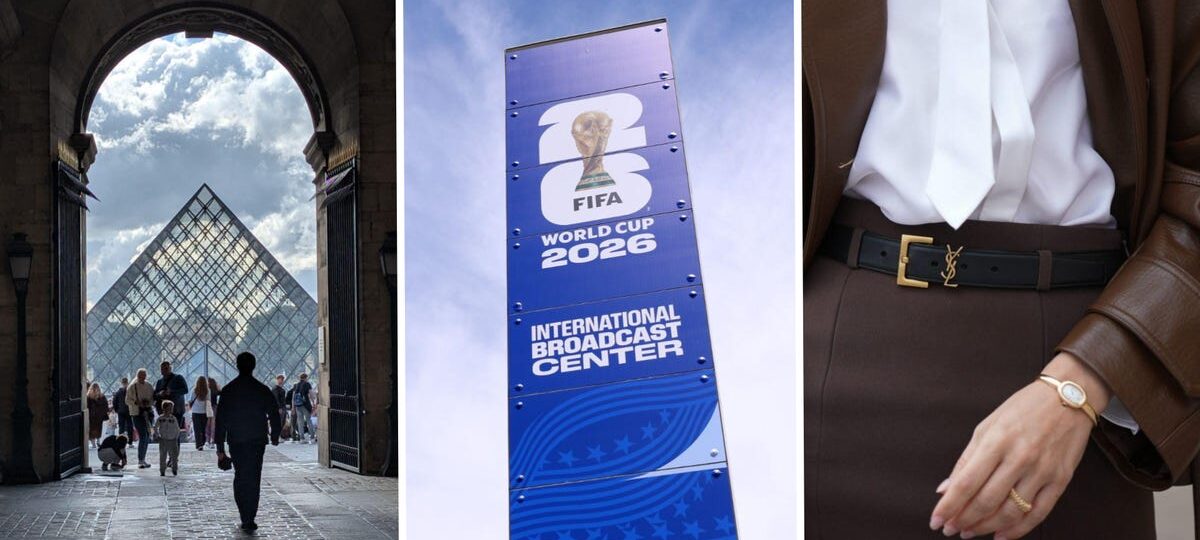
Cartier’s iconic Baignoire is a favorite among women, she said.
On resale platform The RealReal, vintage Baignoire models sell for between $8,000 and $40,000, depending on age and whether the watch is paired with a leather strap or a solid-gold bracelet.
Vintage versions of Piaget’s Polo watch and Audemars Piguet Bamboo are popular options for men; the latter can cost as much as $50,000 on RealReal.
London-based luxury concierge business owner Levi Pastor said he has multiple clients in the AI space who use his services because they want to know which items are considered “if you know, you know.” At the ultra-luxury end, he’s received requests for the Audemars Piguet Code 11.59 Grande Sonnerie Carillon Supersonnerie watch, which can cost around $860,000.
The San Francisco tech elite’s appetite for luxury watches is so great that it is said to be transforming the city’s watch scene.
In the last three years, high-end luxury brands Patek Philippe, A.
Lange & Söhne, Breitling, and Rolex have opened stores around the Union Square area in central San Francisco. “These houses have effectively created a concentrated fine watch destination in San Francisco that did not exist in this form five years ago,” Ali Mirza, CEO of consumer data firm Affluential, said.
Optimize the body, optimize the mind.
The newly AI-rich are embracing everything from blood testing and biometric tracking to expensive longevity treatments.
Longevity crusader and billionaire Bryan Johnson, who spends $2 million a year to reverse the impact of aging, has popularized therapies such as hyperbaric oxygen chambers — designed to increase the body’s oxygen levels — and therapeutic plasma exchange, which filters and refreshes the blood.
These treatments are trickling down to the broader tech elite.
Elisa Harca, Hong Kong-based cofounder and CEO of China marketing agency Red Ant Asia, said that in Singapore, renting a hyperbaric oxygen cocoon can cost around $2,600 a month.
Reborne Longevity, a wellness clinic in London, offers some of these cutting-edge therapies.
Faye Mythen, a consulting CEO for the clinic, said therapeutic plasma exchange at the clinic costs nearly $7,000 per session and requires four to six treatments.
She said these treatments appeal to the tech elite because the intensely competitive AI industry drives a desire to operate at your personal best. “In a way, you can say there is a massive parallel with athletes,” Mythen said.
Other big spenders are booking trips to wellness-focused luxury hotels, Pastor said.
Amangani, an ultra-luxury hotel and ski resort in winter, located in Jackson Hole, Wyoming, is a popular choice.
It costs north of around $2,000 per night.
The new AI elite are putting their own (expensive) spin on the growing trend of picking experiences over physical goods. “The most sought‑after experiences combine extreme discretion with personalization,” Kerr said.
This could be anything from a private dinner at the Louvre in Paris to backstage access at a sold-out Taylor Swift concert or sourcing rare Hermès bags, he said.
This has given rise to a boom in boutique luxury concierge firms whose main purpose is to nail down these non‑replicable experiences for clients, he added.
Speaking in a recent episode of “The Luxury Item Podcast,” Stuart McNeill, founder of London-based luxury concierge Knightsbridge Circle, said that the average age of his members has decreased from 50 to 42 as a new, younger tech and crypto crowd signs up.
Membership prices start at $50,000 a year.
Quintessentially, a luxury concierge service based in London that services the high-net-worth crowd, said it has several clients working in AI.
Most recently, it’s been scoring these clients’ tickets for the 2026 FIFA World Cup — the most expensive tournament on record.
With Anthropic and OpenAI’s IPOs on the not-too-distant horizon, the pool of newly minted AI peeps is expected to grow even more, and every purveyor of “you’ve made it” goods should be ready to roll out the red carpet.
Discover more from NAIRAVOICE.COM.NG
Subscribe to get the latest posts sent to your email.