Feel free to connect with him or check out his work. He’s everywhere — Upwork, YouTube, Spotify, SoundCloud, Collider, LinkedIn, Instagram.
Please stop describing great miniseries as “really long movies.” That’s like calling a novel an unusually elaborate email. Television has the luxury of letting you know somebody for hours before discovering you were completely wrong about them. You can watch an ordinary conversation become important three episodes later, or grow attached to a character whose name you barely noticed at the beginning. I absolutely adore that kind of storytelling.
And I have enormous respect for a show that knows exactly when to leave. There is no obligation to manufacture another crisis or keep beloved characters around until we’ve forgotten why we loved them. The story gets the time it deserves, and then it’s ours to remember, argue about, and revisit. Some of my strongest television memories belong to people I spent only a handful of evenings with.
10
‘The Night Of’ (2016)
<<img src="https://static0.colliderimages.com/wordpress/wp-content/uploads/2025/08/the-night-of-hbo-riz-ahmed-john-turturro.jpg?q=70&fit=crop&w=825&dpr=1" />
Image via HBO</figure>
One terrible night changes Nasir Khan’s entire existence in The Night Of. Naz (Riz Ahmed) is a sheltered college student who borrows his father’s taxi, meets a young woman named Andrea, and spends the evening at her apartment. When he wakes, Andrea has been brutally murdered, and the evidence rapidly makes him the principal suspect. His defense falls to John Stone (John Turturro), a struggling attorney whose everyday work hardly prepares him for the extraordinary attention surrounding the case.
What fascinates me is how quickly the justice system begins changing Naz before anybody has established whether he committed the crime. Prison teaches him behaviors that his previous life never required, while his family suffers consequences no eventual verdict can simply undo. Stone is magnificent too, particularly because Turturro allows his professional intelligence to coexist with embarrassing personal problems, including his agonizing eczema. Steven Zaillian, who co-created the series with Richard Price and directed most of its episodes, understands that a legal case can become a machine that permanently alters everybody caught inside it. That realization is considerably more unsettling than another clever courtroom twist.
9
‘The Queen’s Gambit’ (2020)
<<img src="https://static0.colliderimages.com/wordpress/wp-content/uploads/2025/10/queens-gambit-harry-melling.jpg?q=70&fit=crop&w=825&dpr=1" />
Image via Netflix</figure>
Beth Harmon (Anya Taylor-Joy) discovers chess in an orphanage basement, where janitor Mr. Shaibel (Bill Camp) recognizes her extraordinary ability and begins teaching her the game. The Queen’s Gambit follows Beth into increasingly prestigious competitions during the 1960s, while addiction and loneliness complicate her growing success. She understands the chessboard almost instinctively, yet ordinary relationships remain considerably more difficult to navigate.
I love watching Beth dismantle arrogant opponents, especially when they arrive expecting an easy victory over a young woman. But the series becomes something far more rewarding as her relationships develop. Alma’s (Marielle Heller) unexpected support, Jolene’s (Moses Ingram) return, and the friendships Beth forms with former competitors gradually challenge her determination to accomplish everything alone. Scott Frank co-created and directed the show, and his approach makes chess genuinely thrilling without demanding that viewers understand every move. Then Beth discovers that Mr. Shaibel had been quietly collecting newspaper articles about her achievements. I find that moment more affecting than practically any tournament victory. The person who first believed in her never stopped.
Four Netflix characters, four completely different ways of showing up
for somebody. This is the one who fits how you actually do friendship, and what having them in your
life would be like.
You do not do friendship at half volume, and neither does he.
What you want is somebody who says yes to the plan before you have finished describing the
plan.
- Dustin is the friend the entire show runs on: loyal past the point of sense,
enthusiastic about everything, and incapable of leaving anybody behind. - You have the same instinct. Your friendships are loud, specific and slightly ridiculous,
and they last for decades because of it. - He is also the one person who would take your strangest interest completely seriously,
which is far rarer than it sounds. - You would have a group chat. It would never once be quiet.
You are the friend who makes things happen, and so is she.
Together you would be mildly exhausting to everyone around you and completely delighted with
yourselves.
- Emily treats an ordinary Tuesday as something that could be turned into an occasion,
which is either the best or the worst quality in a friend depending on your energy
levels. - You share her refusal to sit still. Neither of you has ever accepted a night in when
something was happening somewhere else. - She is far more loyal than people give her credit for. She defends her friends loudly,
publicly, and occasionally before checking the facts. - She would post the photo without asking. You would forgive her, because it is a very
good photo.
You have no patience for pleasant lies, and she has no ability to
tell them. What looks like coldness from the outside is the most reliable friendship on this
list.
- Wednesday never says a kind thing she does not mean, which makes the rare ones count for
an enormous amount. - You would rather be told the truth than be made comfortable. She is constitutionally
incapable of offering you anything else. - Underneath all of it she is ferociously protective. She simply refuses to make a
performance out of caring. - Do not expect a birthday message. Do expect her to ruin anyone who wrongs you.
You look after whoever is having the worst day. So does he. It is
the least strategic way to move through the world and the best possible quality in a friend.
- Gi-hun is not the strongest player in Squid Game, or the cleverest. He is the one who
keeps choosing to protect somebody else, over and over, at genuine cost to himself. - You have the same instinct. You notice who is struggling and you stay with them, long
after anybody would blame you for leaving. - He is a flawed friend, and that is part of why it lands. He lets people down, then comes
back and tries again, which is more than most manage. - He would give you his last chance and never once mention that he had done it.
8
‘When They See Us’ (2019)
<<img src="https://static0.colliderimages.com/wordpress/wp-content/uploads/2026/01/when-they-see-us-yusef-sharonne.jpg?q=70&fit=crop&w=825&dpr=1" />
Image via Netflix</figure>
Five teenagers are arrested following a brutal assault in New York’s Central Park in 1989. When They See Us follows Antron McCray, Kevin Richardson, Yusef Salaam, Raymond Santana, and Korey Wise as coercive police interrogations produce false confessions, leading to wrongful convictions that devastate their families and futures. Ava DuVernay created and directed the miniseries, and her treatment of those interrogations is almost physically uncomfortable. We watch frightened children trying to satisfy adults who already appear convinced of their guilt.
I struggle most with Korey’s story. Jharrel Jerome portrays him as both a teenager and an adult, and his gradual transformation across years of incarceration is astonishing. The boy who entered prison becomes increasingly difficult to recognize, although fragments of that frightened teenager remain visible whenever his defenses slip. DuVernay also gives the families sufficient attention that their suffering never becomes background information. Parents make desperate decisions, relationships deteriorate, and years disappear while the men fight to establish the truth. The eventual exonerations provide necessary relief. What devastates me is understanding how much of their lives cannot possibly be returned.
7
‘Angels in America’ (2003)
<<img src="https://static0.colliderimages.com/wordpress/wp-content/uploads/2025/09/angels-in-america-1.jpg?q=70&fit=crop&w=825&dpr=1" />
Image via HBO</figure>
New York, 1985. Prior Walter (Justin Kirk) is living with AIDS when his boyfriend Louis (Ben Shenkman) begins withdrawing from their relationship. Elsewhere, closeted Mormon lawyer Joe Pitt (Patrick Wilson) struggles with his sexuality, while powerful attorney Roy Cohn (Al Pacino) refuses to acknowledge his own AIDS diagnosis. Angels in America connects their lives through relationships, political conflicts, supernatural encounters, and the terrifying realities of an epidemic that American institutions repeatedly failed to confront.
Pacino’s Roy Cohn is extraordinary because he treats practically everything, including his illness, as something that can be controlled through influence and intimidation. Yet Prior is the person I desperately want people to meet. He is frightened, funny, furious, occasionally ridiculous, and absolutely determined to remain alive. An actual angel arrives with demands that make his already difficult existence considerably stranger. Mike Nichols directed Tony Kushner‘s adaptation of his own play, giving its enormous emotional and theatrical ambitions the room they deserve. The story can move from devastating conversations to outrageous supernatural imagery without losing its humanity. Prior’s determination to keep living is what I remember most.
6
‘Watchmen’ (2019)
<<img src="https://static0.colliderimages.com/wordpress/wp-content/uploads/2021/02/watchmen-hbo-nicole-kassell-regina-king-episode-2.png?q=70&fit=crop&w=825&dpr=1" />
Image via HBO</figure>
Watchmen takes place decades after the events of the original graphic novel, following Tulsa detective Angela Abar (Regina King), who operates under the masked identity Sister Night. When her police chief is murdered, Angela begins investigating a conspiracy involving white supremacists, mysterious vigilantes, and secrets buried deep inside her family’s history. Damon Lindelof created a continuation that uses the established superhero mythology to examine racism, historical trauma, inherited identities, and the troubling authority people grant masked figures.
Episode six, “This Extraordinary Being,” is among the greatest hours of television I’ve experienced. Angela enters her grandfather Will Reeves’ (Louis Gossett Jr.) memories through a drug called Nostalgia, confronting experiences that radically change her understanding of his life. Stephen Williams directed the episode, using extraordinary visual transitions to connect personal memory with America’s history of racial violence. I love that the show’s enormous mythology eventually comes down to intimate questions about family and identity. Even Doctor Manhattan’s (Yahya Abdul-Mateen II) relationship with Angela becomes unexpectedly moving as the story explores his unconventional experience of time. Lindelof had every opportunity to produce another superhero mystery. Instead, he made something genuinely difficult to forget.
5
‘Lonesome Dove’ (1989)
<<img src="https://static0.colliderimages.com/wordpress/wp-content/uploads/2025/10/lonesome-dove-gus-lori.jpg?q=70&fit=crop&w=825&dpr=1" />
Image via CBS</figure>
Former Texas Rangers Augustus McCrae (Robert Duvall) and Woodrow Call (Tommy Lee Jones) decide to drive a massive herd of cattle from Texas to Montana, accompanied by a collection of cowboys whose lives become increasingly complicated as the journey progresses. Lonesome Dove adapts Larry McMurtry‘s celebrated novel, following these men through dangerous landscapes, personal rivalries, violence, romance, and the gradual disappearance of the frontier they once knew.
I would happily watch Gus and Call argue for another twenty hours. Gus talks constantly, enjoys life’s pleasures, and possesses an almost infuriating ability to understand people. Call is disciplined, emotionally guarded, and frequently incapable of expressing what his closest companions mean to him. Their friendship gives Simon Wincer‘s miniseries its extraordinary emotional center. And the journey steadily dismantles whatever romantic ideas we might have about frontier life. Death arrives suddenly, good intentions accomplish remarkably little, and Call repeatedly struggles to acknowledge his relationship with Newt (Ricky Schroder). His eventual determination to honor Gus’s burial request is devastating. He can undertake an exhausting journey to fulfill a promise while remaining almost incapable of expressing love directly.
4
‘Roots’ (1977)
<<img src="https://static0.colliderimages.com/wordpress/wp-content/uploads/2025/05/roots.jpg?q=70&fit=crop&w=825&dpr=1" />
Image via ABC</figure>
Roots begins in eighteenth-century Gambia, where young Kunta Kinte (LeVar Burton) is captured, transported across the Atlantic, and sold into slavery in America. Based on Alex Haley‘s book, the miniseries follows Kunta and several generations of his descendants, including his daughter Kizzy (Leslie Uggams) and grandson Chicken George (Ben Vereen). Their lives unfold through the systematic cruelty of American slavery, forced family separations, personal struggles for freedom, and the determination to preserve an identity that enslavers repeatedly attempt to erase.
The scene where Kunta is whipped until he says his imposed name, Toby, remains horrifying. It establishes something the entire production understands. Enslavement involves an assault on memory, family, language, and everything that connects a person to their previous existence. Later, Kizzy scratches her father’s original name onto his grave marker, replacing the name his enslavers gave him. I find that gesture unbelievably moving. Across its eight installments, Roots continually returns to the preservation of identity through generations of violence. The family’s history survives because people refuse to let it disappear. That determination makes the series far more than an account of historical suffering.
3
‘Mare of Easttown’ (2021)
<<img src="https://static0.colliderimages.com/wordpress/wp-content/uploads/2025/01/mare-of-easttown-nicholson-winslet.jpg?q=70&fit=crop&w=825&dpr=1" />
Image via HBO</figure>
Mare Sheehan (Kate Winslet) investigates the murder of teenage mother Erin McMenamin in a Pennsylvania community where practically everybody knows everybody else’s personal disasters. Meanwhile, the disappearance of another young woman continues haunting the town. Mare of Easttown follows a detective whose professional responsibilities constantly collide with her own complicated history, including her son’s death, her strained family relationships, and a custody dispute involving her grandson.
I became ridiculously attached to the Sheehan household. Mare’s mother Helen (Jean Smart) is hilarious, frequently saying exactly the wrong thing while somehow remaining one of the family’s most dependable people. Colin Zabel (Evan Peters) brings a completely different energy to the investigation, making his developing friendship with Mare especially enjoyable. Brad Ingelsby wrote the miniseries, and his understanding of small-town relationships makes every discovery emotionally consequential. The murder investigation eventually reaches a deeply uncomfortable conclusion, yet Mare still has personal grief she has avoided confronting. Her decision to finally approach the attic where her son died is one of the most affecting moments in the entire show. Winslet barely needs dialogue. We understand exactly how difficult those stairs have become.
2
‘Chernobyl’ (2019)
<<img src="https://static0.colliderimages.com/wordpress/wp-content/uploads/2025/09/chernobyl-david-dencik.jpg?q=70&fit=crop&w=825&dpr=1" />
Image via HBO</figure>
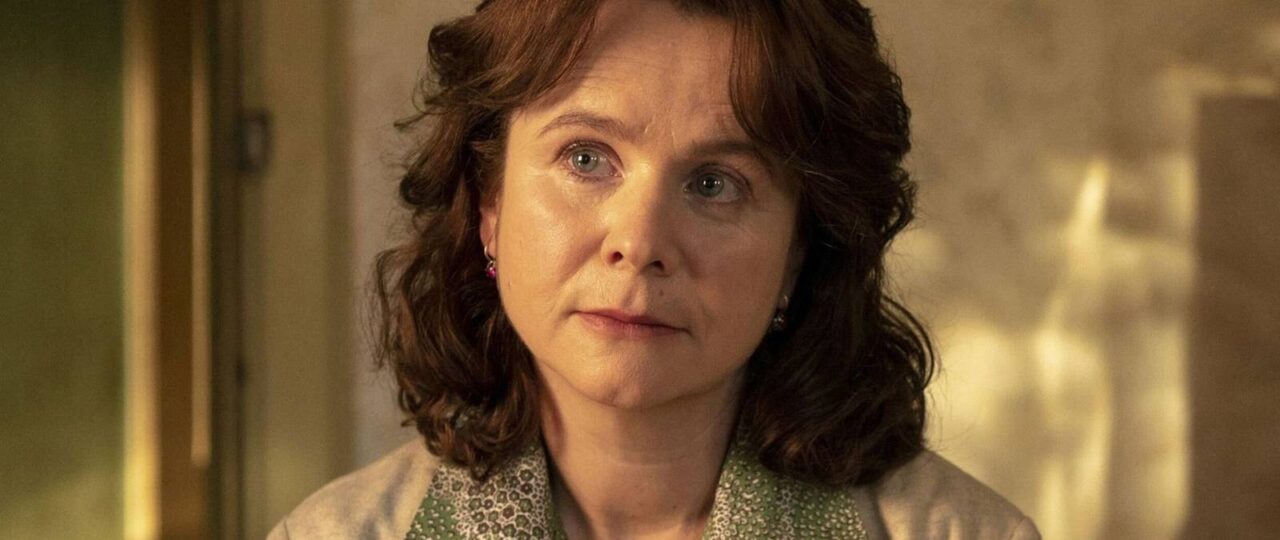
On April 26, 1986, an explosion destroys Reactor No. 4 at the Chernobyl Nuclear Power Plant. Chernobyl dramatizes the disaster and its aftermath, following Soviet scientist Valery Legasov (Jared Harris), government official Boris Shcherbina (Stellan Skarsgård), and the countless workers tasked with containing a catastrophe whose true scale authorities initially struggle to acknowledge. Craig Mazin wrote a miniseries that turns technical explanations, bureaucratic decisions, and scientific disagreements into extraordinary dramatic material.
The rooftop cleanup is almost unbearable. Workers have only a brief opportunity to remove dangerously radioactive debris before retreating, and the entire operation depends upon vulnerable human bodies accomplishing what machinery cannot. Johan Renck directed all five episodes, giving these moments a frightening sense of physical reality. Yet the conversations between Legasov and Shcherbina are just as compelling. Their relationship develops from political hostility into mutual respect as the disaster forces them to recognize the importance of confronting facts that others would prefer to suppress. The courtroom reconstruction takes dramatic liberties with the historical record, but the larger argument is devastating. Institutions can make terrible situations infinitely worse when protecting authority becomes more important than acknowledging reality.
1
‘Band of Brothers’ (2001)
<<img src="https://static0.colliderimages.com/wordpress/wp-content/uploads/2025/06/tom-hardy-band-of-brothers-scene.jpg?q=70&fit=crop&w=825&dpr=1" />
Image via HBO</figure>
Band of Brothers follows Easy Company of the 101st Airborne Division from its training in the United States through the Normandy invasion, the fighting in the Netherlands, the freezing forests around Bastogne, and the closing months of World War II. Based on Stephen E. Ambrose‘s nonfiction book, the miniseries introduces soldiers whose relationships become increasingly important as the casualties accumulate. Richard Winters (Damian Lewis) gradually earns extraordinary loyalty through his leadership, while the men around him attempt to survive circumstances that constantly exceed anything their training could have prepared them for.
I have enormous affection for the Bastogne episode, particularly the attention given to medic Eugene Roe (Shane Taylor). He moves between exhausted soldiers, searching for medical supplies and trying to provide comfort while artillery threatens to destroy their positions. His brief friendship with nurse Renée becomes heartbreaking because the series gives these people enough individuality that every loss feels personal. Tom Hanks and Steven Spielberg executive-produced the miniseries, but its most affecting creative decision may be the interviews with surviving veterans and its now star-studded cast. I cannot think of another war drama that has made me feel so personally invested in people who lived through events long before I was born.
Discover more from NAIRAVOICE.COM.NG
Subscribe to get the latest posts sent to your email.