
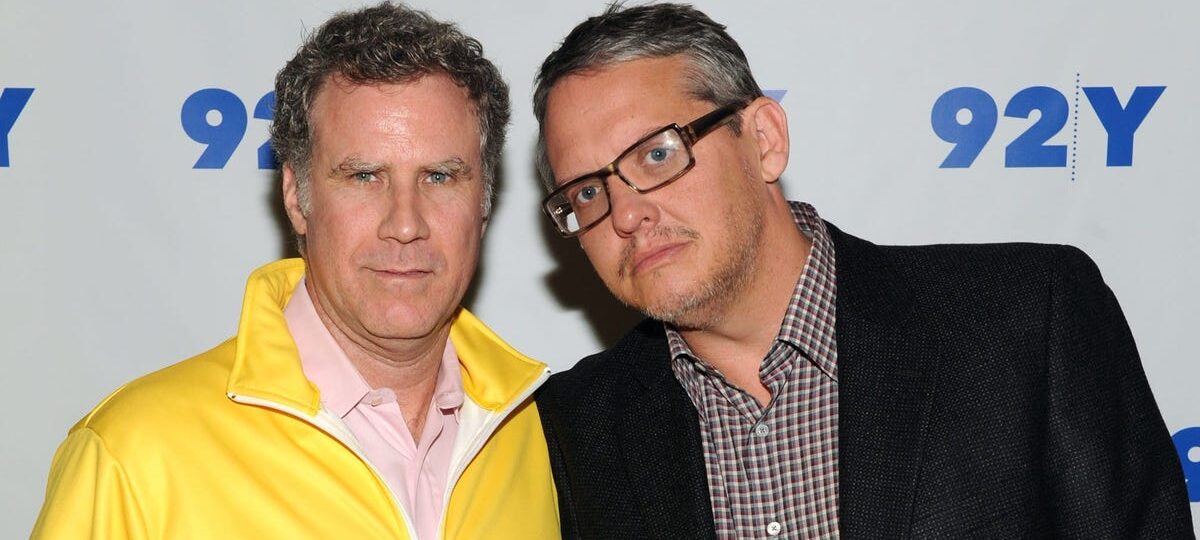
Adam McKay remembers the moment he realized his 2006 comedy “Talladega Nights: The Ballad of Ricky Bobby” would be a hit.
It was the movie’s opening weekend in Los Angeles, and the director and his co-writer and star, Will Ferrell, were driving around the city sneaking into sold-out showings when they encountered comedy royalty in the audience. “We’re standing in the back, everyone was laughing, and we hear someone go, ‘Hey!’ We look over, and it’s Adam Sandler sitting in the back with one of his kids on his lap, and he gives us a thumbs up,” McKay told Business Insider. “What other person at that level does that?
Opening weekend in a packed theater.
Zero competitiveness — truly happy for us.
It’s a moment from making that movie that I’ll never forget.” “Talladega Nights” — which follows the cocky NASCAR driver Ricky Bobby (Ferrell), as he battles his demons and his ego after he’s beaten by French driver Jean Girard (Sacha Baron Cohen) — became a surprise hit at the box office, earning over $160 million worldwide.
It also made a comedy star out of John C.
Reilly, who paired so well with Ferrell that the two would team up again on McKay’s next movie, 2008’s “Step Brothers.” See more of Business Insider’s movie retrospectives: In the twenty years since its release, “Talladega Nights” has enjoyed a place in the pop-culture pantheon: Several of the movie’s lines have become catchphrases, from “Shake and bake!” to “If you’re not first, you’re last,” and NASCAR drivers have done their own homages to Ricky Bobby.
Now, in honor of the movie’s upcoming 20th anniversary, Sony is re-releasing “Talladega Nights” in theaters nationwide on June 28, June 30, and July 1.
Below, Business Insider chats with McKay about about the one thing NASCAR didn’t want in the movie, allowing Sacha Baron Cohen in the edit room, and whether he thinks he’ll ever work with his former creative partner Will Ferrell again.
Business Insider: How did this all start?
Is it accurate to say that the “Talladega Nights” idea didn’t really take hold until Will Ferrell called you with the Ricky Bobby name and the character’s voice?
Phase one is we come up with the world and the large idea.
With “Talladega Nights,” it was, let’s go into the world of NASCAR.
We kick around ideas, we come up with a pitch for the movie, and one of the key elements was the name, Ricky Bobby.
Will started to do the voice, and we started to come up with the story.
The idea that he had an absent dad who was only there long enough to give him a couple messed-up life lessons that he followed to a T — that became the pitch.
Since the movie’s release, the line “If you’re not first, you’re last” has become part of the American lexicon.
How early in the game did you guys come up with that line?
That wasn’t until we wrote the script.
His origin story, the arc, the idea of the pit crew with some comedic actors, the idea of his wife and that McMansion race car culture, that was all from the beginning.
But stuff like “If you’re not first, you’re last,” that probably came out in the outline stage.
I don’t think we took that line into the pitch.
Ferrell and I always worked well because we tended to get excited about the same things and neither one of us was precious if the other one felt really excited by something.
I always say we never had one single creative argument working on any script we did together.
The second the name Ricky Bobby was thrown out, we were like, that’s it.
Same with “If you’re not first, you’re last.” I remember we were laughing about that because it’s a very American mentality.
Now, did Ferrell and I know that that mentality would get bigger and bigger over the years?
But we were seeing it back then, and it felt ridiculous.
How important was it to get NASCAR to buy in on what you and Will wanted to do?
NASCAR’s buy-in was critical to the movie.
The good news was our approach to the movie was always that the racing has to be kick-ass and real.
So it was nice that we had Oliver Wood as the DP — we have the guy who shot “The Bourne Identity”!
Fortunately, the NASCAR people that we were dealing with totally got the fun of this movie.
Even though we were in this period of flag-waving patriotism, they knew that we weren’t looking to eviscerate the NASCAR community.
They only had one note on the entire script.
Originally, the way that Ricky Bobby first got behind the wheel was he was on the pit crew and their driver had died behind the wheel during a race, but no one realized it.
He was leaning on the wheel in such a way that the car was still going around the track, just at a slow speed.
NASCAR was like, “Don’t do that, because one of the negative jokes about NASCAR is all the drivers have to do is just turn left the whole race.” Honestly, we didn’t think of it that way, but that was the only thing NASCAR wanted us to change.
Pretty quickly, we were like, let’s just give the team a terrible driver, and he gets hungry in the middle of the race, and that led to giving me a role. [Laughs.] John C.
Reilly originally was going to play Champ Kind in “Anchorman,” but left before filming started to go do Martin Scorsese’s “The Aviator,” right?
John had done a read-through for “Anchorman” and killed it.
Then he called us and said, “I’m so sorry, I have to do this other movie.” And we were like, “What’s the other movie?” And he said, “Martin Scorsese is doing the Howard Hughes story.” And Ferrell and I laughed and were like, “Ask him if there’s a day part for us.” There were zero hard feelings.
We already knew John was funny, but we saw him be big-time funny in that read-through.
So from the start, we wanted him as Ricky Bobby’s buddy for “Talladega Nights.” Then, during the shooting, we realized he’s a great improviser.
Was there a moment while making “Talladega Nights” that you realized John and Will really worked well together?
Without question, the prayer scene at Ricky Bobby’s house.
Because for that, we were improvising like crazy.
How is a scene like that written on the page, and then how does it evolve with improv?
Like, the “baby Jesus” line was scripted.
But my approach has always been, “We’re here, I got the good take of the scripted version, we’re good on time, what is the harm in trying stuff?” That started with “Anchorman.” By the time we were doing “Talladega Nights,” we had built time for improv into the schedule.
After we do the scripted takes, then I’ll throw out some suggestions for lines from behind the camera.
Oftentimes, Ferrell will take the suggestion, modify it a little bit, or sometimes just do it word for word, then that will get him going.
And Reilly just did not miss a beat and fell right into it.
I knew he really fit the way we like to work when we did the single shots of the kids at the dinner table.
We would just feed them lines, Ferrell and I.
And the kids were great — we would have them say these crazy, mean things to the grandfather.
Reilly just started throwing in lines for them, and I realized, this is a match made in heaven.
At that point, I think Ferrell and I started saying, “We gotta do more with this guy.” Is it true that the first time you and Will met Sacha Baron Cohen was at Garry Shandling’s house playing basketball?
There was this somewhat famous basketball game that would go on at Garry’s house for years and years.
It was just a fun game, and there were a lot of stand-up comics, comedic actors, friends.
Sacha would show up, and I was like, how is this British-slash-Israeli guy playing basketball?
He had a nice turnaround jump shot, so we started calling him “Big Ben.” Sacha is a very charming guy when you hang out and talk to him.
He was hot at that point with Ali G.
We had seen the videos of him doing it in the UK.
We had already come up with this French character, and we had seen Sacha do accents.
So our manager was either representing or about to represent Sacha, and he suggested him for the role, and it felt right.
But then it turned into this long game of he’s in, no, he’s out, no, he’s in.
It started driving us crazy, so finally we said, he’s out, we have to go to someone else.
And, of course, that’s when Sacha was officially in.
He’s certainly a guy who likes to improvise, but I think he was a little taken aback by how open we were.
I remember when we did a very early screening, he was not happy with the way his stuff had been cut.
And I told him, “Sacha, it’s an early cut, it’s only going to get better.” But he’s very obsessive, and he kept texting me about it.
So I said, “I’ll tell you what, come by the edit room, I’ll give you one of our assistant editors, you can go through every daily and find every joke you think should have been in the cut.” But I told him the one thing is, if I really don’t like a joke, I truly think it’s bad, I won’t use it.
So he came in for two whole days, and he came back with 16 new jokes.
In the end, we ended up finding six really good, funny moments, and I put them in the movie.
You did impressive action in-camera for “Anchorman,” but you really leveled up with “Talladega Nights.” Did making sure the racing looked good keep you up at night?
We storyboarded and had incredible stunt people.
The only thing I did learn was for the big crash scene at the end of the movie, the key stuntman banged his helmet and was dazed; he got a low-grade concussion.
After seeing the footage and finding out about the guy, I asked if he was taken to the hospital.
They were like, “Hell no, he’s at the bar celebrating.” We shot during live races.
Those crowds you see are at a real race at the Charlotte Speedway.
So whenever there was a caution flag and the race was stopped, NASCAR gave us a spot in the pits, so we would all rush on the track, and those are the actors improvising during a live race.
That’s, to this day, one of the craziest filmmaking experiences I’ve ever had.
Did Will and Sacha kiss in front of the crowd?
Sacha came to me and said, “We have to kiss, right?” And I was like, “You know, two guys kissing, we like silly comedy, but is it a little hacky?” And he said, “But, I’m a gay French experimental artist and Ricky Bobby is American South,” and I said, “You know what?
Let’s shoot it.” So we were on the track, but that was not a live crowd there when we did it.
The kiss wasn’t scripted, but when we put it in the cut, I knew it hit perfectly.
I believe there were some walkouts in theaters because of that shot, and maybe there were some NASCAR folks who weren’t happy with that, but overall, NASCAR has totally embraced the movie.
I think a driver wrapped his car with the cougar head.
And once there was a wreck, and the driver started running to the finish line.
One of the joys of looking back on this movie is also indulging in the “25th anniversary” commentary track you and Will did.
It’s like listening to a comedy album.
How did you two decide to do a commentary track without ever talking about the movie?
Young people probably don’t know how big commentary tracks were back then.
I remember the one for “Three Kings” and it was super fascinating.
It was your favorite directors talking about what they did.
But we knew with us, if you’re a cinephile, you’re not going to listen to the commentary track to our movies.
So from “Anchorman” on, Ferrell and I said, let’s just play it for comedy.
So, going in, we decided we are going to do the whole thing like it’s 25 years after we made the movie.
Did you ever seriously consider doing a sequel?
But not as seriously as “Step Brothers.” For “Step Brothers,” we had a whole treatment written and worked out.
We did have an idea for “Talladega Nights.” It was that Ricky Bobby was going to hook up with an F1 team, and he was going to race in Denmark or the Netherlands and feel like he’s in a communist country because they have nationalized healthcare.
So, along with struggling with how fast those F1 cars go, he would have clashed with far-left-leaning Europe compared to America.
The only reason we didn’t do it was it’s a lot of work to shoot race car stuff.
The reason we went and did “Step Brothers” next was we felt like, can we just go do comedy in a house?
We were tired after “Talladega Nights.” It never got to the point where we wrote a treatment.
Whereas with the “Step Brothers” sequel, we were almost going to do it.
Your creative breakup with Will Ferrell was well-publicized.
Do you think you’ll ever work with him again?
I totally have been open to the idea.
We always got along great, we were tremendous creative partners.
The only thing that caused acrimony between us was when we decided to end our production company, Gary Sanchez.
And I know it was reported one way or the other, but that was really it.
It’s a shame because we had a great creative partnership.
I think both of us underestimated the complications that go with not just having a company, but a very successful company.
We had it for a long time and did a lot of cool projects.
And Ferrell said it publicly, he was never someone who wanted to produce, so he was always half in and half out, but then he would love it and be proud of the company, but by the end, he wanted to move on.
It had become too much extra work; it was never his passion.
I was really the one who wanted to produce, but a movie star’s life is very different than a writer-director’s life.
I certainly have no hard feelings and, who knows, we’ll see what happens. [Ed note: Ferrell did not respond to a request for comment.] You’ve got five years until the real 25th anniversary of “Talladega Nights.” Imagine if you two got in a room for a real commentary track. [Laughs.] Or we have five years until Brennan or Dale from “Step Brothers” becomes president.
This interview has been condensed and edited for clarity.Sony will re-release “Talladega Nights: The Ballad of Ricky Bobby” in theaters nationwide on June 28, June 30, and July 1.
Discover more from NAIRAVOICE.COM.NG
Subscribe to get the latest posts sent to your email.