
The idea that a soccer match lasts exactly 90 minutes is more myth than reality.
If you’ve been following the 2026 World Cup, you’ve likely noticed that the referee almost never ends the game exactly when the clock hits 90 minutes. The same will hold true during this Sunday’s championship game between Argentina and Spain, which starts at 3 p.m. ET and airs on Fox, Fox One and Telemundo.
- Argentina vs. Spain
- Game time is Sunday, July 19 at 3 p.m. ET
Where: MetLife Stadium in East Rutherford, N.J.
Fox, Fox One, Telemundo
Game time is Sunday, July 19 at 3 p.m. ET
Where: MetLife Stadium in East Rutherford, N.J.
Instead, games often continue with long periods of extra time, when players are clearly tired and things can get unpredictable. For example, in its tournament-opening 4-1 win over Paraguay on June 12, Team USA scored twice during stoppage time, including a goal just before halftime. And on Sunday night, in a thrilling match between England and Mexico at Azteca Stadium, 11 minutes of stoppage time were added as an exhausted England squad, playing down a man in a somewhat hostile environment, withstood a frenzied Mexican attack in the final moments and held on to win 3-2.
Those are just a couple of examples of how stoppage time has affected games in this World Cup. As the tournament advances into the crucial knockout rounds, every minute of every game counts, making it more important than ever to understand how referees decide when the game actually ends.
Here’s what stoppage time means, how referees figure it out, and why soccer matches almost never finish right on schedule.
World Cup matches total 90 minutes, divided into two 45-minute halves, but most games last about two hours from start to finish.
The halftime break lasts about 15 minutes, and stoppage time at the end of each half can add 10+ minutes. FIFA has also introduced mandatory three-minute “hydration breaks” midway through each half (around the 22nd minute) in every match at the 2026 World Cup.
In sports such as American football and basketball, the clock stops whenever play is interrupted. Soccer is different. The referee’s watch keeps running, no matter if the ball is in play or not.
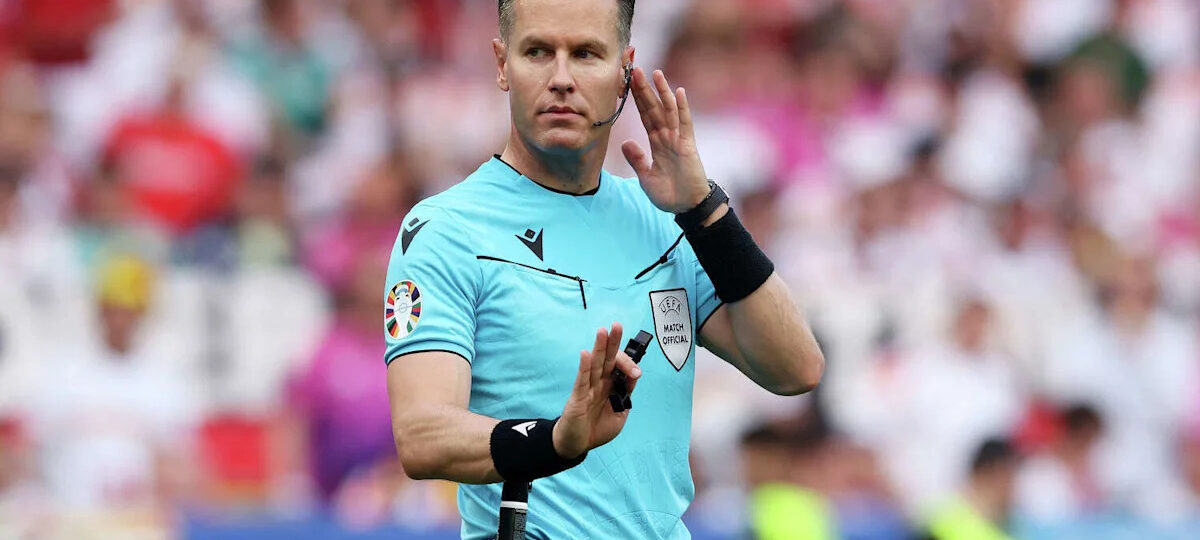
To make up for this, referees add extra minutes at the end of each half. This is called stoppage time or added time and it’s meant to give back the time lost when the ball wasn’t in play. The fourth official shows the minimum added time on an electronic board by the sideline.
- Substitutions: Roughly 30 seconds per player change.
Goal celebrations: Celebrations can consume a minute or more.
Injuries: Medical treatment on the field can create lengthy delays.
Time-wasting: Goalkeepers and players slowing restarts.
VAR reviews: Video reviews often add several minutes.
Substitutions: Roughly 30 seconds per player change.
Goal celebrations: Celebrations can consume a minute or more.
Injuries: Medical treatment on the field can create lengthy delays.
Time-wasting: Goalkeepers and players slowing restarts.
VAR reviews: Video reviews often add several minutes.
Lately, officials have been more careful about making up for lost time, so it’s now common to see five, eight, or even 10 minutes of stoppage time added.
Fans might watch the stadium clock, but referees keep track of time in their own way.
Most referees wear two special watches, one on each wrist. The second watch is a backup, so if one fails or gets pressed by mistake, the referee still has another way to keep time.
These aren’t just regular stopwatches. Today’s referees often use match-management watches, which are made especially for soccer.
The first watch acts as the official match clock. It starts at kickoff and keeps running, just like the clock in the stadium and on TV.
The second watch is used to track big delays. If there’s a long interruption, such as an injury or a lengthy VAR review, the referee can pause the watch and restart it when play resumes.
By comparing the two watches, referees can figure out how much playing time was lost.
Imagine the first half reaches the 45-minute mark. The primary match clock reads 45:00, but the delay-tracking watch reads only 41:30 because it was paused during several interruptions.
The gap between the two clocks shows how much time was lost. In this case, about three and a half minutes were lost, so the referee would probably round up and add four minutes of stoppage time.
It’s not a perfect system, but this process gives referees a way to calculate added time instead of just guessing.
One common misconception is that referees stop the clock every time the ball leaves the field.
Throw-ins, corner kicks, goal kicks and other routine pauses are considered normal and included in the standard 90 minutes. Referees usually adjust time only for delays that significantly interrupt the flow of the game.
This was the case during the United States Women’s National Team’s recent 1-0 win over Brazil. The game concluded with a whopping 12 minutes of stoppage time added after the flow of the game was severely disrupted during the final 25 minutes due to ejections both on and off the field.
- A player taking excessive time to leave during a substitution.
A goalkeeper delaying a restart.
Lengthy confrontations between players.
Injury treatment that stops the match.
VAR reviews and official consultations.
A player taking excessive time to leave during a substitution.
Lengthy confrontations between players.
Injury treatment that stops the match.
VAR reviews and official consultations.
The Laws of the Game make the referee the only official timekeeper, so their judgment is always part of the process.
That’s why the number shown by the fourth official is just the minimum. If there’s another injury, argument, or delay during stoppage time, the referee can keep adding more time. Four extra minutes can quickly turn into five or six.
Sometimes there isn’t any stoppage time. If a half goes by without any major injuries, goals, VAR reviews, or delays, referees can end the half right at 45 or 90 minutes.
Similarly, in one-sided games, officials sometimes take a practical approach. If one team is far ahead near the end, they might skip adding extra time for small delays and finish the game early.
At the opposite extreme sits one of soccer’s strangest records: 28 minutes of stoppage time in a single half.
That figure has happened in two unusual professional matches.
- The Great Floodlight Failure (2019): During a Carabao Cup match between Burton Albion and Bournemouth, the stadium floodlights failed three separate times. Rather than restarting the clock after each delay, the referee allowed the match clock to continue and later added 28 minutes to the second half.
The Drone Intrusion (2022): A drone hovering above a Premier League match between Brentford and Wolverhampton Wanderers forced players off the field for safety reasons. The interruption lasted roughly 19 minutes and after accounting for additional delays, the first half received 28 minutes of stoppage time.
The Great Floodlight Failure (2019): During a Carabao Cup match between Burton Albion and Bournemouth, the stadium floodlights failed three separate times. Rather than restarting the clock after each delay, the referee allowed the match clock to continue and later added 28 minutes to the second half.
The Drone Intrusion (2022): A drone hovering above a Premier League match between Brentford and Wolverhampton Wanderers forced players off the field for safety reasons. The interruption lasted roughly 19 minutes and after accounting for additional delays, the first half received 28 minutes of stoppage time.
The longest stretch of added time ever recorded in a World Cup match came during England’s 6-2 victory over Iran at the 2022 tournament.
The game featured 24 minutes of combined stoppage time, including a lengthy first-half delay during which Iranian goalkeeper Alireza Beiranvand sustained a serious head injury. Medical staff treated him on the field for nearly 15 minutes before he was eventually substituted, resulting in one of the longest delays in World Cup history.
By the time the final whistle blew, the match had gone well beyond the usual 90 minutes. Another reminder that in soccer, the referee decides when the game is really over, not the clock.
Discover more from NAIRAVOICE.COM.NG
Subscribe to get the latest posts sent to your email.