
20 minutes agoShareSaveAdd as preferred on GoogleRichard WheelerPolitical reporter

 PA Media
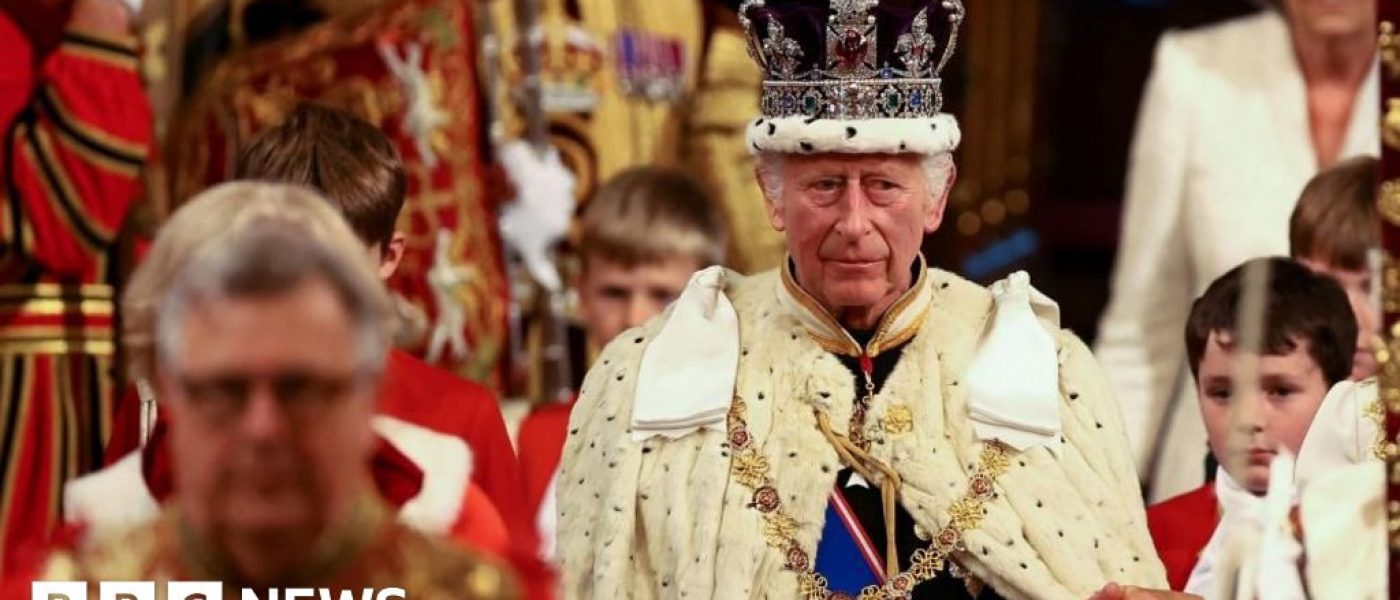
King Charles III will unveil the government’s agenda for the year ahead on Wednesday, as Sir Keir Starmer fights for his future in Downing Street.
Labour’s ongoing divisions mean the day of pomp and ceremony for the State Opening of Parliament will take place in unusual circumstances.
The King’s Speech is expected to include more than 35 bills and draft bills, including on immigration, the NHS and police reforms, along with a route to potentially nationalising British Steel.
But whether or not Sir Keir is in position to deliver the planned laws remains to be seen, amid splits amongst his cabinet and backbench MPs following heavy losses in last week’s elections.
Sir Keir said people expect the government to “get on with the job of changing our country for the better”.
He added: “Cutting the cost of living, bringing down hospital waiting lists and keeping our country safe in an increasingly dangerous world.
“Britain stands at a pivotal moment: to press ahead with a plan to build a stronger, fairer country or turn back to the chaos and instability of the past.”
Other proposals expected to be in the speech include measures linked to the government’s desire for closer ties with the European Union, improved energy security and leasehold reforms in England and Wales.
The BBC has learnt Sir Keir has not included a second attempt to reform welfare.
The first attempt, which sought to restrict eligibility for some health-related benefits, resulted in a mass revolt of Labour MPs and a climbdown for the government in June 2025.
The Conservative Party has released an “Alternative King’s Speech” containing proposed laws that the Opposition would like to see brought forward.
It includes plans on immigration, welfare reform, oil and gas extraction from the North Sea and support for high streets.
Tory leader Kemi Badenoch described it as a “serious and fully funded legislative programme for a stronger economy and a stronger country”.
One of the bills would aim to withdraw the UK from the European Convention on Human Rights and repeal the Human Rights Act.
The Conservatives argue this is part of efforts to “secure our borders, restore fairness in the benefits system and protect our service men and women from lawfare”.
The potential challengers to Keir Starmer
Keir Starmer latest: Follow live updates
How could Labour MPs force a leadership contest?
Read all the ministers’ resignation letters in full
‘Crisis in Great Britain!’ Global media reacts to Starmer’s fight for survival
The state opening will begin at 09:30 when the royal bodyguards, known as the Yeoman of the Guard, conduct a ceremonial search of the cellars of the Palace of Westminster for explosives.
This commemorates the Gunpowder Plot of 1605 in which a group of English Catholics failed to blow up Parliament and kill the Protestant king.
An MP will also be ceremonially taken “hostage” in Buckingham Palace while the King attends Parliament. This is designed to ensure the monarch’s safe return.
A government whip known as the vice-chamberlain of the household traditionally performs this task and the position is currently held by Labour MP Sir Nic Dakin.
The royal procession travels from Buckingham Palace to the Sovereign’s Entrance at Parliament, with a military escort.
In 2024, the Ministry of Defence said more than 1,100 military personnel and almost 200 horses took part.
The King will later lead the royal procession to the chamber of the House of Lords and he will deliver the speech, usually at around 11:30.
Before he starts, Black Rod – a senior officer in the Lords – will be sent to the House of Commons to summon the MPs.
The door to the Commons chamber is shut in Black Rod’s face and he will strike it three times before it is opened, a tradition said to symbolise the independence of the Commons from the monarch.
MPs will file through Central Lobby to the Lords, with as many as possible watching the King’s Speech from the bar of the House – a railing marking the boundary beyond which visitors may not pass when the House is at work.
Other MPs will stay behind in the Commons, with some watching the speech on their phones or tablets.
MPs will hold several days of debate on the King’s Speech from 14:30 on Wednesday.
A long-serving MP and a relative newcomer to the Commons usually make speeches, with Conservative Party leader Badenoch third up before Sir Keir addresses the chamber.
It will be the first opportunity for MPs to attempt to question the PM in the Commons since last week’s elections.
Keir Starmer
Discover more from NAIRAVOICE.COM.NG
Subscribe to get the latest posts sent to your email.