There’s a fight for AI talent that’s playing out in the classroom.
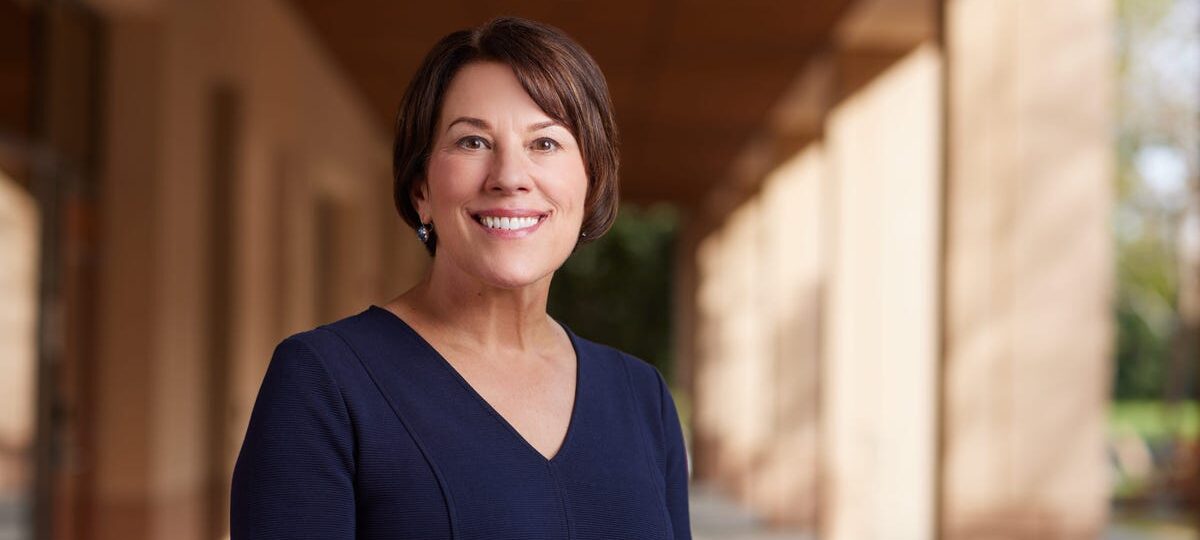
Sarah Soule, the dean of Stanford’s Graduate School of Business, told Business Insider that frontier AI labs — with their enormous computing resources, data, and coming IPOs — are becoming an increasingly powerful draw for professors. “There is an allure for faculty,” she said about the trend. “I won’t lie, I worry about this.” The pull is already evident at Stanford.
Andrew Hall and Chad Jones, two GSB professors, are both on leave this year.
And Stanford University isn’t alone.
Soule had just gotten off a public panel with Aaron Chatterji, OpenAI’s chief economist, who is on leave from Duke University.
Stanford lets its tenured faculty take two years of unpaid leave to join the private sector every seven years.
Faculty can take longer leaves for government service, as the school’s former provost, Condoleezza Rice, did to become the Secretary of State.
Professors often come back to the school, the University told Business Insider.
Westley Hartmann, who has taught at Stanford since 2003, took seven months of unpaid leave to work for Amazon.
Still, the trend comes as AI labs continue to substantially strengthen their recruiting hand.
Leading AI labs continue to amass capital, computing power, and market influence.
Working inside one can offer researchers a chance to shape a technology with enormous economic and social consequences — and, potentially, share in its financial upside.
Stanford said it does not view faculty collaborations or industry leaves as zero-sum losses.
The university described them as part of a broader ecosystem that can help professors stay close to technological development and bring those experiences back into their research, teaching, and work with students. “There’s no question that the opportunity to work with frontier AI labs is attractive to faculty,” Kristin Harlan, the head of dean’s communications for Stanford’s GSB, said. “We see those relationships as complementary to Stanford’s academic mission, not separate from it.” Soule said academia still offers something the labs cannot: freedom to pursue long-term research without the same pressure for immediate results. “I suspect that the freedom to do what you want to do and to take a very long time to do it will be possibly something that won’t be the case at the frontier labs,” she said.
AI is also adding a budget problem for schools.
Stanford University entered into an enterprise agreement with Anthropic over the summer, Soule said, giving students, faculty, and staff access to Claude’s suite of tools.
Stanford also has shared computing resources, cloud capacity, and hardware investments for research.
Researchers doing the most advanced AI work often need far more than a chatbot subscription, and providing enough computing power is getting increasingly expensive.
Soule said Stanford’s AI-related research costs are rising, while future spending is “super hard to forecast.” Frontier labs, meanwhile, can offer the enormous compute and data resources that university leaders are struggling to match. “I don’t have a good answer for it,” she said about the increasing budgets. “Probably, most deans and most college presidents are really worried about this issue, because it’s really daunting to think about.”
Discover more from NAIRAVOICE.COM.NG
Subscribe to get the latest posts sent to your email.